

The Nepali Congress has significantly expanded its organisational structure through its 15th General Convention, increasing the size of its Central Working Committee from 231 to 297 members and adding more office-bearer positions. The decision has drawn criticism from within and outside the party, with questions being raised over whether the Congress has created an unnecessarily large or “jumbo” leadership structure.
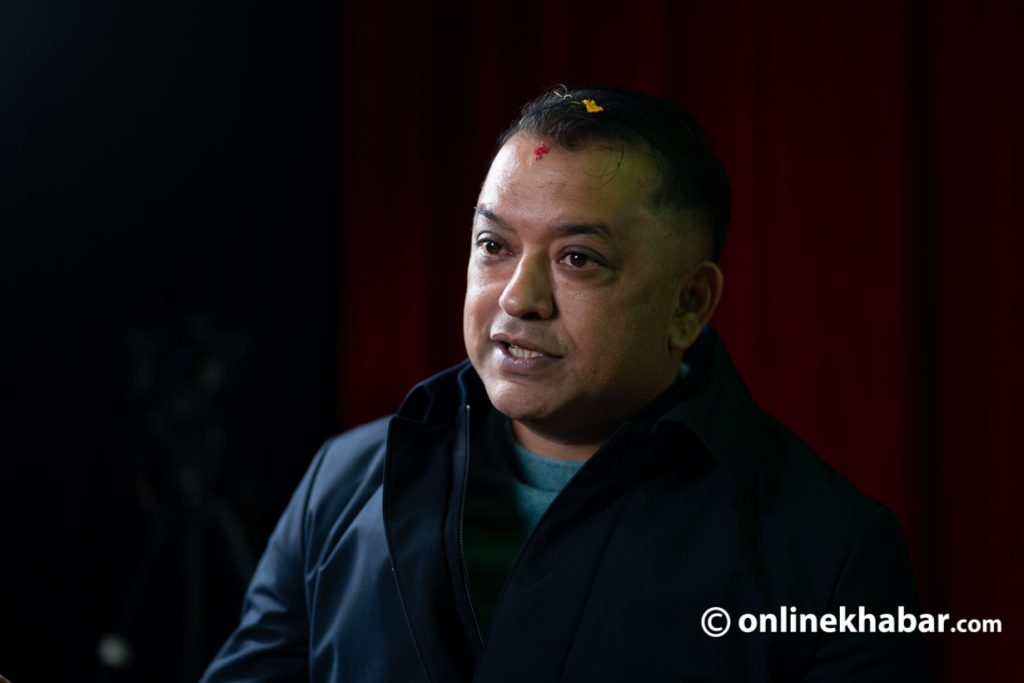
Party president Gagan Thapa, however, argues that the expansion is driven by the need to make the party more inclusive, broaden opportunities for leadership and create space for groups that have traditionally had limited representation in the party’s top decision-making body.
Thapa says the new structure is intended to bring more young people, professionals, workers and Nepalis living abroad into the Central Committee, while also protecting the proportional representation of different communities. He argues that expanding the number of office-bearers will also help address internal divisions following the special General Convention and provide greater opportunities for women and members of historically underrepresented communities to rise to senior leadership positions.
At the same time, Thapa says the changes are not simply about creating more positions. The revised statute assigns specific responsibilities to office-bearers and Central Committee members, including the newly created position of senior vice president, which he describes as being similar to a co-president in terms of handling the party’s internal affairs. He says the objective is to free the party president to focus more on national politics, public engagement and the broader direction of the party.
Thapa also outlines a series of longer-term organisational reforms he wants to pursue. These include ending factional control over candidate selection, introducing a “one person, one executive responsibility” principle, digitising the party and eventually allowing ordinary Nepali Congress members across the country to directly elect the party leadership rather than relying on General Convention representatives gathered in Kathmandu.
With the nomination process for the General Convention underway, Thapa also addresses the unusually large number of candidates seeking positions in the Central Committee and argues that the absence of factional gatekeeping has opened the door to a much wider pool of aspirants. He explains why he has chosen not to form a panel of his own and why he has privately urged some experienced leaders not to contest for office-bearer positions, arguing that the party needs their experience regardless of whether they hold a formal leadership post.
In this interview with Onlinekhabar’s Lilu Dumre, Thapa discusses the thinking behind the expanded Central Committee, the new distribution of responsibilities, the future of party leadership and the reforms he believes are necessary to transform the Nepali Congress into a more inclusive, democratic and functional organisation. Excerpts:
Political parties have long faced criticism for having unwieldy structures and oversized committees. Yet the Nepali Congress has increased its Central Committee from 231 to 297. Why?
Under the previous statute, the Central Committee had 231 members. This time, we realised that without special provisions for young people, it would be difficult for them to get elected because of the party’s existing structure and membership composition. So we created a separate youth cluster and added 21 positions.
We also wanted representation for Nepalis living abroad. Although the party has organisational structures overseas, they had never been represented in the Central Committee. We also wanted to bring in professionals and workers, who otherwise had very little opportunity to enter the Central Committee.
The party had become inclusive in terms of communities, but the same people who had been working in the party for years were continuing to come to the top, regardless of which cluster they represented. Young people, professionals, workers and Nepalis living abroad were largely missing.
The new positions were open to everyone, however, which meant the proportional representation of Dalits, Madhesis, Muslims, Janajatis and other communities would have declined. So we also had to adjust their representation. That was one reason the Central Committee became larger.
What was the reason for increasing the number of office-bearers?
The Nepali Congress has come through a special General Convention, and I have been trying to unite the entire party. If we had kept the number of office-bearers unchanged, there was a risk that the division between those associated with the special General Convention and those outside it would become permanent.
By creating more space, everyone can compete. This time, I am not forming a panel or team. The competition is open to everyone. If we had kept the old structure, those currently in the committee could have effectively formed one team and those outside it another.
There is also a leadership-development aspect. We want to increase women’s participation. Women had been able to enter through the joint general secretary level, but the path to vice president or general secretary was largely closed. By opening those positions to women, we have also opened a path for a woman to eventually lead the Nepali Congress.
Similarly, inclusive representation at the vice-president level creates a path for Dalits, Janajatis, Madhesis and other communities to reach the party’s higher leadership.
Why was the new position of senior vice president created?
There has been a lot of discussion about creating more positions, but less attention has been paid to the fact that the revised statute also assigns specific responsibilities to them.
Previously, the general secretaries had essentially the same broad responsibility of overseeing the central office. Now their responsibilities are differentiated. One will oversee the office, another the organisation, while others will handle specific areas. The vice presidents will also have clearly defined responsibilities.
The idea is that the party president should focus more on external and political matters. At present, too much of the president’s time is spent managing internal party affairs.
In a sense, the senior vice president is like a co-president. The senior vice president will oversee the party’s broader internal affairs, while the general secretaries will handle day-to-day organisational and office work.
This allows the president to focus on connecting the party with the people and on national politics and national issues. That is what the president of the Nepali Congress should be thinking about.
There are now 15 joint general secretaries. How will you ensure they do not remain without responsibilities as happened in the past?
That will not happen this time. The previous statute gave the president the authority to assign responsibilities, but the problem was that this was not done.
Under the new statute, every elected Central Committee member must be assigned a specific responsibility according to a defined terms of reference. They must also report on their work.
We have introduced three broad categories of responsibility — someone can be assigned a particular level of the organisation, a party body or department, or a specific issue.
Someone may be responsible for a province, someone for a municipality, and someone else for a particular issue. But no one will simply be left without a responsibility.
The nomination process has seen a very large number of candidates. Does this suggest the new structure has become unmanageable?
No. The number of candidates was similar in the past. The difference is that factions used to control who could contest. If you belonged to a faction, you could become a candidate; if you did not, your chances of winning were almost zero.
This time, we decided not to distribute lists telling people whom to vote for and whom to defeat. That removed the gatekeeping. Anyone with the ability and desire to contest could do so.
That is a positive development, although it has also created a challenge because many more people are now competing.
What major reforms do you want to introduce next?
The first is that, by the next General Convention, we should end the current system of selecting the party president and Central Committee through General Convention representatives.
By then, we will have digitised the party and established a strong technological system. Ordinary Congress members across the country should be able to directly vote for the party leadership.
The second is the principle of “one person, one executive responsibility.” Someone serving on the Central Committee should not simultaneously seek a mayoral position or contest a direct provincial or parliamentary election.
I have told colleagues that if they want to seek a mayoral ticket in the future, they should not join the Central Working Committee now. Membership of the Central Committee itself will carry substantial responsibilities under the new system.
There is also another issue. After the Central General Convention, we will hold provincial and district elections. Anyone who contests for the Central Committee here should not then go down and contest at the provincial or district level.
We have around 7,000 General Convention representatives and a Central Committee of around 300 members, but nearly 1,500 people are competing. The 1,200 or 1,300 who do not make it are also capable people with political aspirations. We need to think carefully about how to retain and utilise that talent within the party.
There has been speculation that increasing the number of office-bearers was intended to accommodate particular leaders.
That is not the case. The first objective was to create more space and opportunities to promote unity within the party. The second was to ensure that people from different sectors and communities can reach the higher levels of leadership.
There are also many capable leaders contesting for office-bearer positions who are extremely important to the Nepali Congress.
Our system is different from the CPN-UML’s. Here, if you contest for an office-bearer position, you either win or lose. You cannot then remain as a Central Committee member.
At this critical juncture, some leaders are particularly important to the party. For example, I have seen reports that Dr Minendra Rijal is contesting for vice president. If I had the opportunity to tell him directly, I would say that the Nepali Congress needs an intellectual and experienced leader like him.
I have also asked leaders such as Min Bishwakarma not to contest for office-bearer positions because we need to work with them in the organisation. We need their experience to help connect the new generation with the previous generation.
Becoming an office-bearer is not everything. Some leaders have a stature and importance within the Central Committee that they have earned through their own work.
There is speculation that panels will be formed during the election. Will you form one?
If someone else wants to form a panel, that is their choice. But I will not form one.
I am a candidate for president, and others are free to contest or form panels. But I will not have my own panel because the colleagues entering the race all want to work with me. I cannot form a panel based on who I like or dislike.
I have also told some leaders, including Dr Minendra Rijal, that they do not necessarily need to contest for office-bearer positions because the party needs them. Not everyone has to contest an election.
So I am clear on this — I will not form a panel.