Kathmandu, September 28
The Nepal Electricity Authority (NEA) plans to import 1,154 megawatts of electricity from India between January and May to meet rising winter demand and offset losses in hydropower generation caused by recent floods and landslides.
NEA Managing Director Dirghayu Kumar Shrestha said domestic generation during the dry season would not be sufficient to meet projected demand.
According to Shrestha, Nepal is expected to have around 1,218 MW of electricity available from domestic generation during the dry season, while winter peak demand is projected to reach 2,272 MW.
The NEA plans to meet the shortfall through imports from several points in India.
Under the plan, 600 MW will be imported through the Dhalkebar-Muzaffarpur transmission line, 54 MW through Tanakpur-Mahendranagar, 350 MW from various points in Bihar and 150 MW through the Real-Time/RTC mechanism, bringing total planned imports to 1,154 MW.
Shrestha said imports would be necessary because domestic generation alone would not be able to meet winter demand.
Focus on Kathmandu Valley
The NEA said strengthening the transmission and distribution systems has been prioritised to ensure reliable electricity supply during the coming winter.
Last winter, peak electricity demand in Kathmandu Valley reached around 700 MW. The NEA expects demand to increase by about 10 percent this year.
“Load is higher in Kathmandu Valley during winter. We recorded a peak demand of 700 MW last year, and we estimate it will increase by around 10 percent this year,” Shrestha said. “We are preparing to meet that additional demand.”
The authority plans to shift some of the load from older substations in the Kathmandu Valley to newly charged or soon-to-be-charged substations.
It plans to transfer loads from heavily loaded feeders and transformers through substations including Chobhar, Futung and Mulpani.
The NEA has also formed a four- to five-member task force led by the head of its Bagmati Provincial Office to study and manage the distribution of electricity loads. The team has already begun its work, according to Shrestha.
The authority also plans to charge the 11 kV underground cables installed in the Kathmandu Valley before the winter begins. Some of the load from heavily loaded substations will be shifted through these cables.
Repairing flood-damaged transmission infrastructure
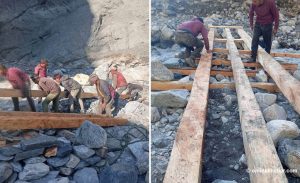
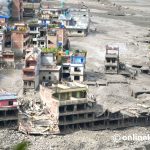
The NEA is also working to restore the 220 kV transmission infrastructure damaged by the Bhotekoshi floods.
A 220 kV transmission line running from the Chilime Hub through the 3B Hub towards the upper areas was damaged in the floods. However, Shrestha said rebuilding the 3 B Hub at its previous location immediately would not be possible.
The flood swept away the 3B Hub substation itself, he said, adding that a new substation will have to be constructed in the area. Since the NEA owns land in the Chilime area, the authority plans to build a new 3B Hub there.
The NEA also plans to use the Kulekhani reservoir as an important source of electricity during the winter. Shrestha said water storage at Kulekhani is currently sufficient.
The authority plans to manage winter demand through a combination of domestic generation, electricity imports from India, hydropower reservoirs such as Kulekhani, and improvements to the transmission and distribution network.
“Whatever it takes, our responsibility is to provide electricity to the public,” Shrestha said. “But providing electricity alone is not enough. We have to provide electricity that is reliable and of good quality.”