
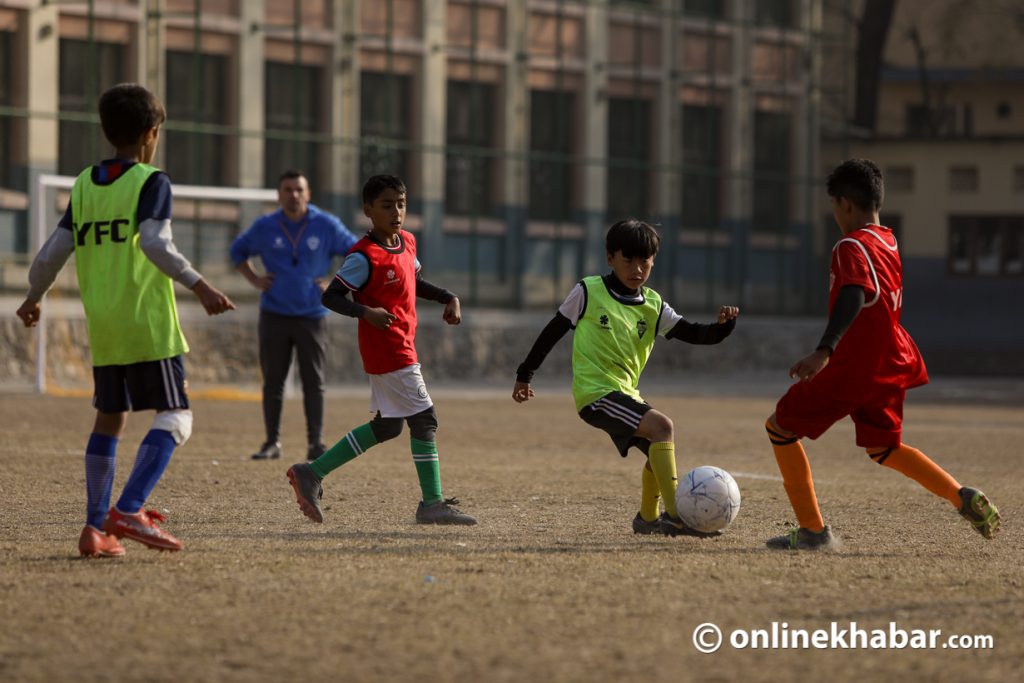
Play is the simplest, most natural, and most effective way to bring smiles to children’s faces while nurturing their creativity, confidence, social skills, and life competencies. Therefore, the International Day of Play, observed on June 11, is not just a commemorative day; it is an important opportunity to recognise the significance of play in children’s holistic development and to unite all stakeholders around this shared responsibility.
Today’s world is changing rapidly. Technological advancement has made our lives more convenient, but it has also introduced new challenges. Children are spending increasing amounts of time on mobile phones, tablets, televisions, and other digital devices. We often tell them, “Don’t use your phone too much” or “Go outside and play.” However, have we ever asked ourselves, “Am I spending enough quality time with my child?”
If we reflect on our own childhood, many of us grew up playing traditional games such as hide-and-seek, Dandi Biyo, Chungi, Gatta, Kabaddi, handkerchief games, tug-of-war, and many others. These games provided not only enjoyment but also valuable lessons in teamwork, discipline, leadership, rule-following, and essential life skills.
Today’s children deserve the same experiences because play is not merely entertainment; it is the foundation of learning. Research shows that nearly 80 percent of brain development occurs between birth and age 8. This is why Nepal’s national curriculum places special emphasis on play-based learning.
Many parents spend their days occupied with work, business, and various responsibilities. Even after returning home, much of their time is often spent on mobile phones, social media, or other digital platforms. During this time, children are constantly observing and learning from us. In reality, children are our mirrors; they learn by watching what we do.
Therefore, the most effective way to reduce children’s dependence on digital devices is to offer them our time, attention, and companionship. More than expensive toys, children need meaningful moments with their parents.
Children wait for our time and presence. As parents, we should dedicate at least 30 minutes a day to playing with our children, or set aside specific time each week. Families can sit together and plan which day, what time, and which games they will play. Small efforts can create significant positive change.
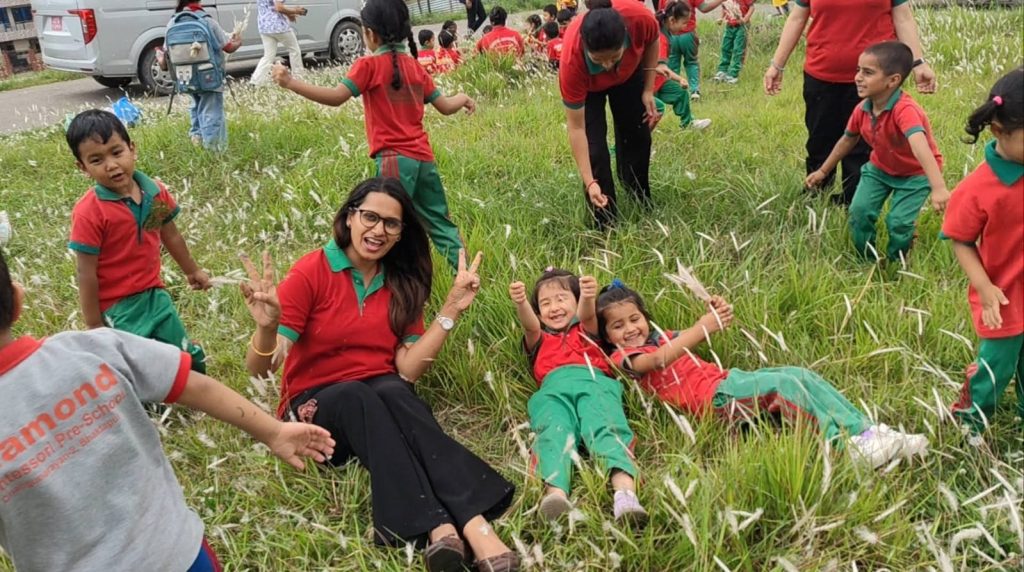
Nepal’s rich cultural heritage includes numerous traditional games such as Dandi Biyo, Kabaddi, Chungi, Gatta, Bagh Chal, hide-and-seek, handkerchief games, tug-of-war, hoop races, and Seven Stones. These games require neither expensive equipment nor sophisticated facilities. Local resources, open spaces, and friends are often all that is needed.
Such games help children develop cooperation, leadership, discipline, patience, problem-solving abilities, self-confidence, and social relationships. They also strengthen children’s connection to their culture and identity.
Play is not merely a physical activity. It is the language of children. Through play, children learn to understand the world, express emotions, accept both victory and defeat, and practice important values such as friendship, empathy, respect, and responsibility. Play builds not only healthy bodies but also healthy minds.
Schools play a vital role in this effort. A school is not only a place for academic learning; it is a centre for personality development. Teachers serve as guides and mentors. Therefore, play should be recognised as an integral part of the learning process. Schools should prioritise child-friendly environments, open-ended learning opportunities, and activities that utilise local resources.
Likewise, parents, teachers, school management committees, local governments, communities, and all stakeholders share a collective responsibility. Child development cannot be achieved by one group alone. When strong collaboration exists between home and school, children benefit from a safe, supportive, and inspiring environment.
We all share a common goal: to nurture responsible, creative, confident, and value-driven citizens. When all stakeholders work together toward this objective, stronger families, communities, districts, and nations are built. Sports education is a crucial foundation for the overall development of children’s personalities. It makes learning more effective, engaging, and practical.
Therefore, on this International Day of Play, I urge everyone to come together and take responsibility for the future of our children. Let us give them our time, play with them, listen to them, and strive to understand them. Let us strengthen collaboration between schools and families and revive our traditional play culture. Let us recognise play as a fundamental right of every child and a cornerstone of holistic development.
Let us set aside our mobile phones for a while and enter the world of children. Let us run with them, laugh with them, learn with them, and teach them. The time, love, and support we give children today will become the foundation of a better society tomorrow.
Let us play, learn, connect, and build the future together.