

Pokhara, September 23
Flydubai’s daily scheduled flights between Dubai and Pokhara have brought a fresh sense of optimism to Nepal’s third international airport.
But as the first regular international service begins, Pokhara also faces a question that has proved difficult for Gautam Buddha International Airport in Bhairahawa: how can an international airport attract airlines and, more importantly, keep them flying?
Under the Civil Aviation Authority of Nepal’s summer schedule, Flydubai has been approved to operate one flight a day on the Dubai-Pokhara-Dubai route from September 23 to October 24.
The service is the second scheduled international service to Pokhara by a foreign airline. Himalaya Airlines had previously operated regular flights to Lhasa, China, but withdrew the service after low passenger numbers made the route financially unsustainable.
That experience offers an early lesson for Pokhara. Getting an airline to operate a route is one thing. Generating enough passengers to keep it commercially viable is another.
Former Nepal Tourism Board chief executive officer Deepak Raj Joshi says sustaining international flights at a relatively new airport requires coordination between the government, airlines and tourism stakeholders.
“Airports cannot be sustained by the government alone, airlines alone or the private tourism sector alone,” he said. “Airlines need enough passengers to make their operations viable.”
What happened in Bhairahawa?
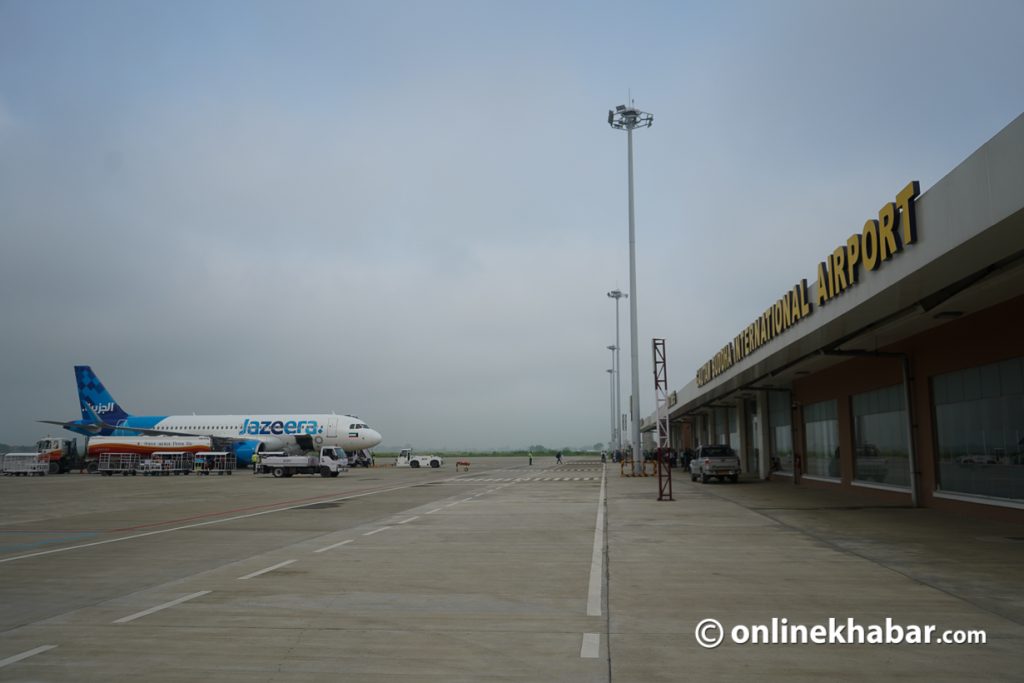
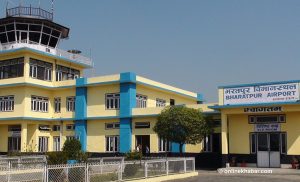
The experience of Gautam Buddha International Airport provides perhaps the clearest example of the challenge Pokhara now faces.
The Bhairahawa airport saw a sudden increase in international flights after maintenance work at Tribhuvan International Airport reduced its operating hours from November 2024.
International airlines, facing limited operating windows in Kathmandu, shifted some services to Gautam Buddha International Airport.
Flydubai, Jazeera Airways, Nepal Airlines, Qatar Airways and Thai AirAsia were among the airlines operating scheduled flights from Bhairahawa during that period.
The airport became busy and appeared to have finally found the international traffic it had been waiting for.
But the momentum did not last.
Once maintenance at Tribhuvan International Airport was completed in March, airlines returned to Kathmandu and the activity at Gautam Buddha declined again.
For Joshi, the episode demonstrates a basic problem: an airport cannot depend on circumstances that temporarily force airlines to use it.
“Foreign tourist arrivals need to be ensured for an airport to operate,” he said. “But that alone is not enough to provide airlines with sufficient occupancy. Domestic passenger demand also needs to increase.”
Bhairahawa has two major potential sources of passengers. It is close to Lumbini, which has the potential to attract Buddhist pilgrims and tourists from countries across Asia. It also serves a large population of Nepalis travelling abroad for employment.
Yet those potential passengers have not been sufficiently converted into sustained traffic, Joshi said.
The government could have used diplomatic channels to make it easier for migrant workers from western Nepal to complete labour, medical and other procedures without travelling to Kathmandu, he said.
The private sector, meanwhile, could have worked directly with airlines to generate tourist traffic.
The broader problem, according to Joshi, was a lack of coordinated effort.
The airspace problem
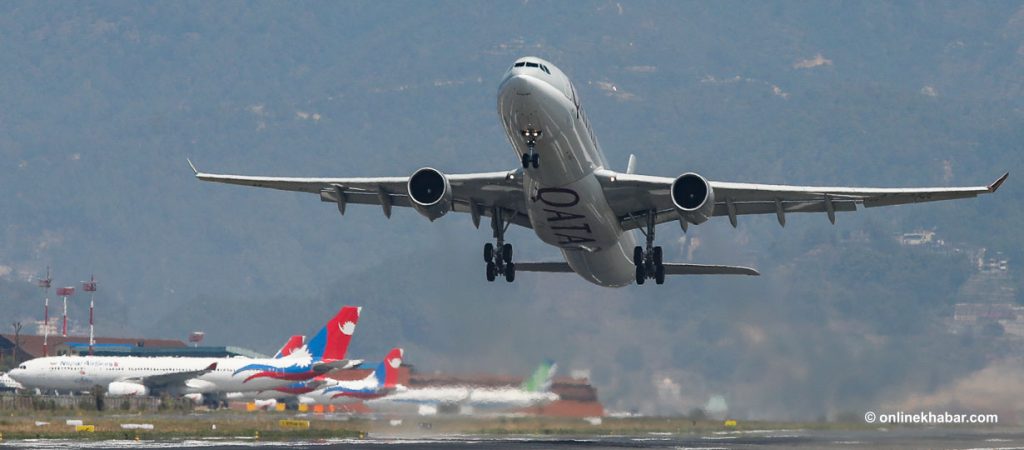
Bhairahawa also faced a problem that Pokhara does not face to the same extent: international flight routes and airspace access.
Former Civil Aviation Authority of Nepal deputy director general Devanand Upadhyay said repeated discussions between Nepal and India had not produced agreements on additional entry routes or sufficient facilitation for aircraft using Indian airspace during take-off and landing at Gautam Buddha International Airport.
Aircraft approaching Nepal from the west are largely required to enter through the Simara route. That creates an unusual situation for airlines flying towards Bhairahawa.
Even aircraft travelling close to the Nepal-India border on the western side may have to enter Nepal through Simara before heading back towards Bhairahawa.
“This increases the cost for airlines,” Upadhyay said. “Airlines do not want to take on that additional risk.”
He said allowing aircraft to enter Nepal through points such as Nepalgunj or Mahendranagar would make Bhairahawa more attractive to international carriers.
“Singapore-bound flights enter Malaysian airspace soon after take-off, but the two countries have facilitated this through agreements,” he said. “Nepal and India should also have reached such an agreement quickly.”
Unlike Bhairahawa, Pokhara does not face the same route and airspace constraints, according to Upadhyay.
That gives airlines operating from Pokhara a potential advantage. But easier airspace access alone will not guarantee the airport’s success.
Pokhara has another lesson to learn
There is another lesson from Bhairahawa: passengers need more than an airport.
Gautam Buddha International Airport has the infrastructure to handle the types of international flights operating from Kathmandu. But connecting the airport to its potential passenger base has remained a challenge.
Road connectivity was particularly poor when efforts were being made to increase flights to Bhairahawa.
The Butwal-Narayangadh road was in poor condition, while traffic jams around Daunne could last five or six hours.
“If someone lands in Bhairahawa and then has to travel to Jhapa, how much difficulty will that person face?” Upadhyay asked.
For Pokhara, he said, reliable and safe road connections with other parts of the country will be important if international flights are to be sustained.
That means the success of Flydubai’s Pokhara service will not depend only on what happens at Pokhara International Airport.
It will also depend on how easily passengers from other parts of Nepal can reach the city.
Pokhara already has one advantage
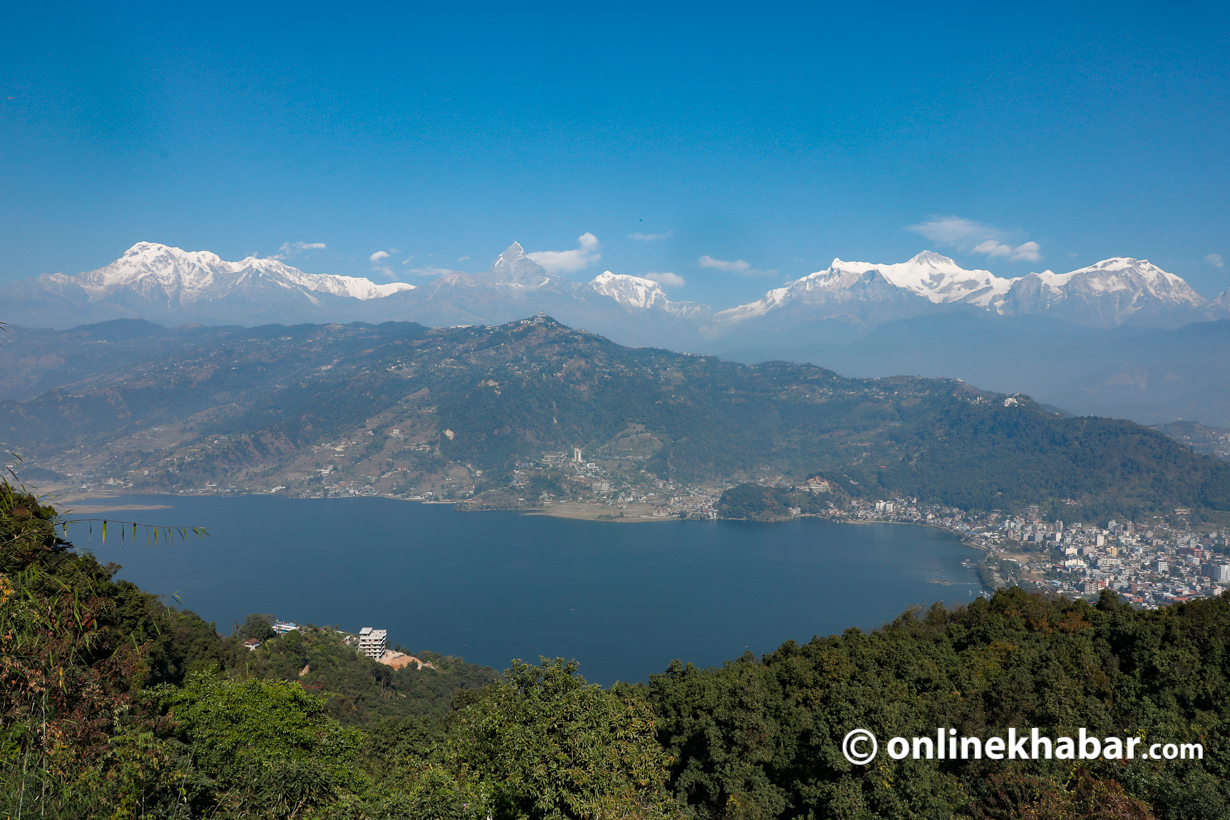
Pokhara has, however, demonstrated that there is international demand for the destination.
Before the launch of scheduled Flydubai flights, the city received more than two dozen charter flights operated by Sichuan Airlines from China.
There have also been charter flights from Bhutan.
These services were facilitated through cooperation between airlines, the private sector and local government.
For tourism stakeholders, that experience offers a possible model for attracting more international flights.
Joshi says the Nepal Tourism Board should incorporate both Pokhara and Bhairahawa airports into its international tourism promotion rather than promoting the destinations alone.
“We cannot simply promote Pokhara anymore. We also need to promote Pokhara International Airport,” he said. “When the private sector is enthusiastic, the state needs to work alongside it.”
Can Dubai make the difference?
Flydubai’s route gives Pokhara something that previous services did not have to the same extent: direct access to Dubai, one of the world’s major aviation hubs.
Dubai also has a large South Asian population and serves as a transit point for passengers travelling to destinations beyond the UAE.
That gives the Pokhara-Dubai route the possibility of drawing passengers not only from the UAE but also from other international markets.
But that potential will have to translate into actual passengers.
The airline’s current approval covers daily flights from September 23 to October 24. The longer-term question is whether passenger demand will be strong enough for the service to continue beyond the initial period.
Joshi believes the government should consider appropriate incentives to help airlines establish and sustain international routes during their early stages.
A successful route could also help demonstrate demand to other airlines and create conditions for additional international connections.
The services passengers need
Upadhyay says Pokhara has an advantage over Bhairahawa when it comes to international routes and airspace.
But he stresses that the airport must be supported by services that make international travel genuinely convenient.
“If passengers flying from Pokhara to Dubai are still required to travel to Kathmandu to complete other documentation, the effort will not be sustainable,” he said.
That, he argues, is one of the key lessons Pokhara should take from Bhairahawa.
An international airport cannot be sustained simply by building a runway, opening a terminal or persuading an airline to operate a route.
It needs passengers, tourism promotion, road connectivity, convenient government services, airline cooperation and private-sector participation.
Flydubai’s arrival therefore gives Pokhara an opportunity. But the experience of Gautam Buddha International Airport shows that the real test begins after the first aircraft lands.
For Pokhara, the challenge is no longer simply getting international flights.
It is making sure there are enough reasons — and enough passengers — for those flights to keep coming.