

On 24 February 2022, one breaking news story dominated television channels, radio stations and news websites around the world. Russia has launched an invasion of Ukraine.
Hundreds of kilometres away, the news sent shockwaves through Nepali communities across Europe. Phones began ringing almost immediately.
Nepali students and workers trapped in Ukrainian cities were frightened. Some were desperate to get home. Others were already moving towards the borders, unsure where they could go or how they would get there safely. Amid the sound of bombs over Ukrainian cities, one question kept returning.
Where do we go now? How do we survive?
At the time, Jaya Prasad Siwakoti, originally from Panchthar in eastern Nepal, was living in Bratislava, the capital of Slovakia. Then his phone began ringing repeatedly. The people on the other end were Nepalis stranded in Ukraine.
“We are stuck. Is there anyone who can rescue us?”
Their voices stayed with Siwakoti.
He had his own business and his own responsibilities, but suddenly those seemed less important. Slovakia shared a border with Ukraine, and he felt that living so close to the unfolding crisis gave him a responsibility to act.
He did not yet know how. But he decided to try.
The first journey to the border
“I was confused,” Siwakoti recalls. “What should I do? How many Nepalis were there in the war zone? What condition were they in?”
The calls began coming in from around 11am.
Many were from relatives living outside Nepal, asking him to help family members trapped in Ukraine.
“They called with hope,” he says. “But I had no answers. Should I say I could help or that I couldn’t?”
Then four or five calls came one after another.
“That was when I thought, this can’t continue like this.”
Siwakoti contacted Ram Kaji Khadka, who was then Nepal’s ambassador to Germany. Khadka told him to go ahead.
A volunteer rescue team began taking shape, bringing together Nepalis and volunteers based in several countries.
Nepalis inside Ukraine started contacting the team directly. They were given information and guidance on possible routes out of the country.
By February 26, many of those trying to escape had reached the borders with Poland and Slovakia.
But the situation at the Polish border was becoming increasingly chaotic. Large crowds were gathering, and confusion and fear were spreading.
Some began looking for another route. Slovakia became the alternative.
Siwakoti was able to contact organisations including Human Rights groups and the International Organization for Migration because of his previous experience working in the health sector in both Nepal and Slovakia.
That network soon proved crucial.
On the evening of February 26, the first eight Nepalis managed to cross into Slovakia.
At that stage, the border was primarily being opened for Ukrainian citizens. The eight were placed in shelter provided by the International Organization for Migration. The following day, February 27, Siwakoti called them.
“Come to Bratislava. I’ll receive you.”
They travelled by train from about 600 kilometres away.
“They came simply because they trusted that I was here and that they had my contact,” he says.
A restaurant becomes a home
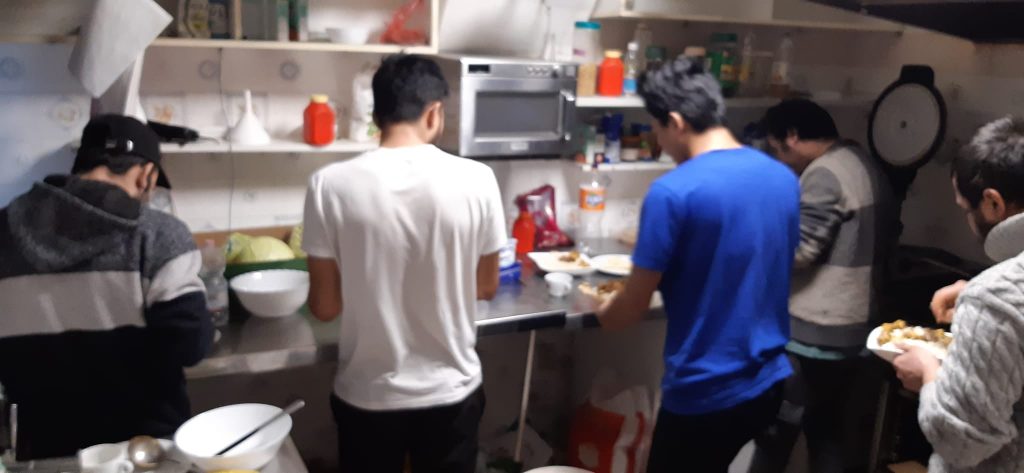
On the morning of February 27, the first group of eight Nepalis arrived in Bratislava. There was a woman among them. Siwakoti took them to the Nepal Restaurant, the business he was running.
“There was no other option at the time,” he recalls.
The restaurant normally opened at 11am. They arrived shortly before 9am. The kitchen was still closed, but the dining area was warm. Siwakoti made tea himself and served it to the exhausted travellers. Then something happened that he still remembers vividly. As they talked, some of them suddenly fell asleep in their chairs.
“They had escaped the war and finally entered a safe place,” he says. “It felt as though they could finally relax enough to sleep.”
He made a decision. The restaurant would not just help them that day. It would become a rescue centre.
At first, the exhausted travellers used cushions from the chairs as pillows. Siwakoti brought mattresses from his own furniture business and laid them out so they could sleep properly.
“They had walked through forests to reach the border,” he says. “They were exhausted.”
More groups were on their way.
Siwakoti soon found himself trying to manage three things at once — looking after those already in the restaurant, preparing for incoming groups and answering a steady stream of calls from Nepalis still trapped in different parts of Ukraine.
So he formalised the restaurant as a rescue centre.
Those who arrived were given a place to rest. But there was another idea behind the arrangement. When a new group arrived, those who had already been through the journey could help them.
The restaurant had only two toilets and no proper bathroom. But Siwakoti arranged first-aid supplies, essential items for women and Wi-Fi.
“At least I wanted to create an environment where they could stay comfortably for two nights,” he says. “I thought being able to contact their families would also give them some mental relief.”
The restaurant had become something very different from the business it had been only days earlier.
For people who had crossed a war zone, it was a temporary home.
When the border became another source of fear
Not everyone who tried to leave Ukraine initially headed towards Slovakia.
Around the seventh or eighth day of the war, some Nepalis reached the Polish border. But what they found there was frightening.
The crowds were growing. People were pushing and struggling to get through.
Then, according to the Nepalis who later told Siwakoti what happened, unfamiliar people suddenly began firing shots and looting started amid the crowd.
“According to the Nepalis, some unknown people fired shots and started looting,” Siwakoti says. “The border itself had become another scene of terror.”
Those who had gone there hoping to enter Poland were forced to turn back. They abandoned that route and eventually headed towards Slovakia. But the journey was still far from safe.
“One group of around 22 to 25 people had travelled together,” Siwakoti says. “But only 13 eventually got in touch with me. We didn’t know what had happened to the others.”
They spent two days travelling through forests.
They moved at night, afraid of what might happen in the darkness and uncertain of whom they could trust.
“They told us very painful stories,” Siwakoti says. “They had to spend nights in the forest, moving forward while worrying about whether someone might shoot at them or rob them.”
When they finally reached his restaurant, the relief was palpable. For Siwakoti, giving them somewhere safe to sleep was one of the few things he could do.
Building a rescue network
By February 29, Siwakoti realised that the rescue effort needed something more organised. He developed what he called a “chain information system”. His idea was simple.
If groups travelling through different parts of Europe could communicate directly with one another, information could move faster and the rescue effort would become easier to manage.
He connected Nepalis staying at his restaurant with groups that had already reached Portugal or France.
Those groups were then connected with people crossing the border.
The people crossing the border were linked with Nepalis still trapped in Kyiv and other parts of Ukraine.
A network began to form.
“I created a system like a chain,” Siwakoti says. “It made it easier for people to help one another.”
The system reduced the pressure on the small team coordinating the rescue.
Each group could guide the next.
Another team was then formed to help manage Nepalis who had reached different European countries.
Siwakoti and his colleagues held discussions with Nepali associations and diplomatic representatives in five countries.
The aim was to make sure people arriving from the war zone received reliable information and practical advice.
The network eventually helped Nepalis travelling towards countries including Portugal, France and Spain.
“It helped people who had just come out of the war get the right information and advice,” Siwakoti says.
On February 27, 2022, the Nepal Restaurant had officially become a rescue centre.
For the whole of March, Siwakoti closed the restaurant and devoted himself to the rescue effort.
By the final week of March, the number of arrivals had begun to fall.
Only two or three people were arriving each day.
“They would eat and leave,” he says. “They didn’t want to stay. They just wanted to continue on their journey.”
The additional accommodation arranged with the help of the International Organization for Migration was eventually closed as well.
On 1 April, the Nepal Restaurant reopened. Siwakoti returned to his business. But the experience had left its mark.
More than a place to sleep
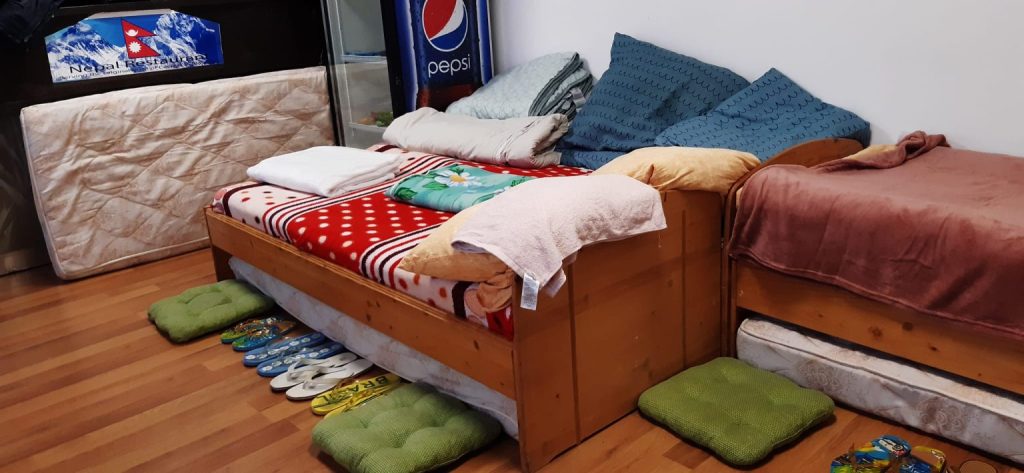
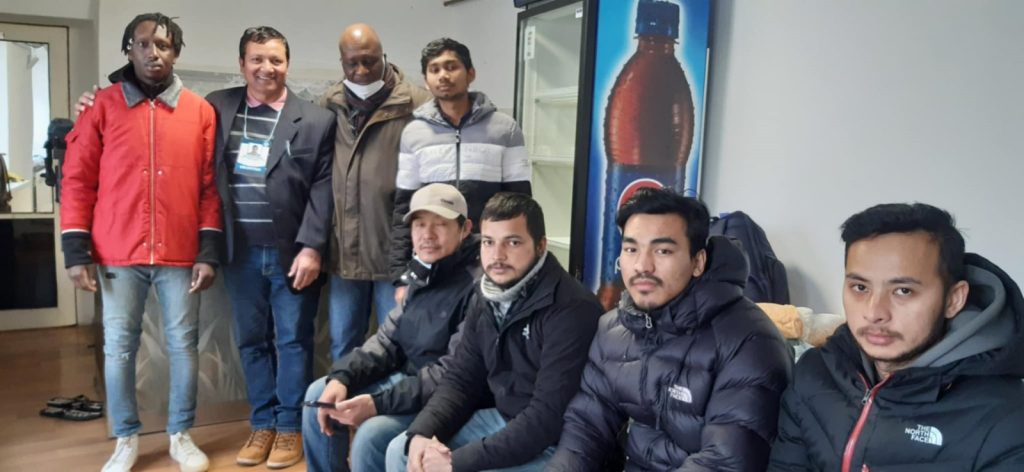
During the rescue operation, the restaurant sheltered not only Nepalis but people from other countries as well.
Around 15 foreign migrants, including Indians, Bangladeshis and Senegalese, also found temporary refuge there.
Siwakoti helped move 78 Nepalis from his restaurant to another accommodation facility and kept a record of all of them.
More than 100 others spent nights at the restaurant before continuing their journeys.
He did not keep records of everyone who passed through. But he remembers their faces.
“I still feel as though all of this happened in a dream,” he says.
“When they arrived, some were afraid even to speak. But after staying for two nights, they would rest their heads on my shoulder and talk comfortably. When I took them outside and said goodbye, it was very difficult for me.”
Many stayed in touch for months. Some continued calling for as long as six months. But, over time, those connections faded.
“Ninety-five per cent have changed their phone numbers,” he says. “Many no longer use their old Facebook accounts. I don’t have contact with most of them now.”
Some, however, still remember. And occasionally, they call.
The rescue ended. The problems did not.
Once the immediate rescue effort was over, Siwakoti returned to running his business.
But he soon realised that helping people escape the war had solved only one part of a much larger problem.
Nepalis living in Slovakia were facing difficulties of their own.
There is no reliable official figure for how many Nepalis currently live in Slovakia, he says.
Siwakoti estimates the number at around 1,000, with many living without proper documentation.
Many come from central and western Nepal.
They typically work in car factories, hospital cleaning services and agriculture.
But finding stable work is not always easy.
“About 40 per cent of the Nepalis who come here are unemployed,” he says.
A common route is to pay a large sum of money in Nepal for a one-year work contract.
But when that contract expires, problems can begin if the company does not renew it or provide continued documentation.
Some do not want to return to Nepal.
They try to move to another European country or end up living in Slovakia without legal status.
A few months ago, Siwakoti says, a Nepali who had arrived from Cyprus died in Slovakia.
“He didn’t have proper documents here,” he recalls. “We somehow managed to arrange for his body to be taken care of.”
The episode underlined a problem that Siwakoti believes is still poorly understood in Nepal.
He continues to contact companies in Slovakia and try to find jobs for Nepalis.
But he is concerned about the way migration to Slovakia is being promoted in Nepal.
“People are being told there is a huge demand for workers here without properly understanding the reality,” he says. “It is still not clear where the problem lies.”
From emergency rescue to a longer responsibility
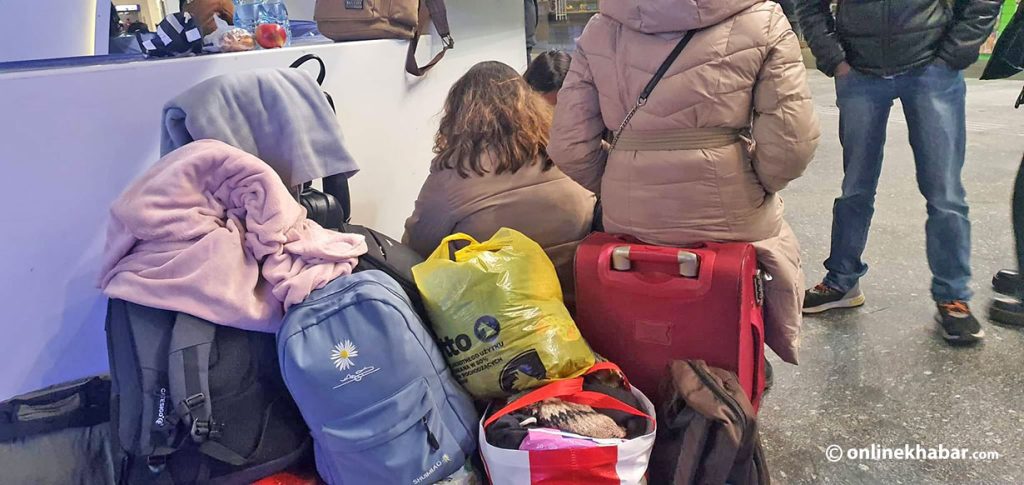
The Ukraine war forced Siwakoti into a role he had never planned to take.
His restaurant became a shelter.
His phone became a lifeline.
And a network built almost spontaneously became a way for hundreds of people to find information, accommodation and a route to safety.
But the experience also exposed the deeper vulnerabilities faced by Nepalis who migrate to Europe in search of work.
Today, Siwakoti is also leading the Non-Resident Nepali Association in Slovakia.
He has formally registered the NRNA in Slovakia, creating a legal and organisational platform through which he hopes to address the longer-term problems facing Nepalis there.
The war may have moved out of the restaurant.
The mattresses have been put away. The kitchen has reopened. The tables once again serve customers rather than exhausted travellers arriving from a war zone.
But for Siwakoti, the responsibility that began with a phone call on 24 February 2022 has not entirely ended.
The emergency was temporary.
The questions it revealed — about migration, legal status, employment and the safety of Nepalis abroad — remain.