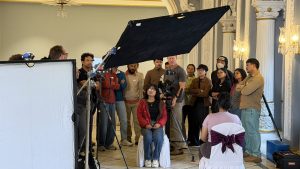


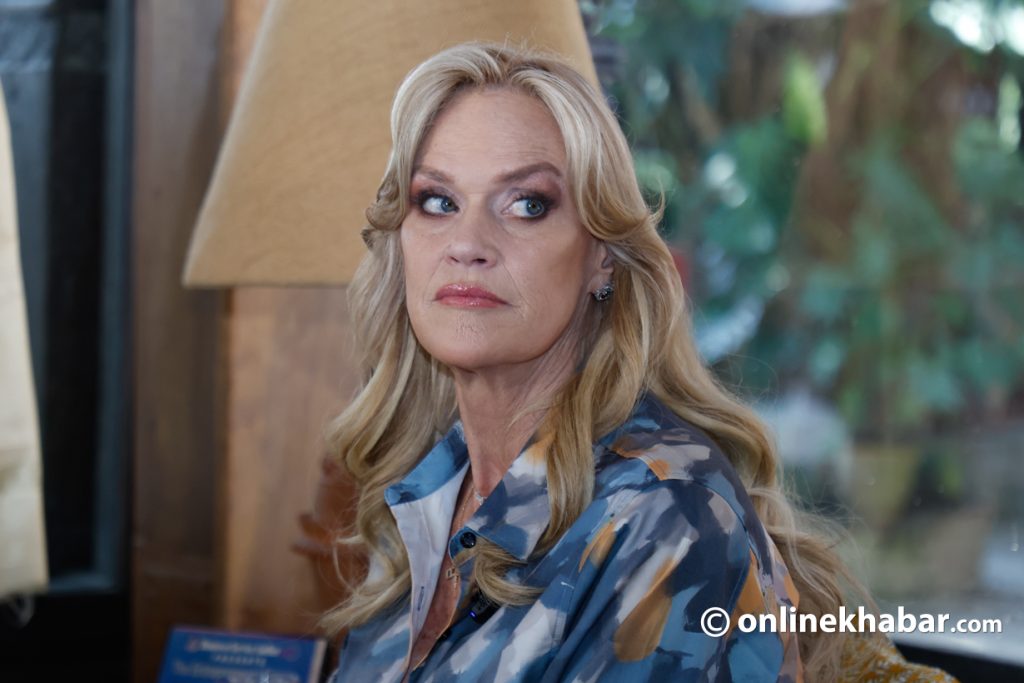
American philanthropist Kym Rapier, Founder of the Kym Rapier Foundation, is currently in Nepal with her team for the first time. With over two decades of social work experience, Rapier focuses on empowering underfunded, community-led initiatives rather than top-heavy organisations.
Onlinekhabar spoke with Rapier about her lifelong journey in giving, the purpose behind her visit to Nepal, and how international donors can better support local communities.
Excerpts:
Firstly, could you share the primary purpose behind your visit to Nepal?
About 15 years ago, my dentist in Montana began telling me about the challenges children in Nepal face in accessing education, getting to school, funding their studies, and pursuing primary, secondary, and university education. He had helped establish schools here. We planned this trip to visit those schools, assess how we can help improve them, and explore how our foundation can offer long-term support to Nepali children.
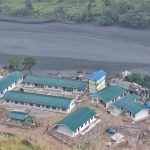
As part of this trip, we already visited a school based in Helambu and have decided to support its infrastructure development.
You have been involved in philanthropy for over two decades. What first motivated you to step into social work?
It actually started when I was six years old. My friend was diagnosed with muscular dystrophy, and I started fundraising to help her get doctor’s appointments and support. Even with the innocence of a child, I believed I could make a difference in her life, and I did. That early experience stayed with me, and I knew as I grew up that I wanted to keep helping people for the rest of my life.
Through your foundation, you focus heavily on grassroots support. Why is working with locally led organisations so important to you?
Going to communities, meeting people face-to-face, and directly listening to their problems is essential. Many grassroots organisations are underfunded; they aren’t big groups that spend huge amounts of money on overhead. They know what works, but they just need resources. Needs vary from community to community based on culture, religion, and local dynamics. You cannot simply duplicate solutions from one place to another; you have to support what specifically works for that local community.
How do you ensure accountability and transparency in the organisations you support?
Accountability and transparency are very important to us. Before supporting an organisation, we take the time to understand their work, how funds will be used, and the impact they hope to achieve. We stay in communication, ask for updates and reporting, and whenever possible, visit the programs ourselves. For us, it’s about building trusted partnerships and making sure our support is creating meaningful impact.
Philanthropists are sometimes criticised for providing short-term relief without addressing root causes. How do you ensure your projects create lasting, sustainable change?
We go in directly to speak with community members and leaders to understand their long-term needs. Sustainable change comes from supporting areas like education and child welfare. Local leaders already know what solutions are required; our role as a foundation is to listen, identify those needs, and allocate the necessary resources so local communities can drive their own progress.
What do you think international donors often misunderstand about communities in developing nations?
Many international donors fail to identify the real, ground-level needs. They overlook the fact that a strategy that works in one location won’t necessarily work in another. Every country has unique cultural and contextual differences. Understanding and respecting what works for a specific community is always the best approach.
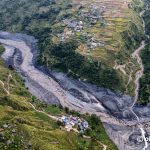
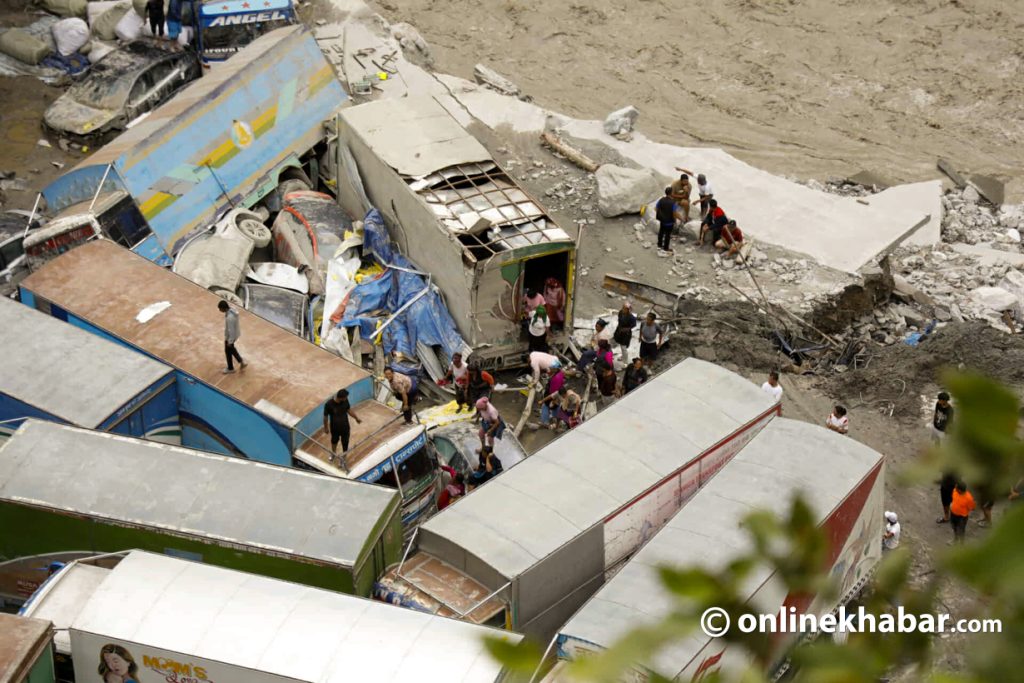
Nepal was recently hit by severe flooding. As a humanitarian, what goes through your mind when a disaster of this scale hits, and what can organisations learn about long-term preparedness?
My immediate thought goes to the basic survival needs of the affected people: shelter, hospital care, clean water, and food. Disasters underline the need for resources, government foresight, and unified coordination.
Everyone must come together to assess the real ground needs and prepare communities before the next disaster strikes.
Given your foundation’s focus on children’s support, how do you plan to address the challenges faced by children displaced or orphaned by the floods?
Our priority is to help support displaced children and get them back into schools. However, as a foundation visiting Nepal for the first time, we are being very cautious not to jump in with assumed solutions. We are consulting with well-established local partners on the ground who understand the immediate relief and hospital rescue efforts to see exactly where our support can be most meaningful.