
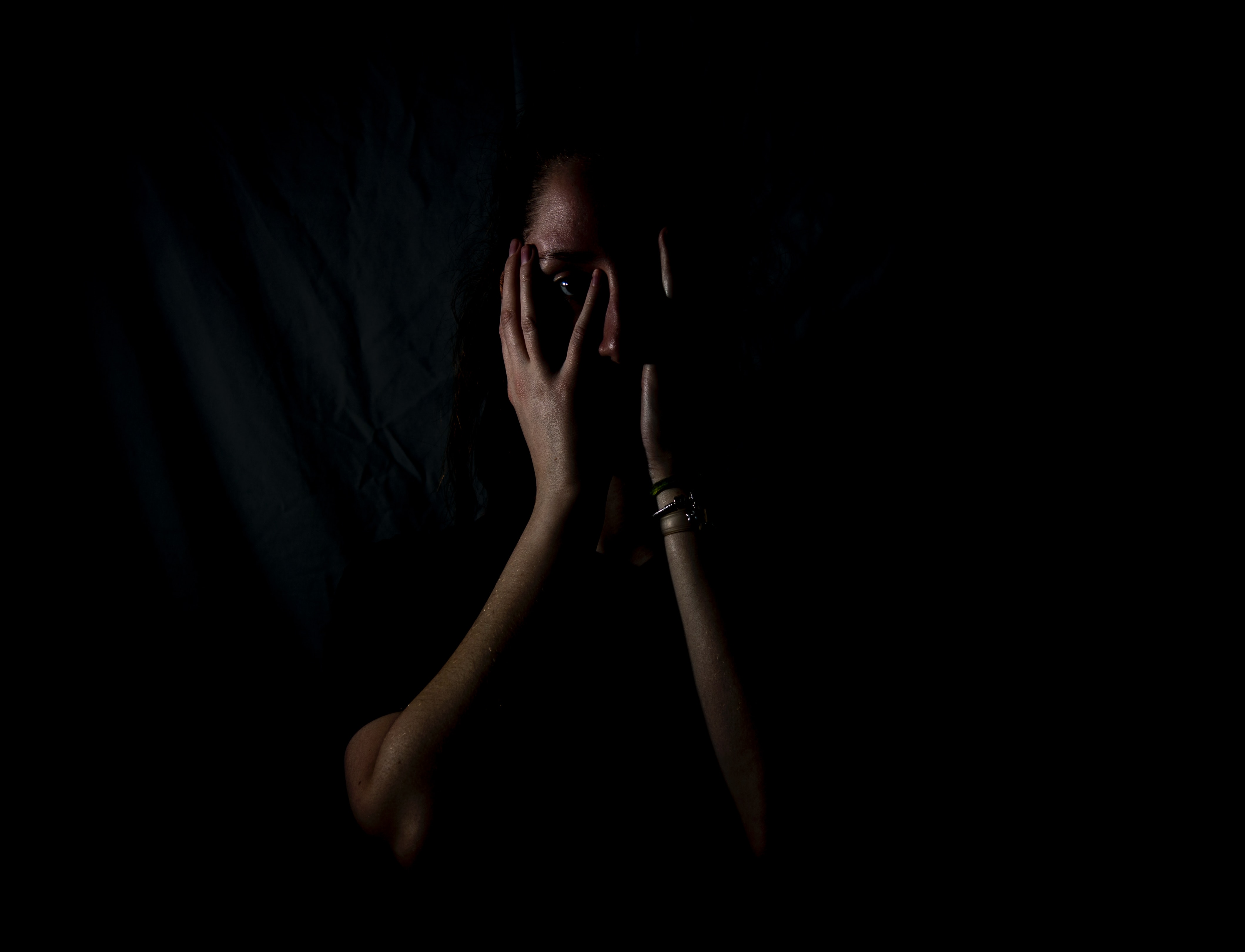
As I’ve grown older, my fear of the police has gradually lessened, but still I sometimes feel it hasn’t completely disappeared. It emerged with the threatening note I used to get when young, “I will tell the police if you do this? Never thought of asking what the police would do, but having a policeman upright in their crisp uniform was enough for me to fear them. Another fear, particularly among certain types of people, such as those who appear rugged, wear black, or have an intimidating presence, still lingers. It could have started from noticing the jogis around Shivaratri. Moreover, my mom would be telling me, “Stay away, they will hypnotise and take you away in a sack”. I never checked whether they were able to hypnotise me or not, nor do I want to try either, yet the fear is something I have been exploring in my therapy, realising that it’s high time I confront and work through it. And I am aware that either I absorbed myself, or society injected me.
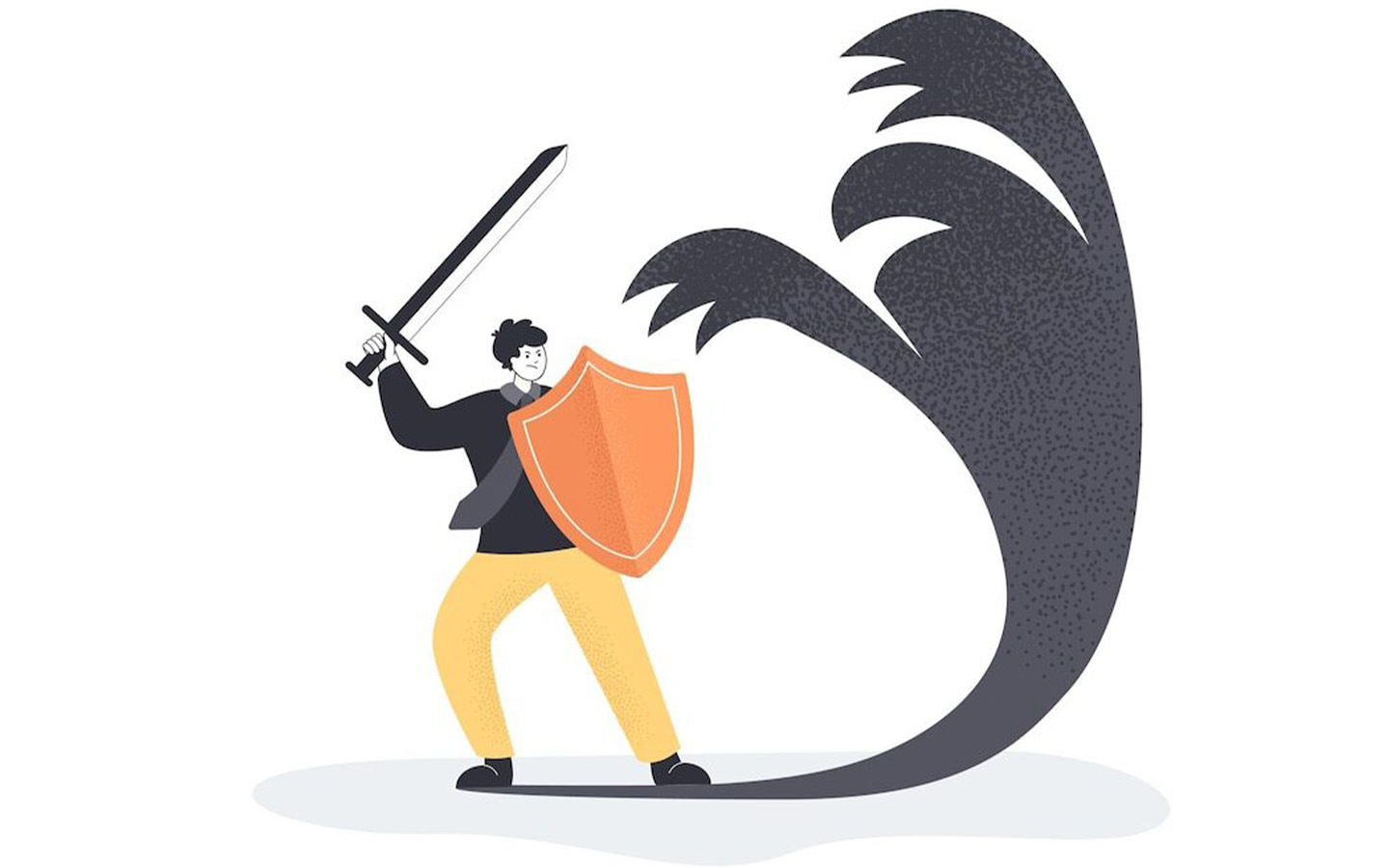
As I went deeper into it, I became more aware of the existence and pervasiveness of fear in Nepali society. I came to a realisation that we are a really fearful society, and another polarisation of us is to get into extremism. Either we are so brave that we go and fight like maniacs, destroying everything on its blind side, or we are so fearful that we just stay quiet or stay behind someone, a group, or at times the screen keeps up with pseudonyms.
Fear is not explored in isolation; it is associated with other feelings and emotions like shame, guilt, regret, insecurities, etc., the feelings hidden mostly unless explored. The avoidance and reluctance are labelled as fear. The fear is associated with anxiety and stress-related disorders. Although fear is primarily future-oriented, past experiences may resurface as recurring thoughts that reinforce “what if” thinking.
Nepali society fears a lot. Students fear their teachers, the consequences of any unwanted behaviour, speaking out, or being alone. They suppress themselves so they would have friends and not end up being alone. So they would have a friend to talk to, and be suppressed due to fear of ridicule or bullying, and many more. In a relationship, the couple fears a breakup. As a result, the couple may start giving in too much or giving up altogether. Guided by social media, the couple may fear they will not have an ideal relationship and stop working toward connection. Among the elderly, fear of loneliness, fear of not being cared for, and fear of giving so much to the next generation without receiving support in return exist intensely.
People in different professions have fear deeply embedded in their workplace. Many of them fear not getting promoted, missing out on the travel package, or failing to land their designation. In trying to manage these fears, many of them jeopardised their relationships, friendships, and personal connections and network. They are left with lifelong guilt and regret.
Psychologists Tangney and Dearing noted in their 2002 work on shame and guilt that these emotions are deeply tangled and provocative to both tangible and intangible inner responses or reactions. The primary of fear dwells in the anticipation of negative consequences or rejection. A sense of being flawed, incompetent, or insecure generates shame in human beings, whereas unwanted or unexpected behaviours that disrupt personal, social, or moral norms lead to guilt. Therefore, these emotions somehow play a critical role in bringing noticeable symptoms of withdrawal, apology, and avoidance, as well as subtle ways of self-censorship, people pleasing, and other forms of agony in human beings.
Moreover, these unexplored patterns function in context. Social emotions, dynamics, and the individual’s response and reaction to others, both online and offline, are referenced in context. It shows how increased exposure to technology is shaping a materialistic, objectifying mindset and how it is gradually distancing society from subjective emotional awareness.
On the glamorous side of social media, the fearless and uninhibited content creators fear losing views, likes, and acknowledgement. The possibility of monetisation has heightened fears of failing to meet platform requirements, with creators anxious about missing the spotlight or eligibility to earn. The result is aggressive and impulsive behaviour, difficult for society to accept. and on the other side of this spectrum, the people are very much struggling with insecurities, low self- esteem, unassertiveness, bullying, and others.
In politics, fear often wears the crown; it quietly shapes and influences right or wrong. rarely showing its face openly, instead hiding behind masks of strategy, morality, or strength. We see it in the fear of losing power, status, influence, followers, or legacy. In one form or another, fear sits at the centre of much leadership behaviour.
The writer and neuroscientist Joseph LeDoux, in his book “Anxious” (2015), talks about it as fear is not just an emotion or feeling; it is a survival system that forces us to act out differently. Every time the brain’s amygdala notices a threat, it reacts automatically, even when the danger is social or symbolic rather than physical. A loss of reputation, authority, or control can trigger the same distress signal as a real threat; it pushes individuals toward either bold action or unbending defensiveness.
This dynamic was evident in recent Gen Z–led protests as well as during the Special General Convention of the Nepali Congress. Although the fears differed in nature and origin, and may have seemed irrational to some, they triggered significant disruption and ultimately caused a split in one of the oldest democratic parties.
From an evolutionary perspective, human beings are wired to be vigilant of uncertainty. Psychologist Arne Öhman has stated about this fearful behaviour and associates it especially with the inability to cope with the unknown, in his book, Fear and Anxiety (2008). This theory explains why political change often feels intimidating before it feels hopeful, a phenomenon clearly visible in Nepali politics. Losing influence over followers can be a major source of fear. This fear—of losing privileges, influence, attention, or public recognition—is deeply rooted in human nature, reflecting our natural desire for security and status. Our thinking patterns add another layer. We humans, are more sensitive to losses than gains. Thus, whenever new leadership, ideologies, or reforms appear, resistance naturally arises. This resistance does not happen by chance; there is a strong logic behind it—and that logic is fear.
We are deeply afraid of losing status, power, security, and control. This fear not only exists at the individual level but also destabilises group identity. It stems from both the communal mindset and cultural practices. When beliefs, norms, or loyalties feel at risk, fear emerges quickly, and when people are unable to cope, they often cling to familiar leaders or systems. It’s not because these leaders are the best, but because with them, people feel safe. A clear example of this behaviour is the persistence of unchanged leadership in democratic parties, such as CPN-UML, Nepali Congress, CPN-MC, and others.
Though fear is very much embodied without life, yet the constant undercurrent for some turns into chronic anxiety, panic disorder, or severe emotional exhaustion. Fear looks to the future, yet it remains weighed down by the past. Shame, guilt, and regret frequently pass under the veil of fear, influencing everyday decisions and behaviours, often without the individual’s awareness. Perhaps that is why fear is something we live with every day, yet struggle so deeply to talk about. It is powerful, familiar, and often unspoken, guiding both our politics and our inner lives.
Though fear is never only personal and is deeply collective, it also shapes our priorities, keeps us alert, and can even bring positive shifts. Yet, fear of positive change is rarely observed; instead, we often continue to fear what we might lose or what we might never have.