Kathmandu, September 6
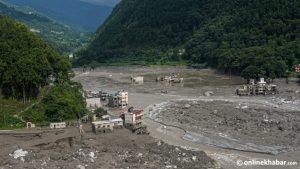
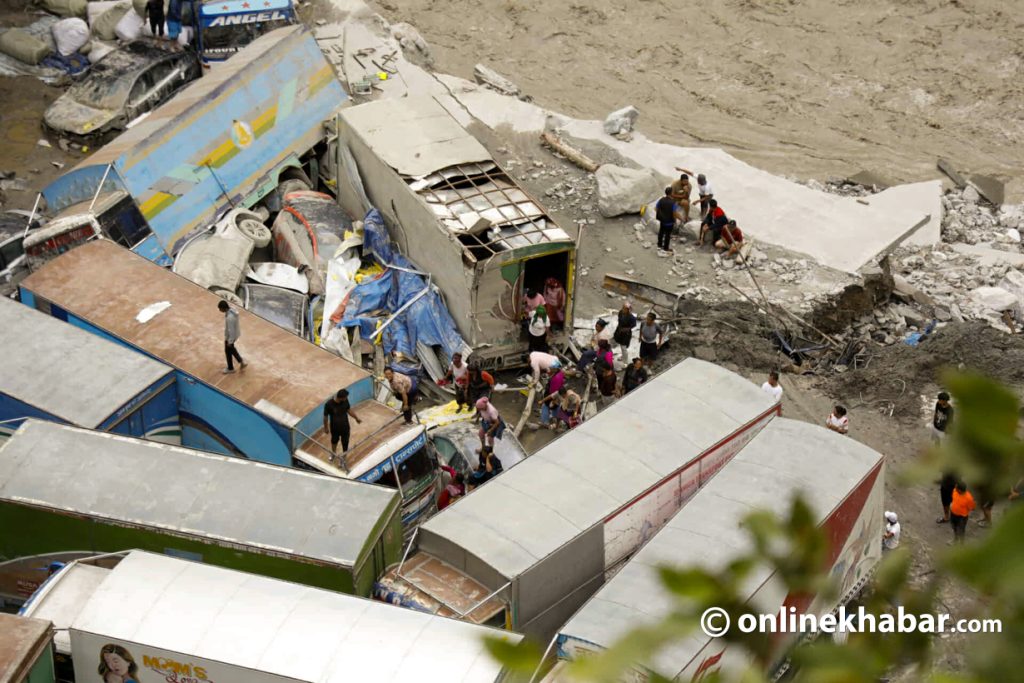
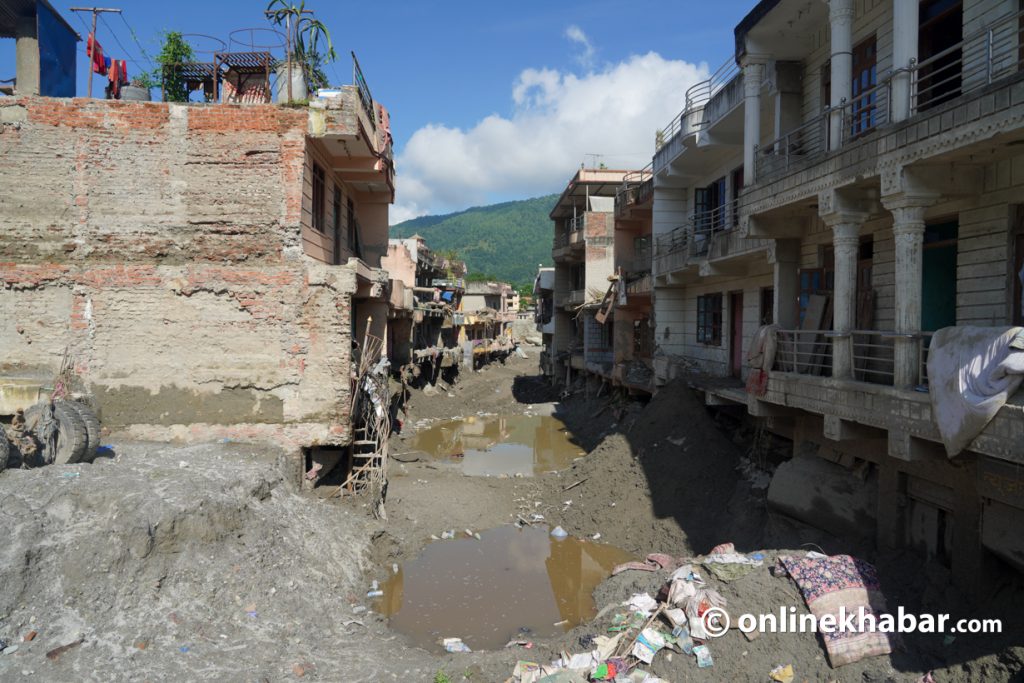
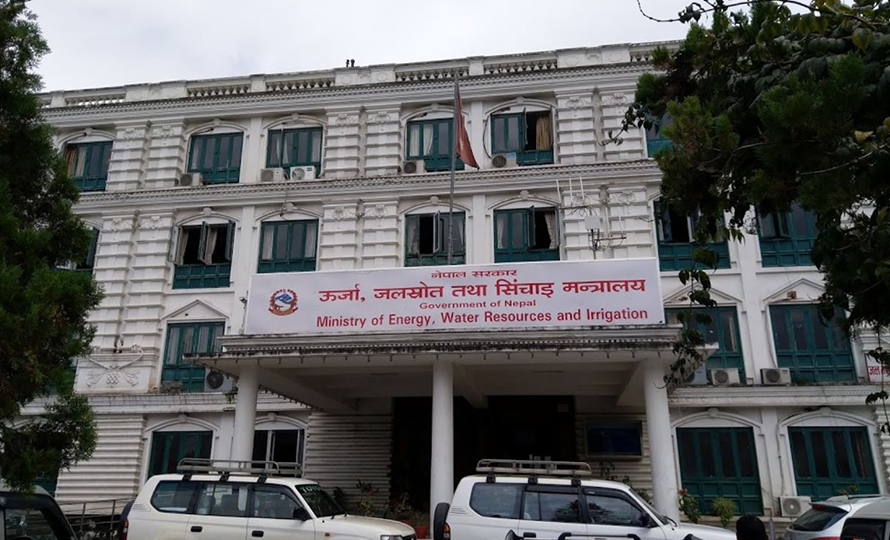
The Ministry of Energy, Water Resources and Irrigation has been carrying out the search and rescue of workers trapped or missing at hydropower projects alongside efforts to restore electricity supply and rebuild infrastructure damaged by the devastating Bhotekoshi flood in Rasuwa.
The flood caused extensive damage to hydropower projects, transmission structures and electricity supply systems in Rasuwa, Nuwakot, Dhading and other districts.
The ministry has formed a high-level management mechanism (SMT) to coordinate the response. The mechanism includes the ministry secretary, heads of departments and divisions, and senior officials from the Nepal Electricity Authority.
The mechanism is coordinating rescue, relief, restoration of electricity services and management of damage caused by the disaster.
Since the day of the flood, the ministry has been maintaining records of the condition of affected hydropower projects, missing employees and workers, equipment deployed for rescue operations and progress made at different sites.
It has now begun developing a real-time update system to provide an integrated picture of rescue and restoration efforts.
The system will allow authorities to monitor which projects are being worked on, what equipment has been deployed and the status of rescue operations in real time, according to the ministry.
Rescue operations continue at hydropower projects

The ministry is coordinating with the Home Ministry, National Disaster Risk Reduction and Management Authority, Nepal Army and other security agencies for rescue operations.
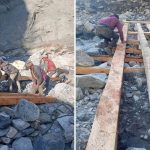
Technical personnel, excavators, drilling machines, vehicles and other equipment have been deployed at affected hydropower projects.
According to the ministry, the Nepal Army has so far rescued around 350 workers and local residents, including 25 workers trapped inside the tunnel of the Langtang Bhotekoshi Hydropower Project and people trapped in the tunnel of the Upper Trishuli-1 project.
However, the search for people still missing inside tunnels and underground structures at several hydropower projects remains challenging.
At the Rasuwagadhi Hydropower Project, the ministry is coordinating rescue efforts with the Nepal Army.
According to the project, an Army team reached the powerhouse area in four helicopters on Bhadra 20 with necessary equipment and began removing debris and searching the transformer cavern and different sections of the powerhouse.
However, the operation has so far failed to establish the whereabouts of the missing employees.
Electricity restoration also underway
Alongside rescue efforts, the ministry has prioritised restoring electricity supply to areas affected by the disaster.
Electricity has already been restored to around 90 percent of Nuwakot, while work is continuing to restore services in Rasuwa.
Alternative energy systems are also being arranged for remote and high-risk areas where power lines have been damaged, particularly to address immediate lighting and communication needs.
The ministry said it had initiated the process of sending institutional solar systems with a capacity of 2 kW and 500 solar sets of 20 watts each to affected areas.
More than 400 MW of supply affected
The flood affected more than 400 megawatts of electricity supply, equivalent to around 10 percent of the country’s supply, according to the ministry.
This has created a dual challenge for the government: restoring electricity services in the short term and repairing and rebuilding damaged energy infrastructure over the longer term.
The ministry is updating information on employees and workers at affected projects in coordination with project managers, the Independent Power Producers’ Association, Nepal (IPPAN), and Nepal Electricity Authority representatives.
To make night-time search and rescue operations more effective, 200 headlamps and 900 batteries have also been provided to security personnel.
Detailed damage assessment planned
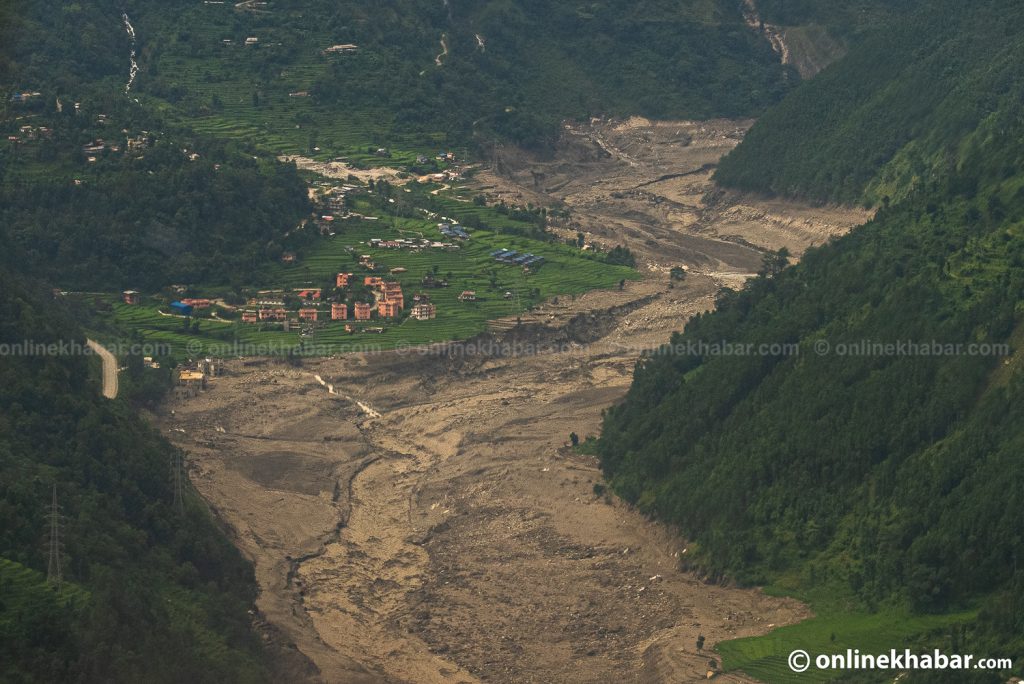
The ministry is preparing to move beyond immediate rescue and restoration towards a detailed assessment of damage to hydropower projects, substations and other energy infrastructure.
In coordination with the National Planning Commission and the disaster management authority, it plans to assess the damage and identify the resources required for restoration, reconstruction and recovery.
The ministry said the immediate priority remains the search and rescue of missing workers and restoration of electricity services.
The next phase will focus on determining the full extent of damage and developing plans to bring damaged energy infrastructure back into operation and rebuild facilities that have been destroyed.