Kathmandu, September 18
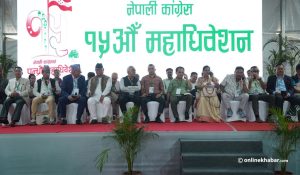
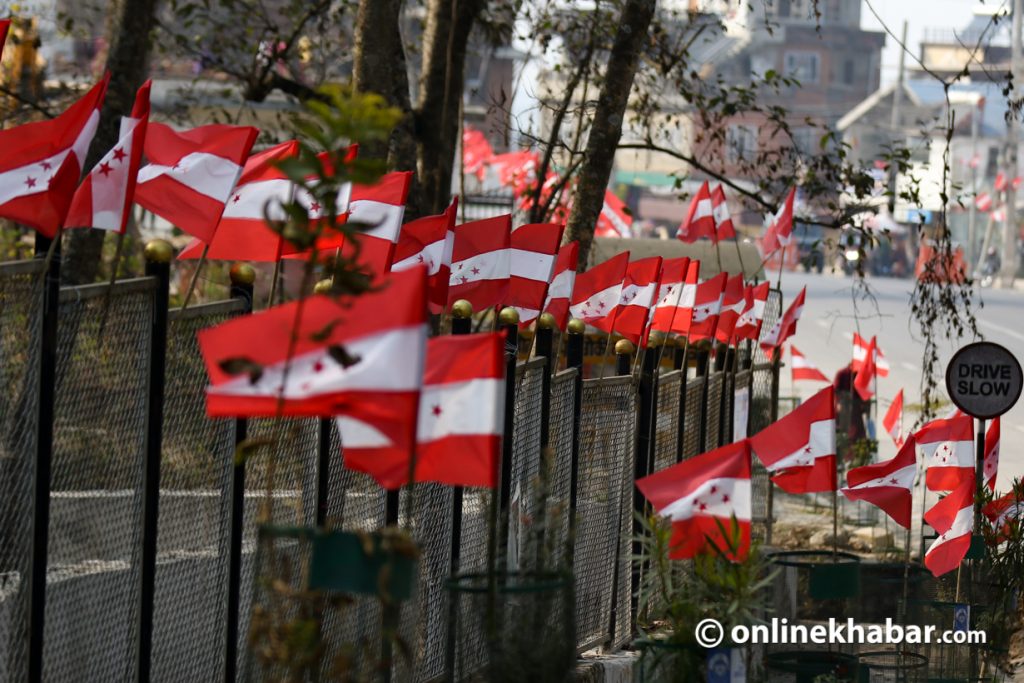
Ward-level conventions of the Nepali Congress will begin on Saturday as part of the party’s 15th General Convention. The party’s Central Election Committee has said ward conventions may be held on Saturday or Sunday, depending on local circumstances.
All active members who renewed their membership by the end of Poush 2082 BS will participate in the conventions in their respective wards.
Party President Gagan Thapa has already called on members to participate enthusiastically in the ward-level conventions being held as part of preparations for the 15th General Convention.
Active members within each ward will be members of the respective ward convention. The ward convention will elect a president, two vice-presidents including one woman, one secretary and one joint secretary.
According to the Nepali Congress statute, ward presidents elected from wards under rural municipalities, municipalities, sub-metropolitan cities and metropolitan cities can nominate a treasurer from among the elected ward executive committee members.
The ward convention in a rural municipality will elect seven ward members, including at least two women, one Dalit and one youth under the age of 30.
Similarly, ward conventions in municipalities and sub-metropolitan cities must elect eight ward members, including two women, one Dalit and two youths under the age of 30.
Likewise, metropolitan ward conventions will directly elect 11 ward members, including at least three women, one Dalit and three youths under the age of 30.
The Nepali Congress statute provides different provisions for ward presidents to nominate ward members depending on the type of local government. Accordingly, a rural municipality ward president can nominate five members, a municipality or sub-metropolitan ward president can nominate six, and a metropolitan ward president can nominate seven.
The ward president must nominate ward members from among active members while ensuring that one-third of the executive committee members are women and taking into account the principle of inclusion, including representation of all communities, minorities, persons with disabilities and youth.
According to the Nepali Congress statute, the ward executive committee must meet at least once a month. Representatives to the regional convention may be invited to ward executive committee meetings as necessary.
Likewise, the ward executive committee must invite the presidents of subordinate neighbourhood-level committees to its meetings.
The Nepali Congress statute allows the same person to serve as a representative to the regional convention and as a member of a rural municipality ward executive committee.
Selection of regional convention representatives
Representatives to the regional convention will also be selected through ward conventions in rural municipalities, municipalities, sub-metropolitan cities and metropolitan cities. The same number of representatives will be selected from each ward convention for the regional convention.
A ward with 150 or fewer active members will select nine regional convention representatives from among its active members, including at least three women and one worker or professional-sector representative.
The ward convention must also directly elect three youths, including one woman under the age of 30, as regional convention representatives.
Similarly, in wards with more than 150 active members, six additional representatives, including two women and one youth, will be directly elected for every additional 150 active members, up to a maximum of 55 representatives.
The statute states that representatives must be elected proportionally according to the population composition of the ward, as prescribed, with the number of representatives from women, Dalit, Indigenous Nationalities, Khas-Arya, Madhesi, Tharu, Muslim, minority and backward areas set at 50 per cent of the number of members directly elected.
The statute states, “One representative each from among active members with disabilities and Dalit active members.”
According to the statute, the ward executive committee president is considered an ex-officio representative to the regional convention.
What are the qualifications for a ward president?
The Nepali Congress has not set qualification criteria for candidates for ward executive committee president. The party statute, amended by the special general convention held last Poush, does not specify qualifications for candidates for ward executive committee president.
Previously, only members who had completed one year as active members of the Nepali Congress were eligible to contest for president of a rural municipality, municipality, sub-metropolitan city or metropolitan city ward executive committee.
The amended statute also does not specify qualifications required to contest for president of a rural municipality or municipality, provincial assembly constituency, House of Representatives constituency, district, provincial or central party president.
However, the 15th General Convention Election Directive, 2083 BS, sets out provisions regarding the qualifications and nomination of candidates, except for ward presidents.
Accordingly, candidates for president of a rural municipality or municipality, president of a provincial assembly constituency, president of a House of Representatives constituency, and district vice-president and secretary must have been active members for five years.
Similarly, candidates for district president, provincial president and other provincial office-bearer positions, as well as central committee members, must have held active membership for 10 years. However, the directive states that this requirement does not apply to youths below 35, members who joined the party through integration, and members from professional and workers’ sectors.
The directive also states that candidates for central office-bearer positions must have been active members continuously for 10 years, while a candidate for central president must have held continuous active membership for 15 years.