Kathmandu, October 6
The new working committee of the Nepali Congress will be elected from 80 clusters, including inclusive categories, at the party’s 15th General Convention.
The amended statute passed at Monday’s closed session has 80 categories (clusters), covering the president, office-bearers and central members. Central members will be elected from separate categories including open, women, Dalit, Indigenous Peoples (Adivasi Janajati), Madhesi, Muslim, Khas Arya, province, diaspora and youth.
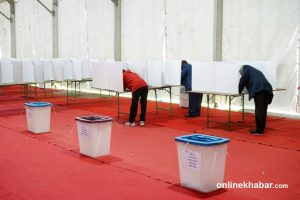
Nominations for the new working committee are being filed today. After all the processes that follow nomination are complete, voting is scheduled for 7 am to 5 pm on October 8.
Under the amended statute, the Central Working Committee will have 297 members. It will include one president, one senior vice-president and four vice-presidents. One of the vice-presidents must be a woman.
There will be three general secretaries, two from the open category and one from the women’s quota.
There will be 15 joint general secretaries. Two will be elected from the open category. One each will be elected from the Indigenous Peoples (Adivasi Janajati), Dalit, Madhesi, Khas Arya, Tharu, Muslim, backward areas, and minority/disability quotas.
The treasurer will be nominated from among the central members. There will be one spokesperson and one joint spokesperson.
Among central members, 45 will be elected through open competition. Fifteen will come from the women’s open category. Eight will be elected from Indigenous Peoples women, 12 from Indigenous Peoples open, five from Dalit women, one from Madhesi Dalit and eight from Dalit open.
Eight each will come from Madhesi women and Khas Arya women, and 10 from Khas Arya open.
There will be two central members from Tharu women, four from Tharu open, two from Muslim women and three from Muslim open.
One central member each will be elected from backward areas women, backward areas open, minority and disability quotas.
One central member each will come from democracy fighters, martyrs’ families and conflict-affected families.
Central members will also be elected from all seven provinces from among women and open candidates under 35. One central member each will come from the Kathmandu Valley from women and open categories.
Quotas for central members have been set aside for the Nepali Public Relations Committee Europe region, Oceania–America region, Nepali Public Relations Committee Middle East region, Asia Pacific region and the Nepali Public Relations Committee India. Central members will also be elected for professional and thematic areas and labour, including a women’s open seat.
The statute also provides for the Central Working Committee to nominate 66 more members later.