
Kathmandu, September 24
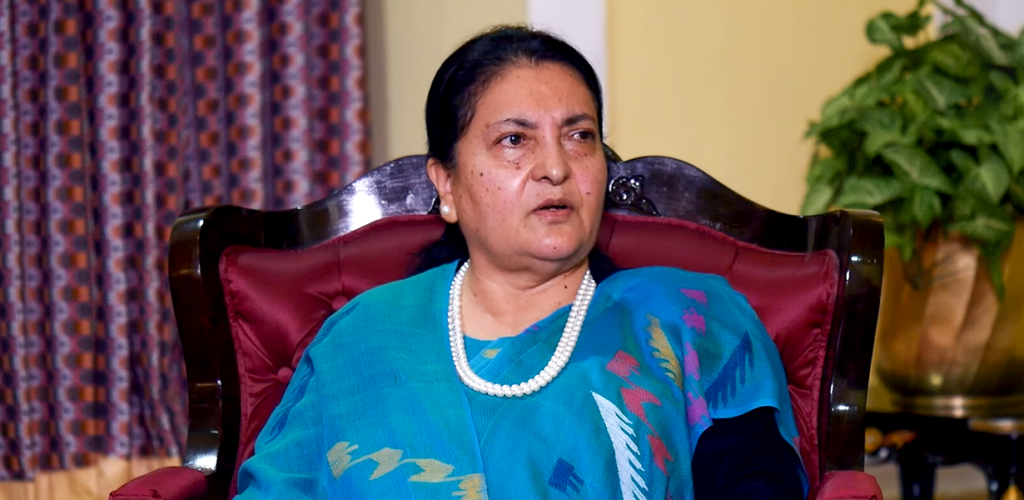
Former President Bidya Devi Bhandari had already returned to active politics within the CPN-UML. The party’s latest decision to bring her in as a senior leader has now revived questions about her future role in the party and its leadership.
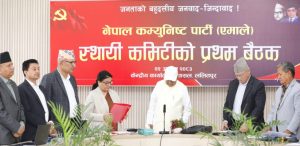
The UML Secretariat has proposed making Bhandari a senior leader, with the proposal set to go before the Central Committee for approval.
Bhandari had left active party politics after being elected president in October 2015. Before her, former President Ram Baran Yadav, who had previously served as general secretary of the Nepali Congress, maintained an independent public profile after leaving office rather than returning to active party politics.
Bhandari, however, has made clear in recent years that she intended to continue her political journey within the UML after completing her presidential tenure.
In an interview with Onlinekhabar three years ago, she said the possibility of becoming UML chairperson had not been ruled out. More recently, she publicly expressed the belief that KP Sharma Oli would not return as party chairperson, while saying leadership change should be accepted as part of democratic practice.
Her return to party politics has been accompanied by a prolonged dispute with Oli.
When Bhandari sought to renew her party membership after leaving the presidency, the issue became contentious within the UML. The party leadership had argued that someone who had served as president, the country’s head of state, should not immediately return to active partisan politics.
Bhandari nevertheless maintained that she had never abandoned the UML. At a programme marking the birth anniversary of her late husband and UML leader Madan Bhandari, she said she had renewed her party membership with the intention of continuing her political journey within the UML.
She also criticised what she described as the growing dominance of a single-person style of leadership in the party, saying it was inconsistent with the spirit of the People’s Multiparty Democracy advocated by the UML.
Oli and Bhandari have since exchanged sharp political remarks. At one event marking Madan Bhandari’s birth anniversary, Oli made remarks referring to fears that something dramatic would happen around the occasion, which were widely interpreted within the party as directed at Bhandari.
Bhandari expressed dissatisfaction with Oli’s presentation at the event. By then, however, Oli had already left the venue.
Three weeks later, the UML placed Bhandari’s party membership on hold. Although the party described the move as a membership “hold”, it effectively left her without active party membership at the time.
Bhandari responded angrily, saying she had returned to UML politics after 35 years as a party member and had not left the party when she became president.
She also said no one could take away her membership of the UML.
Her relationship with the party leadership had become so strained that her supporters said she received a cold reception when she visited the UML headquarters in Chyasal.
From president to senior party leader
Bidya Devi Bhandari’s political career predates her marriage to Madan Bhandari. She became involved in the politics of the All Nepal National Free Students’ Union and later joined the organisation of the then CPN-Marxist-Leninist. She married Madan Bhandari, one of the most prominent communist leaders of the time.
After Madan Bhandari died in 1993, she returned to active politics and went on to hold several positions in the UML and the All Nepal Women’s Association.
She later served as minister for science and technology, minister for population and environment, and defence minister before becoming UML vice-chairperson and eventually president of Nepal.
Her return to a senior position in the UML therefore marks a significant shift from the role she occupied for two consecutive terms as head of state.
Her political ambitions have also been discussed within the UML for several years.
At the party’s most recent general convention, Ishwar Pokhrel, who was backed by the Bhandari camp, challenged Oli for the party chairperson position. Oli won the contest.
The latest decision by the UML Central Committee comes amid an internal debate over the party’s leadership following its poor performance in the March 5 election. Several senior leaders have been calling for organisational and leadership changes.
Bhandari has also held meetings with Oli and UML General Secretary Shankar Pokhrel in recent months, adding to speculation about her role in the party’s future.
Debate over a former president returning to party politics
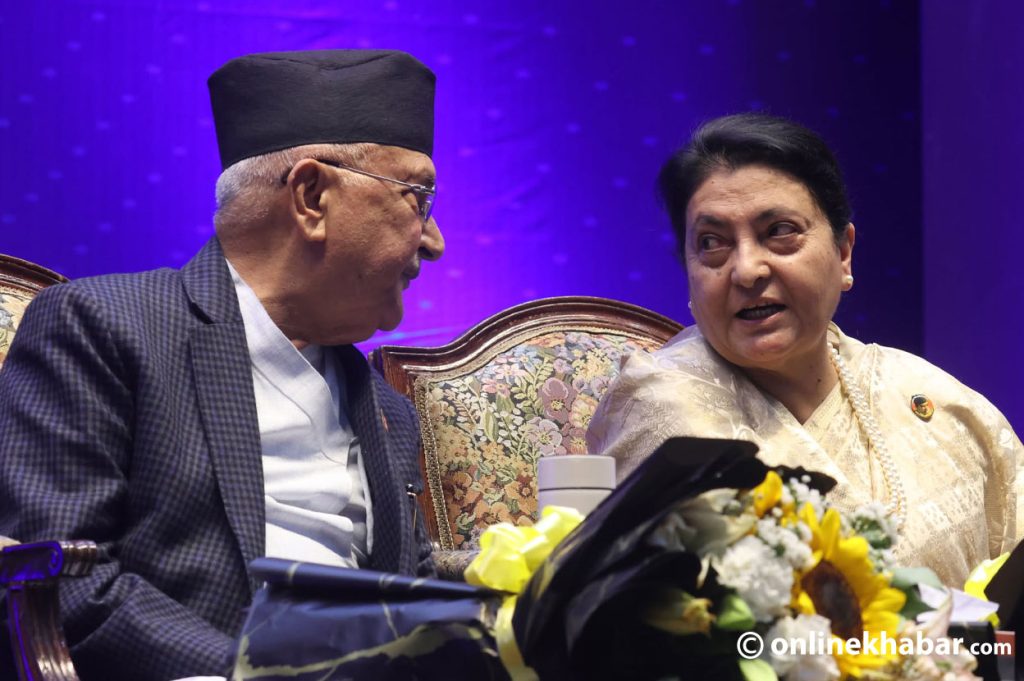
Bidya Devi Bhandari’s return has also raised a broader debate over whether a former head of state should resume active partisan politics.
Political analyst Sanjeev Pokharel has criticised the move, arguing that the return of someone who has served as the country’s highest constitutional office to party politics raises questions about the distinction between the presidency and partisan politics.
He has also argued that Nepal’s presidential system should not be directly compared with the US system, where a former president can return to party politics and seek elected office.
“There, it is an executive presidency; here, it is about serving as the respected ceremonial head of state,” Pokharel said, according to the source text.
Bhandari’s supporters, meanwhile, have argued that her return to the UML is consistent with her long political career and that she never formally abandoned the party.
Her political comeback has also acquired significance as discussions continue over possible cooperation or unification among Nepal’s communist parties.
The UML and the Nepali Communist Party (NCP) have held several rounds of talks in recent months. Against this backdrop, some within the left have begun discussing Bhandari as a possible figure for leadership in a future unified party.
The UML’s proposal to make her a senior leader does not itself determine her future position in the party. But it formally brings her back into the senior leadership structure and reopens the question that has followed her return to active politics — whether her long-discussed possibility of seeking the UML’s top leadership could eventually become a political reality.