
Kathmandu, October 6
Prime Minister Balendra Shah’s Facebook post about Khula Manch has sparked an open debate in Nepali society.
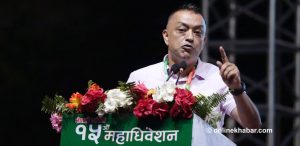
With the opening of the Nepali Congress general convention at Khula Manch on Sunday, the venue’s old role as a public space for political rallies and gatherings has been revived after nearly a decade. But a debate is also underway over who deserves credit — or blame — for closing and reopening the venue.
The vast Tundikhel area, which was used during the Rana era for military parades and displays of state power, was gradually adopted by pro-democracy activists as Khula Manch, or “Open Stage.”
After the 1951 democratic revolution, the northeastern section of Tundikhel was transformed into a major centre for political rallies and civic dialogue. On February 19, 1951, King Tribhuvan declared democracy from there.
Following the 1959 general election, the policies and programmes of Nepal’s first elected government, led by BP Koirala, were also presented from this very stage. But after King Mahendra staged a coup in 1960 and imposed the Panchayat system, the area was placed under strict surveillance and Tundikhel was gradually divided into different sections. In the process, Khula Manch was reduced to the northern section after being separated from the military area.
Khula Manch witnessed the student movement of 1979, the 1990 democratic movement and the 2006 republican movement. A central platform for democratic consciousness and civic resistance, Khula Manch was eventually closed even under a democratic system.
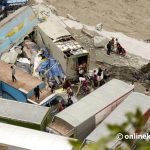
The situation became particularly complicated after a multi-storey commercial building project began at the old bus park adjacent to Khula Manch. From 2014, the bus park was moved into Khula Manch.
A market was also established inside Khula Manch, with commercial shutters installed alongside the bus park. Jaleshwar Swachchhanda Bikoi Builders, which had won the contract to construct a 29-storey tower at the old bus park, encroached on Khula Manch and rented out the shutters to businesses. No one appeared willing to put a “brake” on the activities of businessman Manoj Bhetwal, owner of Swachchhanda Builders, which was collecting rent from the shops at Khula Manch.
However, the issue led to a public dispute in 2017 between then-Kathmandu Metropolitan City Mayor Bidhya Sundar Shakya, elected from the CPN-UML, and Deputy Mayor Hari Prabha Khadgi.
Khadgi, who is now a Bagmati provincial assembly member, recalls that while serving as deputy mayor, she had to launch a campaign against her own metropolitan city’s decisions to protect Khula Manch.
“The mayor at the time did not stop even when 52 shutters were being constructed. The subsequent mayor, Balen, also tried to turn it into a parking area,” she says.
Following widespread public opposition, then-Deputy Mayor Khadgi supported the activists. In April 2019, the federal government used bulldozers to demolish the commercial shutters.
Shakya says Khula Manch was opened during his tenure
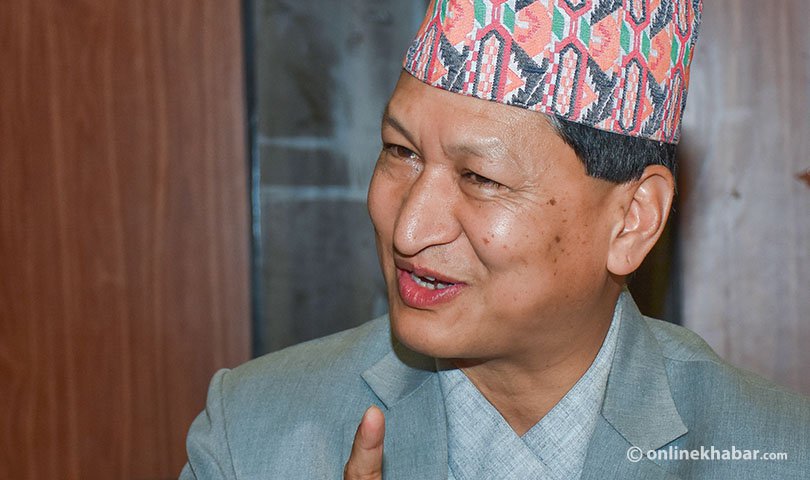
However, Shakya claims that Khula Manch was actually cleared during his tenure.
“The old bus park was moved to Khula Manch after the decision to construct the multi-storey building. At the same time, the new Bir Hospital building was under construction, as was Durbar High School, which had been damaged by the earthquake. Construction materials for those buildings could not be stored on the roads, so they were placed at Khula Manch. But once the Bir Hospital and Durbar High School buildings were completed, Khula Manch was cleared,” he says.
But why, then, were political programmes not held there until now?
“That is something you should ask the organisers. But there was no obstruction,” Shakya says.
In the 2022 local elections, Balendra Shah was elected mayor and Sunita Dangol deputy mayor. Soon afterwards, the metropolitan city began the process of preparing a detailed project report for constructing a triple-basement parking facility at Khula Manch.
The decision taken by the metropolitan city’s 10th executive meeting on November 15 that year came under widespread criticism.
According to activist Sushan Vaidya, had the metropolitan city’s plan succeeded, Khula Manch would no longer have remained Khula Manch.
He says the metropolitan city was planning a concrete structure similar to the one at Chandni Chowk in New Delhi, with commercial activity on top.
“I cannot understand why every mayor wants to turn Khula Manch into a milking cow,” Vaidya says. “It was the people who saved Khula Manch. Activists and the media supported them.”
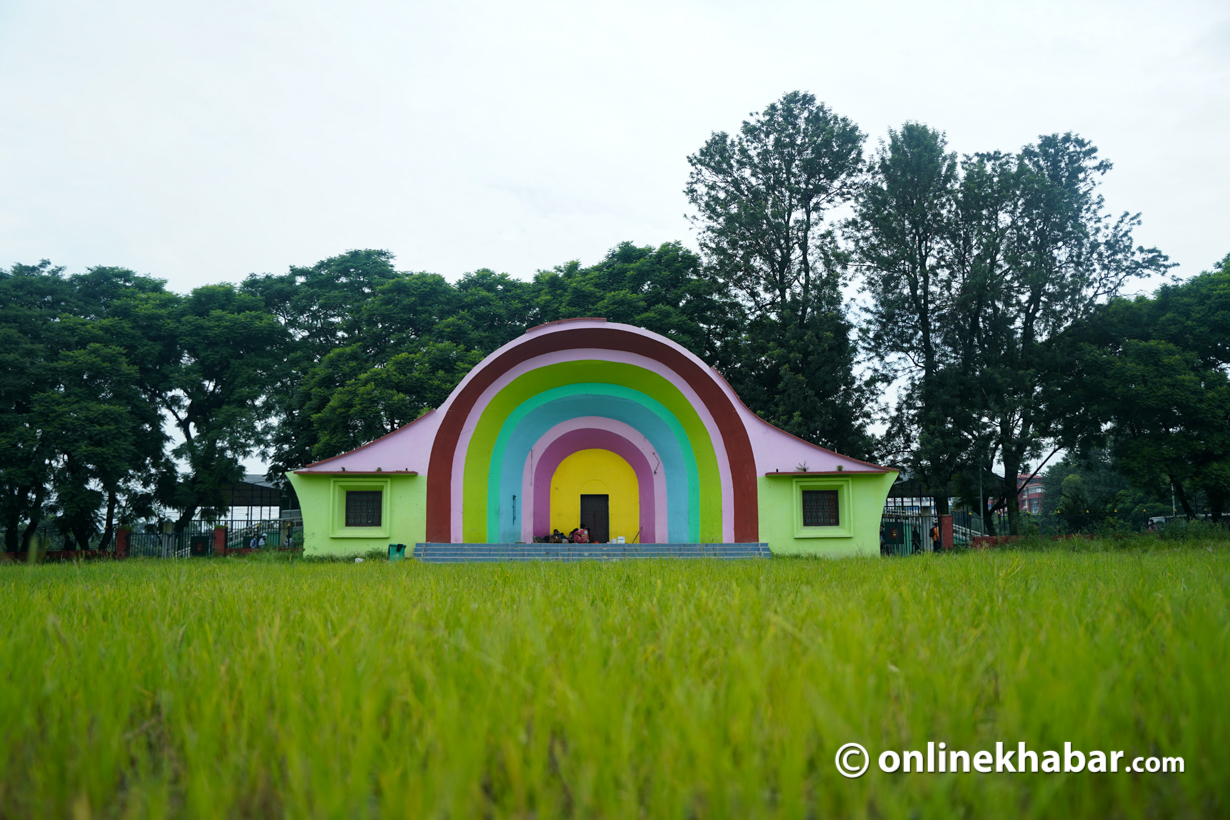
During Balen’s tenure as mayor, Kathmandu Metropolitan City carried out work at Khula Manch under its “Sports Infrastructure Maintenance, Improvement and Upgrading Programme,” including planting grass, constructing walking paths around the area and painting.
“Planting grass, painting or constructing pathways cannot be called saving Khula Manch,” says Vaidya, one of the activists involved in the campaign to protect the site.
Vaidya stresses that protecting Khula Manch also means preserving its spirit. He is also president of the Nepali Congress Kathmandu Metropolitan City committee.
“Even now, it is fenced off with railings and kept locked. The spirit of Khula Manch can only be preserved if it is actually open to everyone,” he says.
“Khula Manch was already good, Prime Minister. You did some painting. Thank you for your colourful efforts,” Gen Z activist Majid Ansari commented on social media.
Balen’s Facebook post targeted at Gagan?
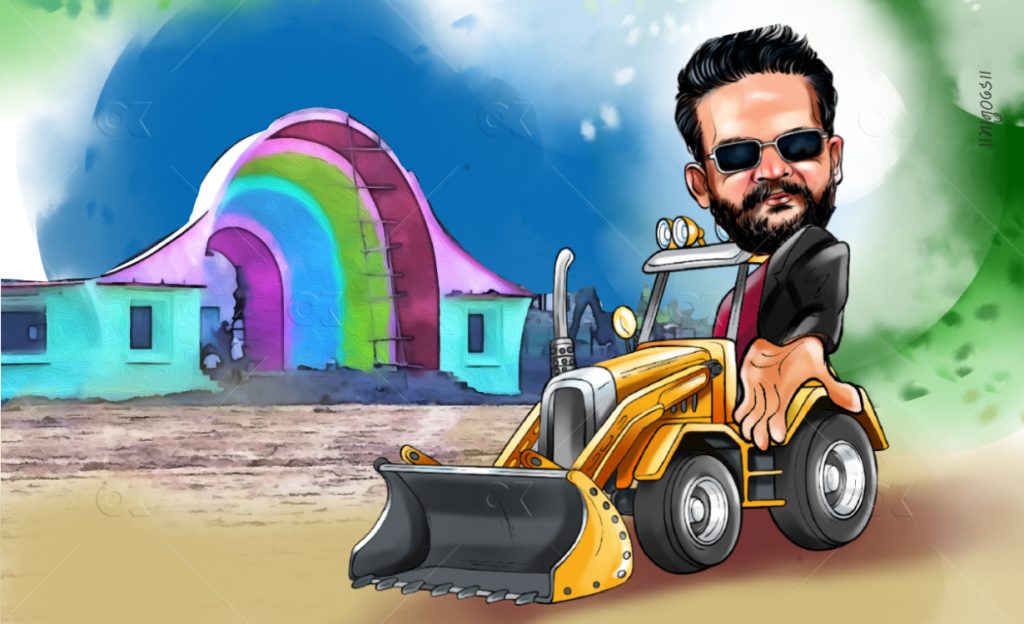
Many believe Prime Minister Balen Shah’s Facebook post — “Thankfully, Khula Manch has been made better, so the new party can hold programmes there and abuse others!” — was aimed at Congress President Gagan Thapa.
The prime minister’s post came as a response to comments Thapa had made about him during the opening session of the Congress’s 15th General Convention on Sunday.
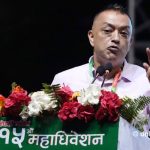
Speaking at Khula Manch, Thapa said: “Today, Nepal needs many more Khula Manchs like this. Where is the first Khula Manch needed? It is needed inside Parliament. Parliament is not open. Parliament is closed. The prime minister who was made by this very Parliament needs to be present for both the lawmakers who supported him in becoming prime minister and those who did not, and for the dignity and functioning of Parliament. Until the prime minister is present there with respect, Parliament cannot be considered open. We need a Khula Manch inside Parliament.”
Public land linked to Khula Manch ‘sold’
Thapa’s remarks were clearly directed at what he sees as the prime minister’s disregard for a Parliament in which the Rastriya Swatantra Party has 182 lawmakers.
But was it appropriate for the leader of the main opposition party to make such comments from the platform of his own party’s general convention?
Analyst Neelambar Acharya says, “Not only was it appropriate, he had to do it. If the opposition does not speak about the prime minister’s lack of accountability to Parliament, who will? Gaganji has not done anything excessive. He has said what needed to be said.”
Meanwhile, media scholar Bhanu Bhakta Acharya wrote in a comment on social media:
“Thank goodness Mark Zuckerberg created the Facebook chautari, allowing us to read the whimsical status updates of prime ministers, ministers, lawmakers and everyone else.”