
Kathmandu, November 29
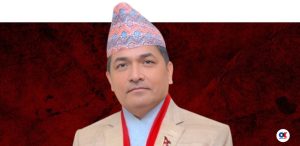
A missing Labour Ministry file that had stalled an investigation into the illegal collection and transfer of money from Nepali workers bound for Malaysia has resurfaced, revealing key decisions signed by former chief secretary Ek Narayan Aryal and giving the investigation fresh momentum.
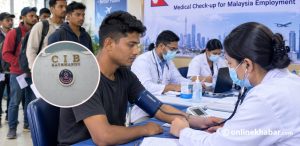
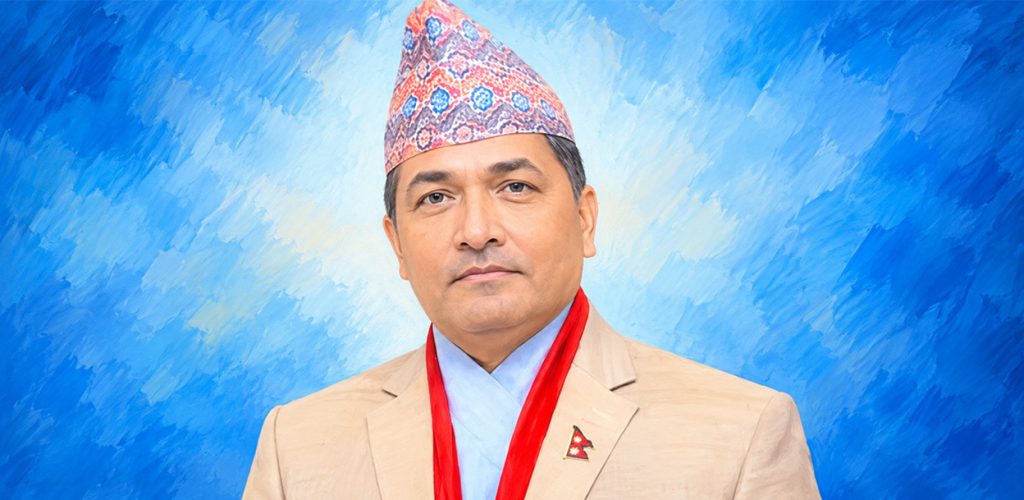
Aryal, who was among those sought by investigators, was arrested in India and brought back to Nepal on Thursday. The Labour Ministry has also handed over the recovered original file to the Central Investigation Bureau (CIB), which is investigating allegations of fraud and organised crime involving the collection of billions of rupees from migrant workers.
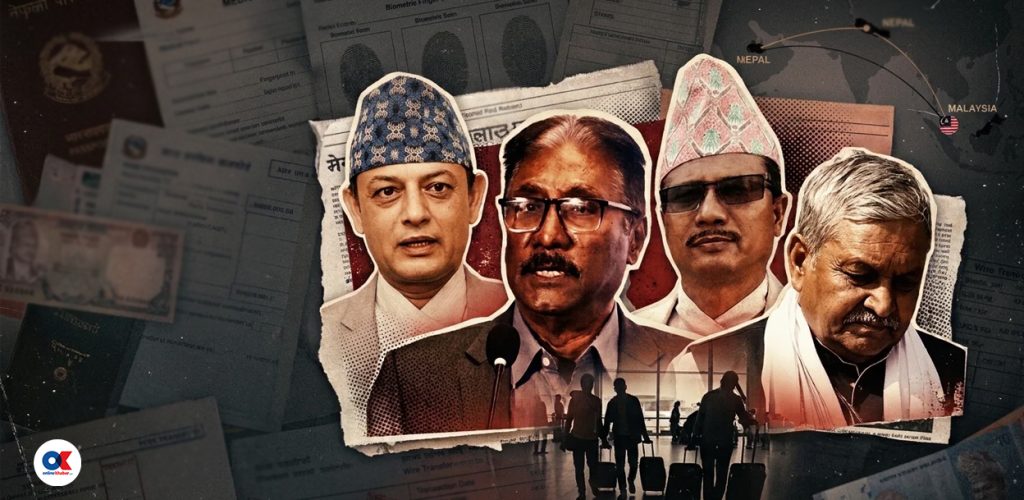
The CIB arrested former labour ministers Rameshwar Raya Yadav and Sher Bahadur Kunwar, along with government officials Binod KC, Rajiv Pokhrel and Nirmala Gurung, on November 18. Aryal, however, was not found at the time. He had reportedly left Nepal for Kolkata via Tribhuvan International Airport the day before.
The file was recovered following a search of records across various divisions of the Labour Ministry. Labour Minister Ramji Yadav had formed a task force led by Undersecretary Upendra Paudel on November 18 to locate the missing documents.
The recovered file reveals that Aryal, then labour secretary, personally signed decisions authorising the transfer of money illegally collected from workers to Malaysia, despite concerns raised within the ministry over possible foreign exchange violations, tax evasion and money laundering.
The CIB alleges that Aryal was at the centre of a scheme in which more than 750,000 workers were defrauded of around Rs 2.37 billion, of which Rs 1.69 billion was transferred to Malaysia over five years. Investigators suspect he worked in coordination with medical entrepreneur Kailash Khadka and allegedly received cash, a vehicle, a house and foreign travel benefits in exchange for facilitating the arrangement.
Aryal was remanded in custody for four more days on Friday as investigators continue probing allegations of fraud and organised crime.
How did the file go missing?
The investigation turned towards the Labour Ministry after the CIB arrested Kailash Khadka and three others on October 15. Investigators sought documents related to decisions made during the tenures of former labour ministers Yadav and Kunwar, which had reportedly authorised the transfer of money collected from workers to Malaysia.
The ministry initially said it could not locate the files.
According to a CIB investigation officer, Aryal appears to have fled shortly after investigators requested the documents.
“ We had requested some documents from the ministry. Aryal appears to have fled immediately after that,” the officer said.
Investigators are still examining who was responsible for making the file disappear. The CIB suspects that Undersecretary Nirmala Gurung, who joined the Labour Ministry during Aryal’s tenure, played a role in suppressing the documents. Gurung and Joint Secretary Rajiv Pokhrel are both in custody.
This is not the first time records related to the Malaysia medical examination racket have disappeared from the ministry.
Following complaints that Khadka’s group was exploiting migrant workers through medical examinations, a monitoring team led by Undersecretary Paudel had inspected 36 medical institutions. Its report and related documents also went missing from the ministry.
The report had recommended further investigations into fraud, organised crime, foreign exchange violations and money laundering. The CIB said it had repeatedly sought the original report but had been unable to obtain it.
What does the recovered file reveal?
The recovered documents show how approval was granted to transfer money collected illegally from migrant workers to Malaysia.
First step — September 1, 2022
On September 1, 2022, Legal Officer Amrita Devkota prepared a note under the heading ‘Comment and Order’, recommending that the ministry seek foreign exchange facilities from Nepal Rastra Bank to transfer biomedical system charges collected from workers to Bestinet, the Malaysian government-authorised company.
The note proposed that the amount be transferred after deducting applicable taxes under Nepal’s rules and that MacroTech, the concerned institution, be held responsible if issues involving foreign exchange violations, tax evasion or money laundering arose.
The note itself raises questions about the ministry’s handling of the arrangement. Officials were aware that the transaction could raise concerns about foreign exchange violations, taxation and money laundering, yet the recommendation proceeded without further investigation, relying on a condition that MacroTech would bear responsibility if the transfer proved unlawful.
Second step — September 4, 2022
On September 4, Joint Secretary Rajiv Pokhrel submitted the file to the secretary for approval, recommending that foreign exchange facilities be sought from Nepal Rastra Bank to transfer biomedical system charges collected from workers going to Malaysia after deducting taxes under Nepal’s prevailing rules.
Third step — the secretary’s decision
On the same day, Aryal signed the decision. The subsequent correspondence with Nepal Rastra Bank, however, referred to the approval as a ministerial decision, even though the recovered file contains no record of the matter having reached then-minister Sher Bahadur Kunwar.
Fourth step — September 8 2022
Four days after Aryal signed the decision, Legal Undersecretary Nirmala Gurung signed the file.
Ministry decisions are ordinarily presented for approval after obtaining an opinion from the legal division. In this case, however, the legal opinion appears to have been aligned with a decision already made rather than preceding it.
The same decision was subsequently used repeatedly to transfer money to Malaysia, with official correspondence referring to the approval as a ministerial decision.
According to investigators, the decision was meant to apply to a specific number of workers and could not legally be reused for subsequent batches, as the number of workers would change each time. Nevertheless, transfers were repeatedly authorised citing the original decision.
Over five years, 750,988 workers were charged a total of Rs 2.37 billion, of which Rs 1.69 billion was transferred to Malaysia.
File recovery could ease Kunwar’s position
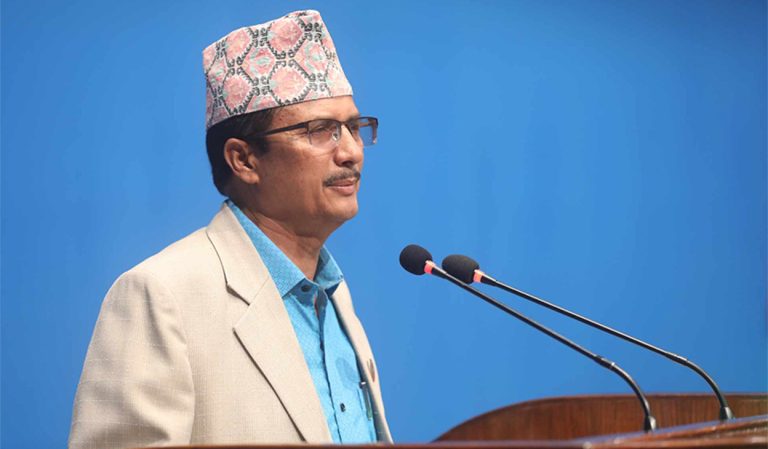
The recovered file could significantly alter the investigation into former labour minister Sher Bahadur Kunwar.
Investigators say the documents show that the transfer decisions during his tenure were made directly by the secretary rather than the minister. The CIB is preparing to take his statement and may release him, according to investigation officers.
Aryal served as labour secretary from December 1, 2021, to May 29, 2023. During that period, Krishna Kumar (Kisan) Shrestha, Sher Bahadur Kunwar, Dol Prasad Aryal and Sharat Singh Bhandari served as labour ministers. Money was transferred to Malaysia during the tenures of all three ministers except Shrestha.
The situation is different for former minister Rameshwar Raya Yadav, who investigators allege personally approved the transfers during his tenure.
Four transfers were made during Yadav’s tenure — £693,000 on February 28, 2020, £248,000 on March 23, 2020, £246,000 on June 1, 2020, and US$214,000 on July 27, 2020.
Binod KC was labour secretary at the time. Investigators say the file was submitted to the minister after KC approved it with the legal division’s opinion, and Yadav’s decision led to the first transfer of money.
Aryal’s team and the alleged racket
Investigators say the transfers resumed after Aryal was appointed labour secretary, following a period in which money had not been transferred during the tenures of ministers Gauri Shankar Chaudhary and Bimal Prasad Srivastava.
Aryal brought Pokhrel in as joint secretary and Gurung as legal undersecretary. The CIB considers both officials part of Aryal’s team and suspects the arrangement was revived with their involvement.
According to investigators, Aryal made the initial decision and subsequently delegated the transfers to Pokhrel, allegedly instructing him to proceed on the basis of the earlier decision and retain 10 per cent of the amount in return.
Pokhrel and Gurung left the ministry within three months of Aryal’s departure from the labour secretary’s position on May 29, 2023. Both have reportedly told investigators that they acted on Aryal’s instructions.
Investigators also say Pokhrel used to go hiking with Khadka, while Gurung maintained regular communication with the businessman on social media. According to CIB officials, Gurung would send Khadka news reports about the Malaysia medical examination issue as soon as she came across them.
Allegations of a house, vehicle and foreign trips
Aryal and Khadka are believed to have known each other for years. Aryal served as Kathmandu’s chief district officer from November 17, 2014, to December 12, 2015, and officials believe their association began during that period.
The CIB also alleges that Aryal helped Khadka avoid enforcement action in 2018, when then-labour minister Gokarna Bista had ordered raids on medical institutions accused of exploiting workers and the arrest of their operators.
Investigators say they have found leads suggesting Khadka provided Aryal with cash, a vehicle and even a house in exchange for facilitating the transfer of money abroad. They say a separate investigation into these benefits is underway.
According to an investigation officer, Aryal had been living in his own house in Koteshwar until around three or four years ago. He later sold that house after Khadka allegedly purchased a house for him in Budhanilkantha.
Investigators say Aryal’s assets appear disproportionate and that they will also pursue a money laundering investigation.
The CIB has also allegedly found evidence that Khadka’s company, MacroTech, paid for Aryal’s air tickets when he travelled to Malaysia.
“Evidence has been found that Khadka took him abroad in return for decisions made in his favour, and that the tickets were paid for through MacroTech’s company account,” an investigation officer said.
The CIB has also searched Aryal’s residence in Hepali Height, Kathmandu, and seized documents, according to bureau spokesperson SSP Anupamshamsher Rana.
Aryal allegedly maintained influence over labour affairs after leaving the ministry
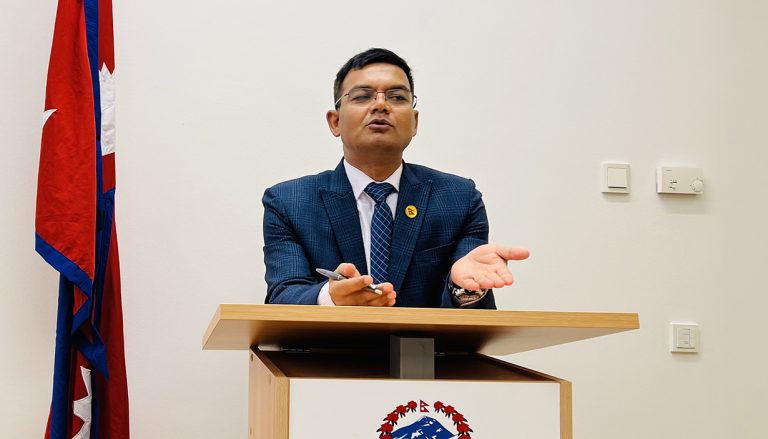
Sources say Aryal continued to exert influence over the Labour Ministry even after leaving the labour secretary’s post and continued to take an interest in Malaysia-related employment matters after becoming chief secretary.
Sources say he played a role in appointing Krishna Hari Pushkar as labour secretary.
During Pushkar’s tenure, a decision was made on March 21, 2025, to increase the medical examination fee from Rs 6,500 to Rs 9,500. The revised fee came into effect on November 26, 2025.
Sources familiar with the matter allege the decision was made with Aryal’s advice. They say unnecessary medical tests, including ultrasound and B1 and H1 sugar tests, were added to the examinations required for workers going to Malaysia, allegedly with the involvement of Aryal, Pushkar and Khadka.
Medical operators have reportedly told investigators that equipment required for the tests was purchased from a single company. They allege that equipment costing around Rs 700,000 was sold for as much as Rs 2 million, with some of the money allegedly reaching Aryal.
After the Gen Z movement, labour minister Rajendra Singh Bhandari, appointed on December 12, 2025, reduced the medical fee to Rs 6,500 on December 19, 2025. However, Bhandari said the secretary had initially resisted the decision.
“I had decided to reduce the medical fee and asked for the file, but the secretary would not agree. I told him to bring the file immediately, or I would call the media and Gen Z representatives and explain the issue publicly. Only then was he ready to bring the file,” Bhandari told Onlinekhabar on February 6.
The ministry has also conducted an internal investigation into the matter and is preparing to refer it to the Commission for the Investigation of Abuse of Authority (CIAA), if necessary, sources say. Pushkar could also be drawn into the investigation, according to the sources.
The roots of the scheme — the agreement, MacroTech and Nepal Rastra Bank
The arrangement traces back to the labour agreement signed between Nepal and Malaysia on October 29, 2018. The agreement stipulated that Nepali workers would be sent to Malaysia at zero cost, with the employer responsible for medical examination expenses, including biomedical tests.
The agreed arrangement was for the employer to reimburse the workers for the medical examination costs through their first month’s salary after they reached Malaysia. Instead, money was being collected from workers in Nepal and transferred abroad through decisions made at the Labour Ministry.
Bestinet was assigned the biomedical examination system on the Malaysian side, while Nepal was responsible for determining which institutions would conduct the medical examinations locally.
Investigators say Khadka established a syndicate involving 36 medical institutions. Representatives of the medical institutions have reportedly told the CIB that Khadka initially collected Rs 1 million from each institution and later charged as much as Rs 15 million for providing biometric equipment.
Khadka’s association with Bestinet dates back further. An agreement on operating the biometric system was signed between the head of the Nepal Health Business Association, led by Khadka, and Bestinet’s chief executive on June 20, 2013.
Khadka registered MacroTech on February 19, 2019. Bestinet and MacroTech subsequently signed an agreement, reportedly without the Nepal government being aware of it.
Bestinet sent a letter to MacroTech instructing it to collect 100 Malaysian ringgit per worker. The arrangement was then used to collect additional biomedical charges from workers on top of the regular medical examination fees. Of the amount collected, 90 per cent was to go to Bestinet and 10 per cent to MacroTech.
The collection began in July 2019. Khadka applied directly to Nepal Rastra Bank in December 2019 to transfer the money to Malaysia, citing provisions of the labour agreement between Nepal and Malaysia and the annexes of a joint working group.
Investigators say the cited provisions did not contain any authority for collecting or transferring the biomedical charges. Clause 20, sub-clause 3 of the labour agreement dealt with the collection of decisions, while Annex 5(4) of the joint working group referred to security checks.
“Even that document, which was only seven lines long, appears to have been recommended by Nepal Rastra Bank officials without proper examination,” an investigation officer said. “We suspect that the officials may also have been influenced by some inducement.”
The CIB says Rs 1.69 billion has so far been transferred to Malaysia. The figure only covers workers who passed the medical examination and travelled to Malaysia. The total amount allegedly collected could be higher, as investigators do not have records of those who underwent multiple examinations or failed to travel after being declared medically unfit.
CIB chief AIG Uma Prasad Chaturvedi says Bestinet also entered into direct financial arrangements with some medical institutions.
Aryal arrested in India and brought to Nepal
Aryal is the 11th person arrested in the case.
After fleeing Kathmandu, he reportedly did not stay in a hotel in Kolkata but instead stayed at the home of a senior Indian official he had known from his time as Nepal’s consul general in Kolkata, a position he held for around four years after 2015.
He was reportedly located after around four days of searching. An official said it took time to arrest him because investigators had to locate him in an area without CCTV coverage.
Indian authorities handed him over at the eastern border, and he was flown to Kathmandu from Biratnagar on Thursday. The CIB officially said he was arrested near the Nepal-India border in Biratnagar.
Nepal and India signed an extradition treaty in 1953, but its practical implementation has remained limited. Under Nepal’s Extradition Act, 2013, the transfer of an accused person to a treaty partner also requires judicial procedures, which can be lengthy and complicated.
Since 2005, efforts to revise the more than 70-year-old treaty have remained stalled. Security agencies in the two countries have therefore often relied on informal arrangements to hand over suspects accused of serious crimes.
A similar arrangement was reportedly used in the case of Durga Prasai, who fled after violence erupted during a royalist demonstration in Tinkune on March 28, 2025. He was reportedly arrested in Assam, India, and brought to Jhapa through the Kakarbhitta border before being flown to Kathmandu.
Nepal Police had denied reports that he was arrested in India, saying he was apprehended near the eastern border.
From aspiring CIAA chief to detention

Aryal, who was born and raised in Putalibazar, Syangja, is described by colleagues as an astute bureaucrat capable of adapting to changing circumstances.
He had reportedly been lobbying to become the chief of the CIAA and was actively meeting political leaders while serving as chief secretary to oppose legislation that would require retired government officials to observe a two-year cooling-off period before taking up certain appointments.
The Gen Z uprising subsequently disrupted both the legislation and Aryal’s ambitions.
Aryal had previously said that when he accompanied his father to the District Administration Office as a student in grade 10, he was impressed by the authority of the chief district officer and aspired to become one himself.
He studied law at Prithvi Narayan Campus in Pokhara and joined the civil service as a non-gazetted first-class officer on January 18, 1990. He became a section officer on February 16, 1995, undersecretary on January 20, 2002, and joint secretary on March 3, 2011.
He served as chief district officer in Tanahun, Makwanpur and Kathmandu, headed the personnel administration division at the Home Ministry and served as consul general in Kolkata.
He became a secretary on March 1, 2020, initially serving as chief administrative officer of Kathmandu Metropolitan City before moving to the Ministry of Federal Affairs and General Administration and subsequently to the Labour Ministry.
He later served as secretary at the Office of the Prime Minister and Council of Ministers and at the Home Ministry. He was considered close to then-prime minister KP Sharma Oli during the latter’s tenure in government.
After then-chief secretary Baikuntha Aryal was charged with corruption by the CIAA on June 23, 2024, the race for the chief secretary position intensified.
Ram Krishna Subedi was considered a strong contender during the Maoist-led government, but the political equation changed after Oli became prime minister in late June.
Acting chief secretary Liladevi Gadtaula was appointed chief secretary on July 25 and retired on August 29. Aryal, who was fourth in the seniority ranking at the time and serving as home secretary, was subsequently appointed chief secretary by Oli.
Aryal retired on December 25, 2025, after reaching the age limit of 58.
He has now been taken into custody exactly a year after his retirement.