Kathmandu, November 23
Lawmakers have proposed legal provisions requiring mineral extraction in Nepal to take into account the interests of future generations, as they seek amendments to the Mines and Minerals Bill, 2026.
House of Representatives members Basana Thapa, Jayapati Rokaya and Reena Upreti (KC) have proposed adding provisions on the conservation and management of mineral resources to Section 3 of the proposed bill.
Their proposed amendment states that the government shall conserve, manage and utilise minerals found naturally on or beneath any land in Nepal, whether privately, communally, government-owned or publicly owned, in the interests of citizens and future generations.
They have also proposed that the conservation, management and utilisation of mineral resources be guided by the principles of intergenerational justice, environmental sustainability, public interest, transparency and accountability.
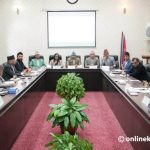
The parliamentary committee is now preparing to discuss amendments submitted to the bill. The Industry, Commerce, Labour and Consumer Welfare Committee under the House of Representatives is scheduled to hold a discussion with experts on the Mines and Minerals Bill, 2026, on Monday, before proceeding to discussions with lawmakers who have proposed amendments.
Lawmakers have submitted amendment proposals in 35 groups on the bill.
The bill was introduced by Minister for Industry, Commerce and Supplies Gauri Kumari. It was registered in the House of Representatives on August 14, with lawmakers subsequently submitting amendments in 35 groups.
The government introduced the bill to clarify the rights and responsibilities related to mines and mineral resources in line with the federal governance system.
The proposed legislation aims to make the conservation, exploration and extraction of mines and minerals more systematic, scientific and sustainable. It contains 63 sections.
The Mines and Minerals Act, 1985, is currently in force. The new bill seeks to repeal and replace the existing law, adapting it to the current governance system and decentralising authority in line with the federal democratic republic. It also proposes specific provisions concerning ordinary construction minerals, strategically and militarily significant minerals, and radioactive minerals.
The Constitution of Nepal distributes authority over mines and mineral resources among the federal, provincial and local governments.
According to the Ministry of Industry, Commerce and Supplies, the existing Mines and Minerals Act, 1985, was enacted before the implementation of the federal governance system and is insufficient to address the current constitutional framework, federal structure, modern mineral administration, environmental accountability, strategic mineral management and investment promotion requirements.
The ministry said the new bill was drafted to improve the scientific management of mineral resources and make their conservation, exploration and extraction more systematic, transparent and streamlined.
The bill also aims to regulate strategic, militarily significant and radioactive minerals, provide a legal basis for geological research and earthquake monitoring, and clarify jurisdiction and coordination among the federal, provincial and local governments through the amendment and consolidation of existing laws on mines and minerals.