


In the aftermath of the catastrophic Rasuwa-Gyirong flash flood, Prime Minister Balendra Shah proposed that Nepal, India and China work together to address climate-related disasters in the Himalayas. In his address to the United Nations, he called for a Himalayan Climate Resilience Mechanism focused on mountain observation, information-sharing and early-warning systems.
“Through this mechanism, let us share satellite data and expertise. Let us monitor dangerous glacial lakes. Let us strengthen joint early-warning systems. And when disaster strikes, let us coordinate assistance across borders,” Shah said.
A month after his address to the UN, Shah is visiting India, one of the two neighbours he hopes to bring together through the proposal. The visit presents an opportunity to advance an ambitious idea that seeks to transcend the geopolitical rivalry between two major powers in the interest of a shared regional challenge.
Can Nepal make this proposal a meaningful part of its foreign policy? And can it encourage India and China to cooperate on an issue that increasingly threatens the lives and livelihoods of millions across the region?
Although Nepal has a history of initiating regional platforms and institutions, bringing India and China together around the climate crisis in the Himalayas remains a particularly difficult task. Shah’s proposal is timely, but it is only a starting point. The scale of the crisis demands cooperation that goes beyond disaster monitoring, early warnings and information-sharing to encompass a broader vision of regional cooperation.
The Himalayas should no longer be viewed merely as a geographical boundary or strategic frontier. They are a shared lifeline, and the threats facing them are increasingly an existential concern for the countries and communities that depend on them.
The Himalayas as an existential threat
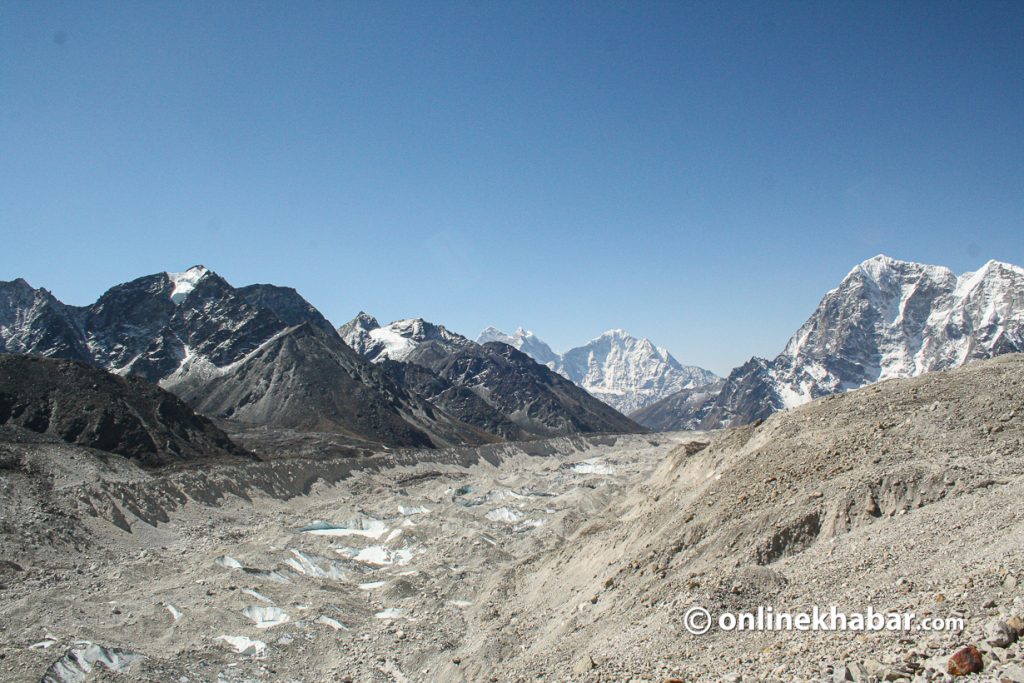
The Hindu Kush-Himalaya (HKH), often described as the Third Pole, is one of the world’s most important mountain regions. Its glaciers, snowfields and river systems sustain communities and economies across 16 countries, with more than two billion people depending directly or indirectly on the region’s water resources.
For centuries, the Himalayas have been viewed through strategic and geopolitical lenses. Western powers regarded them as an important vantage point between China and India, while the two regional powers often treated the mountains as natural frontiers. But climate change is increasingly challenging this traditional understanding of security.
As temperatures rise, glaciers are melting at an accelerating rate. A recent study found that the rate of Himalayan glacier melt has increased by 65 per cent. Meanwhile, an ICIMOD report identified hundreds of glacial lakes at high risk of outburst, highlighting the growing threat of sudden floods across the region.
The consequences extend well beyond mountain communities. Rapid snow and ice melt can trigger floods, landslides and other cascading disasters, while long-term changes in glacier and snow conditions threaten the water supply of major river systems. Communities and economies downstream are increasingly exposed to the consequences of changes occurring far above them.
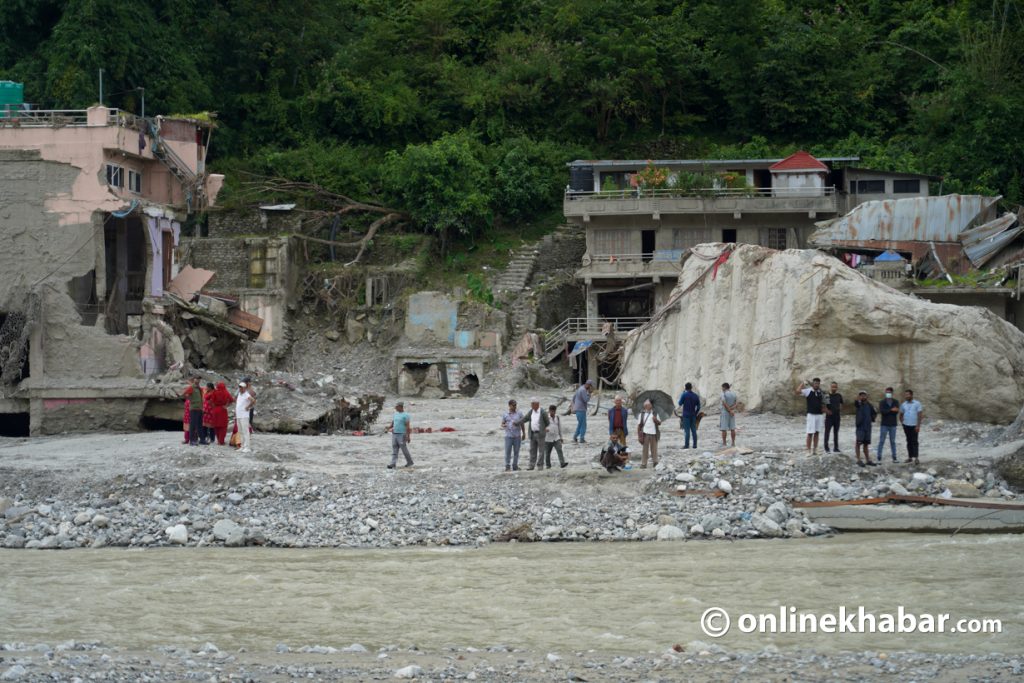
The Rasuwa-Gyirong flood is a reminder that mountain disasters do not respect national boundaries. A hazard originating in one part of the Himalayas can quickly become an emergency across borders, making coordinated monitoring, preparedness and response essential.
The discourse following the flood has largely focused on improving observation systems, sharing information, strengthening early warnings and seeking climate-related financial support for reconstruction and mitigation. These are necessary measures. Better information can save lives, and financial assistance can help communities recover.
But these measures alone cannot address the scale of the crisis. The region needs to invest in technologies capable of monitoring glaciers, snowfields and dangerous glacial lakes in real time, while developing mechanisms for sharing information and coordinating responses. More importantly, it needs a broader framework of cooperation that addresses the underlying vulnerabilities of the Himalayan region and the development choices shaping its future.
Beyond early warnings, a regional framework
The countries of the Himalayan region need to move beyond reactive disaster management and begin imagining a broader framework of regional cooperation. This requires recognising the Himalayas as a shared geographical, environmental and economic space rather than a collection of national territories divided by political boundaries.
Such cooperation should also reconsider how sustainable development is understood in the region. China and India have long defended their right to economic development, pointing to the historical emissions and development trajectories of Western countries. Both have legitimate ambitions to improve living standards and expand their economies.
However, the conventional development model has also contributed to environmental degradation and climate change. The countries of the Himalayan region must confront the consequences of that model while pursuing economic growth. They need a development framework that recognises the ecological vulnerabilities of the mountains, the dependence of downstream communities on their water systems and the long-term consequences of climate change.
China and India, now among the world’s major economic and technological powers, have an opportunity to contribute to such a framework. Rather than relying exclusively on externally developed approaches, the countries of the region could collectively develop a model of climate-resilient development suited to their geographical, economic and social realities.
But this requires institutional cooperation capable of translating scientific evidence and policy recommendations into collective action.
The International Centre for Integrated Mountain Development (ICIMOD) has played an important role in generating research, building regional knowledge and providing policy recommendations for the HKH region. Yet research and recommendations alone cannot ensure that governments adopt coordinated policies or implement them.
The region needs a stronger political mechanism that brings governments together regularly, enables cooperation on shared challenges and facilitates collective action.
A regional body for the Hindu Kush-Himalaya could build on existing institutions and initiatives while expanding cooperation in three broad areas.
First, it could strengthen climate monitoring and early-warning systems through shared satellite technologies, glacier and glacial lake observation, real-time information-sharing and coordinated alerts. The objective would be to improve the ability of countries to anticipate and respond to disasters before they become catastrophic.
Second, it could develop regional disaster preparedness and response mechanisms. Joint training, coordinated rescue operations, relief logistics and the development of technologies suited to difficult mountain terrain could improve the region’s ability to respond to emergencies. Such cooperation could also help countries coordinate assistance in areas where political disputes complicate disaster response.
Third, the forum could address broader questions of sustainable development, water governance, clean energy and cross-border infrastructure. The Himalayan region’s river systems, energy resources and ecological vulnerabilities are interconnected. Cooperation on water management, electricity trade, climate-resilient infrastructure and sustainable financing could help countries pursue development while reducing shared risks.
Such a mechanism would not necessarily resolve existing political disputes. But regular engagement around common challenges could create opportunities for dialogue, build trust and gradually expand cooperation into areas where collective action is necessary.
The challenges taller than Everest

The task is formidable. India and China have unresolved border disputes, competing strategic interests and deep political mistrust. Their relationship has repeatedly been shaped by geopolitical tensions, making cooperation on a regional mechanism involving both countries difficult.
Water politics presents another challenge. China’s development of infrastructure on the Yarlung Tsangpo, which flows into the Brahmaputra, has raised concerns in India. India and Pakistan continue to face tensions over the Indus Water Treaty, while Bangladesh remains concerned about water-sharing arrangements involving rivers that originate or flow through India. Nepal, too, has long struggled to establish equitable arrangements for the development and management of its rivers.
These disputes demonstrate how water and infrastructure projects can become entangled in national security concerns and political competition. A regional framework centred on the shared vulnerability of the Himalayas could provide an avenue for dialogue, although it would not eliminate the underlying disagreements.
The region also has a difficult history of regional cooperation. SAARC, which could have provided a foundation for broader collaboration, has been largely paralysed by India-Pakistan tensions. BIMSTEC has offered an alternative platform, but regional cooperation has yet to reach the level required to address the interconnected challenges facing the Himalayas.
A lack of political trust between India and China remains one of the biggest obstacles. Both countries have differences ranging from territorial disputes to political and strategic competition. However, their growing economic and technological capabilities, along with their shared dependence on the Himalayan region, create incentives to cooperate on issues that affect both.
The challenge is to establish a framework in which cooperation does not require resolving every existing dispute. Countries need to find ways to work together on shared risks while continuing to manage their political differences.
A shared future
The Rasuwa-Gyirong flood has demonstrated the urgency of regional cooperation. Better monitoring, early-warning systems, information-sharing and disaster response can reduce risks, but the long-term future of the Himalayan region also depends on how its countries approach development, water management and climate resilience.
India and China have the technological, economic and institutional capacities to contribute significantly to such cooperation. Nepal, situated between the two and directly exposed to the consequences of climate change in the Himalayas, can help initiate and facilitate a regional conversation.
The future of the Himalayas cannot be secured through isolated national efforts. The shared geography means that the risks are interconnected, and the consequences of inaction will extend across borders.
Shah’s proposal at the UN should not be allowed to remain a diplomatic announcement. His India visit offers an opportunity to carry the proposal forward and encourage both neighbours to consider cooperation on one of the most pressing challenges facing the region.
It does not require India and China to resolve their existing differences or abandon their strategic interests. It requires them to recognise that some challenges are too consequential to be addressed independently.
The Himalayas have long been treated as a frontier separating powers. The climate crisis demands that they be understood as a shared lifeline. Whether the countries of the region can make that shift will shape the future of millions of people who depend on the mountains.