

The 31st United Nations Climate Change Conference (COP31) is scheduled to take place in Türkiye from November 9 to 20, bringing renewed attention to the growing climate crisis and its disproportionate impact on vulnerable countries such as Nepal.
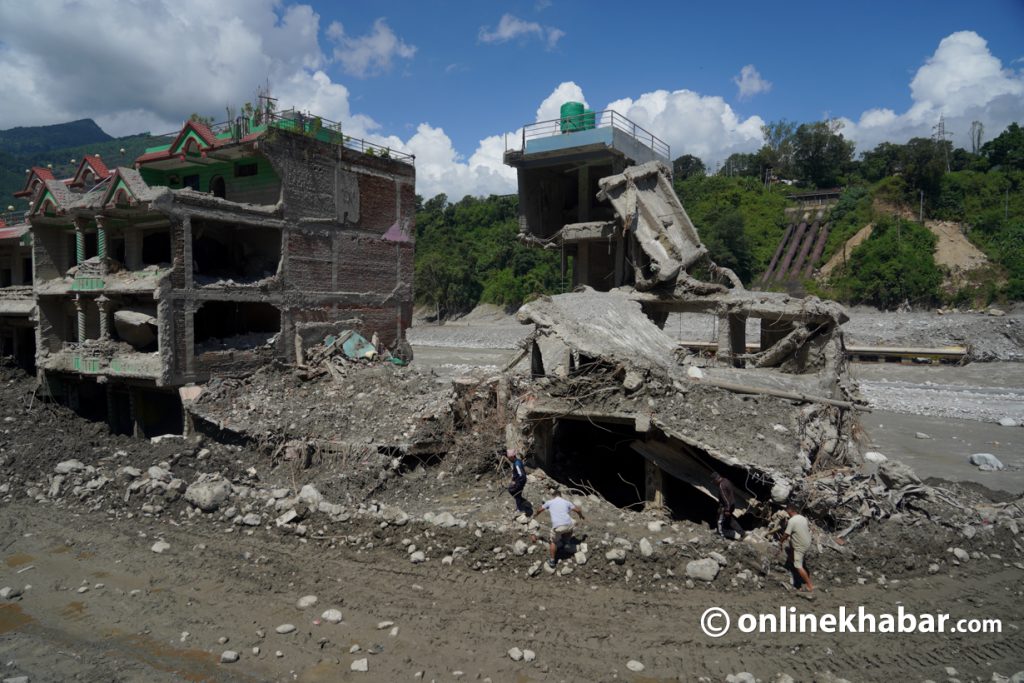
Coming just two and a half months after the devastating August 26 floods in Rasuwa, the conference is particularly significant for Nepal. The country plans to push for greater recognition of the impacts of climate change on mountain ecosystems, stronger commitments to limiting global temperature rise, climate justice and increased grant-based climate finance.
Nepal is also preparing a proposal seeking $20 million from the Fund for Responding to Loss and Damage to address the consequences of the Rasuwa–Bhotekoshi floods, particularly the destruction of agricultural land and losses suffered by farming communities.
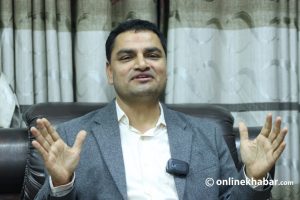
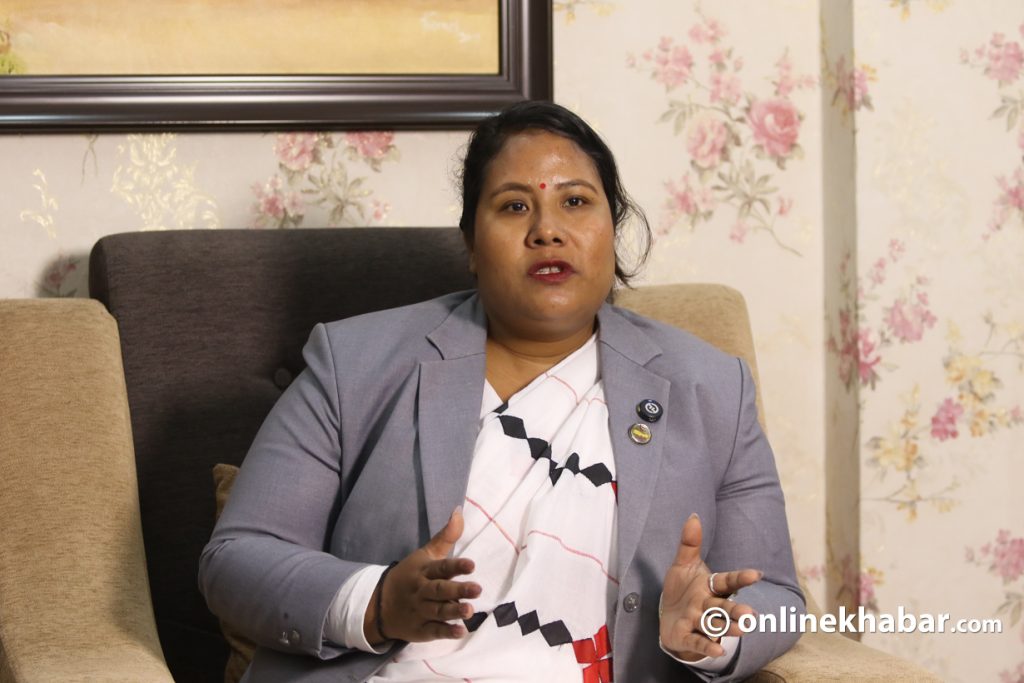
In this interview with Onlinekhabar, Minister for Agriculture, Forests and Environment Geeta Chaudhary discusses Nepal’s preparations for COP31, its key negotiating priorities, the proposed loss and damage funding and how international climate commitments can translate into support for communities affected by climate disasters.
COP31 is scheduled to take place from November 9 to 20. How prepared is Nepal for the conference?
Our preparations have reached the final stage. We are not going alone as a government delegation; we are taking all relevant stakeholders with us.
We are particularly focusing on participation from the federal, provincial and local governments, as well as civil society, young people and the Gen Z community. No matter how much preparation we do, it always feels as though something remains to be done until the very end. Nevertheless, we have been preparing at a very rapid pace.
Who will be part of Nepal’s delegation? Is the country planning to send a jumbo delegation?
We will be participating under the leadership of Foreign Minister Shishir Khanal. Members of Parliament from different political parties, members of the National Assembly, and representatives from provincial and local governments will also be joining us.
Rather than calling it a jumbo delegation, I would describe it as a delegation of stakeholders. Those who experience the consequences of climate change should be the ones telling the world about them. Everyone will have the opportunity to speak on issues relevant to their respective areas.
Why is this year’s COP particularly important for Nepal?
We need to tell the world about the problems we are currently facing. The challenges Nepal is experiencing are not just a threat to our country but to the entire world.
We are suffering the consequences despite having played no role in causing these problems. We have not made the mistakes responsible for this situation, nor have we contributed significantly to creating it. Yet, we are bearing the responsibility and the consequences.
The world needs to understand that we are paying the price for something we are not responsible for. That is what makes this COP particularly important for us.
Foreign Minister Shishir Khanal has said Nepal will prioritise the unique challenges facing mountain regions, climate-induced loss and damage, climate finance and climate justice. Which specific issues will Nepal prioritise?
There is no difference between what the foreign minister and I will be saying. We share the same priorities.
Our primary focus will be on mountains and mountain-related issues. The Himalayas do not sustain Nepal alone. They provide water to nearly two billion people living downstream from us.
There is considerable global attention and concern over rising sea levels, but the same level of attention has not been given to the mountains. We need to amplify that concern because the Himalayas are not just our national asset; they are a global asset.
Just as rising sea levels are creating serious problems, the melting of glaciers and the degradation of mountain ecosystems are also causing significant harm. That is why mountains will remain our foremost priority.
It is often argued that even limiting global warming to 1.5 degrees Celsius is not sufficient for the Himalayas. Will this issue also be discussed at COP31?
Yes. Global temperature rise must not exceed the 1.5-degree Celsius threshold. It needs to remain below that level. Even 1.5 degrees Celsius is too high for the Himalayas.
Nepal and Bhutan have already jointly sent a letter seeking to include this issue in the formal COP agenda. Once we are there, we will also work and engage in dialogue with other mountain countries to raise the issue at the conference.
What other areas of cooperation are you pursuing with Bhutan?
We are working towards effective scientific studies on the impacts of rising temperatures, high-level dialogues on climate change and the establishment of a mountain ecosystem initiative, along with the development of an action plan.
Another important issue is that climate adaptation and loss and damage funding must be entirely grant-based rather than provided as loans.
If we have not contributed to causing the problem, why should we have to carry the burden of debt? That is why we are jointly pushing for grant-based financing.
The board of the Fund for Responding to Loss and Damage has asked Nepal to submit a $20 million proposal in response to the Rasuwa–Bhotekoshi floods. What progress has been made?
We are currently working on preparing the proposal. The Ministry of Agriculture, Forests and Environment is giving this matter particular attention.
The Rasuwa–Bhotekoshi floods caused loss of life and extensive damage to infrastructure. However, one of the biggest problems was the destruction of agricultural land and the loss of livestock.
We are therefore developing a proposal that will directly reach the affected local communities. Given the limited timeframe, we will submit it within the deadline.
Reconstruction following the Bhotekoshi floods is estimated to require nearly $5 billion. Isn’t the $20 million expected from the fund just a drop in the ocean?
One thing we need to understand is that we are fighting for climate justice. This is the first time Nepal has received an allocation from the Loss and Damage Fund. We have made a beginning and taken the first step.
Although the amount is relatively small, it demonstrates that the international community has begun recognising the injustice faced by countries like Nepal and acknowledging that something needs to be done to address it.
We are working through different ministries to expand the scope of this effort. The Ministry of Finance and the Ministry of Foreign Affairs are contributing from their respective areas. The prime minister raised these issues at the United Nations General Assembly, our chairperson also spoke about them at the Inter-Parliamentary Union (IPU), and the media, including outlets like yours, have played an important role.
This is the beginning of our fight for climate justice. We still have a long way to go.
Flood victims in Rasuwa spent their festivals under temporary tents. How will the money received from the Loss and Damage Fund reach those affected?
We are working to ensure that the funding is used effectively by focusing on the agricultural sector. Infrastructure reconstruction is being handled by the Ministry of Physical Infrastructure and Transport, while our ministry will concentrate on agriculture.
The flood-affected area is one of the largest suppliers of vegetables to Kathmandu. It previously had extensive areas of highly fertile agricultural land.
We are therefore preparing a proposal focused on protecting agricultural land, restoring the conditions necessary to transport vegetables from the region to Kathmandu and coordinating with different agencies to reach farmers directly.
The proposal will also cover the promotion of local agricultural production and indigenous seeds.
Before the Rasuwa floods, Nepal had already submitted three proposals to the Loss and Damage Fund. Will the allocation of $20 million affect the implementation of those proposals?
The 11th meeting of the fund’s board will be held in Nepal next March, where those three proposals will be discussed.
For now, the Rasuwa–Bhotekoshi floods have created an extremely difficult situation, so we sent a separate formal request through the Ministry of Agriculture and the Ministry of Finance. The $20 million allocation was made based on that request.
The other proposals are currently under consideration, and we have received positive responses from the board. Their direct visit to Nepal and the opportunity to see the situation on the ground will certainly make a difference.
What is the agreement Nepal is expected to reach with South Korea at COP31?
We are working with South Korea on cooperation in carbon finance. Discussions on other areas of cooperation will also take place.
What are Nepal’s minimum expectations from the COP in Türkiye?
Our biggest expectation is that the Mountain Agenda we have been advocating for will be incorporated into the formal COP agenda. That would be our first major success.
Second, we want to ensure that the relevant authorities and stakeholders are held accountable for the direct impacts and suffering Nepal is experiencing because of climate change.
Third, there is the issue of climate finance. We have not contributed to causing the problem, yet we are suffering its consequences. Therefore, we need climate finance.
These are our three main expectations from the conference.
How was Nepal able to send a request to the fund within just a week of the Rasuwa–Bhotekoshi floods? How did you coordinate with the Ministry of Finance?
The people have given us a mandate to make decisions quickly.
Immediately after the floods, all ministers met at the Prime Minister’s Office and the National Disaster Risk Reduction and Management Authority. Ministers were working throughout the day, including early mornings and evenings, to respond to the disaster.
Even before going to the authority, I called a meeting of my ministry’s senior management team to discuss the situation.
Farmers had suffered the greatest losses. For many people, a house may be their most valuable possession, but for farmers, the livestock they have raised and cared for represent their livelihood. They lost their cattle and other animals.
In addition, employees from the national parks under our ministry were working in the forests, and the largest fish farming operation along the Trishuli was located in the affected area. The Nepal Agricultural Research Council (NARC) also had facilities there, along with several agricultural offices. All of these suffered damage.
After seeing the extent of the destruction, we immediately came up with the idea of preparing a proposal. Once our senior management team approved it, we took the request to the Ministry of Finance. They did not object, and we were able to move forward immediately.
As a minister, you were the first to take such a proposal forward. Did you expect the fund to make a decision so quickly?
Even before becoming a minister, I was an activist fighting for climate justice. I have also been involved in voluntary work during disasters, including earthquakes.
Settlements in the Tarai are flooded every year, and farmers in Karnali face similar hardships. I have witnessed their suffering firsthand. When you speak about pain that you have personally experienced and understood, your words carry weight.
The week the floods occurred, a meeting of the Least Developed Countries (LDCs) was taking place. I went there and raised the issue before representatives of 44 countries. It was also raised at the UN General Assembly.
The media supported us tremendously. At the same time, young people around the world launched campaigns demanding grants instead of loans. I received thousands of emails in support of this cause.
What we achieved was the result of contributions from all stakeholders, each playing their part wherever possible.
I also raised the issue strongly during bilateral meetings, with the Australian team involved in the COP presidency and with members of the fund’s team.
I told them, ‘We do not need sympathy. If all you can offer is sympathy, then say no. This is our right, and we must receive what we are entitled to.’
As a result of these efforts, we have received not only $20 million from the Loss and Damage Fund but also $45 million from the Adaptation Fund. These achievements have been possible because of collective support.
We are making every effort to prepare for COP. When we return, we will do everything possible to ensure that the outcomes reach farmers in Karnali, flood victims in Rasuwa and communities in the Tarai.