
Kathmandu, November 3
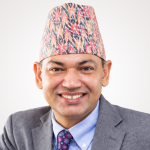
Jigyan Kumar Thapa’s qualifications were not in question when he was proposed as Nepal’s ambassador to Japan. But during his parliamentary hearing, lawmakers raised concerns that his appointment could create a conflict of interest because of his longstanding personal, family and professional ties to Japan.
At the hearing on October 14, ruling Rastriya Swatantra Party (RSP) lawmaker Madhu Kumar Chaulagain questioned how Thapa could represent Nepal in a country where he had worked for years, where his family lived with permanent residency, and where he had accumulated property.
“You have worked for a long time in the country where your family continues to live with permanent residency. You have also acquired property in Japan. How can you represent Nepal in that same country without a conflict of interest?” Chaulagain asked.
Other members of the Parliamentary Hearing Committee also raised questions about the issue. For the next 20 days, Thapa attempted to address the concerns, while the committee sought to establish the facts.
Through the Ministry of Foreign Affairs, the committee requested additional information from the Japanese government. It sought clarification on whether Thapa had held any appointments from Japanese government agencies, received salaries or other benefits from public funds, or had any financial or institutional ties through his association with a Japanese foundation. However, the committee was unable to obtain definitive answers on several of these issues.
Thapa eventually decided to withdraw his nomination.
In his withdrawal letter, he acknowledged that the parliamentary hearing process was ongoing and that further examination and clarification were being sought on matters related to potential conflicts of interest arising from his connections with Japan.
He also referred to democratic values, good governance and the dignity of parliamentary proceedings.
“I firmly believe that national interest, moral integrity and transparency stand above any position,” Thapa wrote. “In keeping with this conviction, I have decided to respectfully withdraw my name from the ongoing parliamentary hearing process for the position of Nepal’s ambassador to Japan.”
The decision, according to Parliamentary Hearing Committee chair Bodhanarayan Shrestha, enhanced the committee’s standing.
“Jigyan Kumar Thapa demonstrated high moral integrity. He understood and acknowledged the issue of conflict of interest himself and submitted the withdrawal letter. This has enhanced the dignity of the committee and strengthened parliamentary practice,” Shrestha said.
According to Shrestha, this is the first time in Nepal’s parliamentary history that a nominee has withdrawn from an appointment process after questions were raised specifically about a potential conflict of interest.
“People proposed for various positions have withdrawn their names in the past. But this is the first time such a decision has been made over a conflict-of-interest concern,” he said. “A new and different practice has begun through the parliamentary hearing process.”
Nepali Congress lawmaker Arjun Narsingh KC also said he had not heard of a previous case in which a nominee withdrew after conflict-of-interest concerns were raised during a parliamentary hearing.
“The proposed ambassador said that if there was a conflict of interest with regard to the national interest, he would withdraw from the race. This should genuinely be regarded as a commendable step,” KC said.
KC, who has been active in parliamentary politics since 1981, said conflicts of interest were not limited to an individual’s professional competence or qualifications. Previous business engagements, family connections and financial interests could also raise questions about someone’s suitability for public office.
“Those in positions of power have often used conflicts of interest to their advantage. Against that background, the decision to decline a position when circumstances indicate a potential conflict is commendable in itself,” he said.
KC argued that the practice should become a guiding principle for appointments across government, diplomatic, non-governmental and administrative institutions.
“The tendency to pursue public office even when there is a clear possibility of conflicting interests must be discouraged,” he said. “Monday’s development sends a message that anyone seeking public office must also be conscious of their relationships with the institution or country to which they may be appointed.”
Thapa has a long academic and professional history in Japan. He holds a master’s degree in international relations and law from Yokohama National University and a bachelor’s degree in international cooperation from Sumei University.
Since 2009, he had worked at the Kanagawa International Foundation as a specialist in international cooperation, public policy and multicultural affairs. He had also taught as an associate professor at Japanese universities, including Tsukuba, Aoyama Gakuin and Nihon University.
He had worked closely with the Japan International Cooperation Agency (JICA), UNICEF and Japanese local governments on international cooperation and migration governance initiatives. He also served as an adviser to the Japanese Chamber of Commerce in Nepal.
Thapa is a former general secretary of the Non-Resident Nepali Association (Japan) and former president of the Nepalese Students’ Association in Japan. It was his extensive connections with the country where he was proposed to serve as ambassador that prompted the conflict-of-interest questions.
Maoist Centre lawmaker Barshaman Pun said Thapa appeared qualified based on his background and professional experience, but that his connections with Japan made withdrawing from the appointment process appropriate.
“Looking at his CV and background, he appeared qualified. But when it comes to Japan specifically, there are several issues that could create a conflict of interest,” Pun said.
He noted that although Thapa had already renounced his permanent residency, questions remained about his investments, house and other assets in Japan.
“His decision to withdraw his own name is a good practice that helps establish standards of good governance and high ethical conduct,” Pun said.
CPN-UML lawmaker Padma Aryal also described the withdrawal as a positive precedent.
“Today’s development sends a message that the Parliamentary Hearing Committee is not merely a forum for completing formalities,” she said. “The state can make use of a qualified person for another country.”
Questions remain unanswered
Even as the proposed ambassador withdrew over conflict-of-interest concerns, several questions about his ties to Japan remained unresolved.
The Parliamentary Hearing Committee had written to the Ministry of Foreign Affairs on October 14, seeking clarification about Thapa’s professional background and his connections with Japanese government ministries, universities and other organisations between 2009 and 2026.
According to committee secretary Tul Bahadur Kandel, the committee had specifically sought information on whether Thapa had received any appointment from Japanese government agencies and whether he had been paid or given other benefits from public funds.
The Ministry of Foreign Affairs sent its response only on Monday. According to the ministry, Thapa’s permanent residency in Japan was no longer valid after he left the country on March 25.
The ministry had contacted Japan’s Ministry of Foreign Affairs through Nepal’s embassy in Tokyo. In its response, the Japanese ministry stated that Thapa’s permanent residency had ceased to be valid from November 1. However, the Japanese government did not provide answers about Thapa’s association with the Kanagawa International Foundation (KIF) or whether he had received appointments from Japanese government agencies.
“His permanent residency status has been clarified. But further information is needed about his work at the foundation, including how he was paid and the nature of his involvement,” committee chair Shrestha said during the hearing process.
In other words, although Thapa’s permanent residency status was clarified, the committee did not obtain complete information about his other connections with Japan.
Political analyst Mumaram Khanal questioned why Nepal had to seek information from the Japanese government about a person it was preparing to appoint as its ambassador to that very country.
“The surprising thing is that the government had to ask Japan to provide information about the background of someone it was about to appoint as ambassador to Japan. Is there any other country in the world that would make such an absurd decision?” Khanal asked.
He argued that the authorities responsible for recommending an ambassador should already know the nominee’s background.
“Now, in an era when we claim to choose the knowledgeable and qualified, we ended up with someone who had gone to Japan for ordinary work. We have not only embarrassed the country but also disrupted Jigyan Kumar Thapa’s comfortable life in Japan,” he said.
Nepal has no separate conflict-of-interest law
Although Thapa withdrew from the appointment process after questions were raised about a potential conflict of interest, Nepal does not have a separate law specifically governing the issue.
Committee chair Shrestha said the episode had made the need for such legislation more apparent.
“Defining a conflict of interest, determining how to examine it and deciding whether a particular situation constitutes a conflict of interest are complicated matters,” he said. “Although various laws contain some provisions related to good governance and conflicts of interest, the absence of a separate law creates uncertainty in how these issues should be interpreted and assessed.”
Committee secretary Kandel said that after Thapa withdrew his name, the committee would inform the Cabinet through the Ministry of Foreign Affairs that the hearing process had been suspended. However, the formal decision would not specifically state that conflict-of-interest concerns had led to the withdrawal.
“The decision will state that the process has been suspended because the nominee submitted a letter withdrawing his name. But since his letter explaining the reasons will be attached, it will provide the government with a reference for assessing the need for legislation on the issue,” Kandel said.
The need for a conflict-of-interest law has previously been raised in parliament and various parliamentary committees. However, the process of drafting such legislation has yet to begin.
Kandel said the recent discussion in the hearing committee had highlighted the importance of the issue, particularly because parliament is the institution responsible for making laws.
“Since the need for a conflict-of-interest law was discussed in the hearing committee, which is part of the legislature, this has also demonstrated its importance. The government can move forward by taking the circumstances and the need into account,” he said.
According to records maintained by the Parliamentary Hearing Committee secretariat, Thapa’s case was not the first in which a nominee withdrew after concerns were raised during a parliamentary hearing.
However, it was the first time a nominee had withdrawn specifically after conflict-of-interest concerns were raised and had explicitly referred to those concerns in the withdrawal letter.
In June 2024, the Constitutional Council recommended Krishna Man Pradhan for appointment as an election commissioner. After the nomination reached the Parliamentary Hearing Committee, complaints were filed against him alleging sexual exploitation and misconduct. The allegations included claims that he had sexually exploited a woman over an extended period and settled the matter through a financial agreement involving Rs 12.5 million. Pradhan withdrew his nomination on July 29, 2024.
Similarly, the Cabinet recommended Ram Krishna Bhattarai for appointment as Nepal’s ambassador to Sri Lanka in August 2024. After questions were raised during the parliamentary hearing about whether he had completed his bachelor’s degree, the committee asked him to submit his academic certificates. He was unable to provide the required documents and withdrew his nomination on September 24, 2024.
Thapa’s case was different from both. His withdrawal did not follow questions about academic qualifications or personal conduct. Instead, it came after lawmakers questioned whether his long-standing residential, family and professional connections with Japan could create a conflict of interest if he were appointed to represent Nepal there.
His withdrawal has therefore marked a first in Nepal’s parliamentary hearing process and renewed calls for a separate law to define, assess and regulate conflicts of interest in public appointments.