
Kathmandu, November 2
Rastriya Swatantra Party (RSP) has often criticised actions taken by its own government, with party chair Rabi Lamichhane and General Secretary Bipin Acharya issuing both verbal and written statements expressing their concerns.
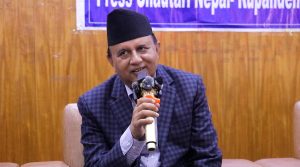
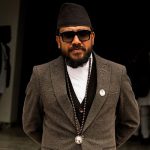
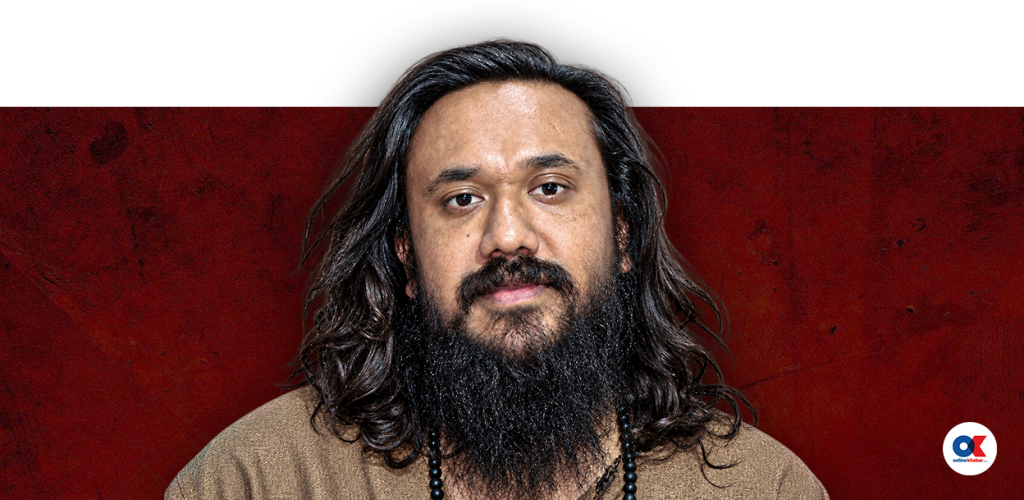
However, the party is now facing questions over its handling of a controversial audio recording involving its lawmaker Khagendra Sunar. The party’s own investigation committee appears to be moving towards clearing him of wrongdoing, raising concerns about whether the RSP is acting as investigator and judge in a matter involving allegations of abusive and threatening language against a woman.
The controversy has also put the party’s commitment to good governance and social responsibility under scrutiny.
The party’s disciplinary commission was initially instructed to investigate the authenticity and circumstances of the audio after it became public. The recording allegedly features Sunar using obscene language and making violent remarks towards a woman.
Following the party’s directive, the commission formed an investigation panel led by its deputy chief, advocate Harichandra Bhattarai. The other members are Upendranandan Yadav, Sushila Simkhada, Santosh Acharya, Ramchandra Karki and Santosh Bishunkhe.
Based on its investigation so far, the committee has reached a preliminary conclusion that Sunar should not face disciplinary action. However, the panel has not directly met the woman identified as the alleged victim to hear her account. A committee member said the panel had not contacted her because the matter fell outside its terms of reference.
The committee is reportedly considering clearing Sunar based on several factors, including his denial of the allegations, an interview in which the woman said she was not a victim, and the absence of a formal complaint from her side.
The committee was preparing to submit its recommendations before Tihar.
“We have recorded his statement and collected other audio recordings,” committee member Santosh Acharya told Onlinekhabar.
The committee obtained an unedited version of the audio from the Jana Astha newspaper. It also requested News 24 to provide the audio of the interview with the woman. However, no technical examination has yet been initiated to establish whether the voice in the controversial recording belongs to Sunar.
Since Khagendra Sunar has denied that the voice is his and the woman identified as the victim has publicly said she was not a victim, the committee has yet to decide whether to conduct a forensic examination.
“There is also the question of whether to conduct a technical examination. Khagendra Sunar has denied the allegations, and the woman identified as the victim has already given an interview saying she was not a victim,” another committee member said.

The panel has so far leaned towards the conclusion that the audio does not belong to Sunar, without an independent forensic assessment. Critics have questioned why the party appears eager to clear him rather than send the recording to the Nepal Police forensic laboratory or another competent institution for verification.
After the audio became public, Sunar had publicly denied that the conversation was his. He also claimed that the recording was fabricated using artificial intelligence.
“The audio of a conversation with an imaginary woman has been made public and attributed to me. All the allegations made public are false. They are propaganda created using technologies such as AI,” he had said.
The recording has not been sent for audio forensics, and the committee has yet to decide whether to pursue such testing.
According to a source familiar with the matter, party chair Rabi Lamichhane himself questioned within the party whether more lawmakers and leaders should be put at risk in the name of investigations.
Sunar has maintained that the controversy is part of a planned conspiracy against him by Inspector General of Police Dan Bahadur Karki, following his allegations of corruption within the police force.
Some party leaders told Onlinekhabar that the leadership had instructed them not to be swayed by what they described as continued opposition attacks against Sunar.
However, stakeholders argue that the absence of a formal complaint does not mean state agencies should refrain from investigating such a sensitive matter.
“Since when did the RSP start acting as its own judge and lawyer in a matter involving a woman’s dignity and right to justice?” a rights activist asked.
A committee member said that if the panel decides to proceed with audio testing, it will take several more days to submit its report.
“If we go ahead with audio testing, it will take some time. If we decide not to conduct it, we can reach a conclusion soon. If there is no victim, the report will reflect that,” the member said.
Earlier dispute settled at police station

The controversy surrounding the audio has also brought an earlier dispute between Khagendra Sunar and a woman to public attention. The dispute was settled through a written agreement on February 27, 2022, at the Swayambhu Police Circle.
Sunar has repeatedly claimed that he is being targeted because he raised allegations of corruption within the police force.
A complaint had been filed with a parliamentary committee alleging irregularities in the procurement of uniforms for election police. During a parliamentary committee meeting, Sunar had called for the removal of the inspector general to facilitate an investigation.
After the audio controversy emerged, Sunar said he had faced repeated attacks since raising questions about corruption in the police force.
“Ever since I raised questions about corruption within the police, I have been under continuous attack and made a target of various allegations,” he said.
Questions over the role of state agencies
The RSP had also drawn the attention of state agencies to the audio controversy. In a statement, General Secretary Bipin Acharya had expressed confidence that the relevant state agencies would promptly conduct an independent, impartial and fact-based investigation.
However, there has been little visible progress towards an independent investigation. The RSP has also faced criticism for appearing to consider its own statement sufficient to discharge its responsibilities in the matter.
Opposition parties, too, have so far shown little indication of taking up the issue publicly.
The National Human Rights Commission said it was monitoring the matter after the audio was broadcast by the media. However, the National Women’s Commission said it had not received a formal complaint from the woman concerned.
Commission spokesperson Krishnakumari Khatiwada said the commission could not initiate legal proceedings without a complaint from the alleged victim.
“Since the victim has not filed a complaint seeking justice, the commission is not in a position to initiate legal proceedings,” Khatiwada told Onlinekhabar. “It is difficult for a constitutional body to take action solely on the basis of information circulating on social media.”
She said the commission was ready to assist the woman in seeking justice if she filed a complaint.