Kathmandu, October 12
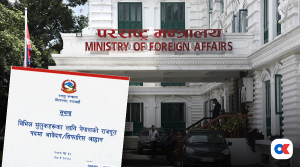
The Parliamentary Hearing Committee has begun discussions on complaints filed against 13 individuals nominated as Nepal’s ambassadors to different countries.
Complaints have been filed against all 13 nominees. Japan’s ambassador-designate, Jigyan Kumar Thapa, faces three complaints, while Giribahadur Sunar, nominated as ambassador to Saudi Arabia, faces two.
The Cabinet recommended the 13 names on September 18. The committee had decided on September 24 to invite complaints against the nominees, and seven complaints were reportedly received within the 10-day submission period.
Some complaints question the nominees’ conduct, qualifications and suitability for diplomatic appointments. The allegations have yet to be established, and the committee will have to examine them before making its decisions.
One complaint against Sunar alleges involvement in violence against women and mistreatment of women, as well as an extramarital relationship. Another alleges involvement in financial and criminal activities. These remain allegations, and the committee is expected to examine their factual basis.
Sunar is a PhD researcher in sociology at Tribhuvan University and has more than 25 years of experience in international development, policy advice and multi-stakeholder governance. He has worked on social protection, gender equality and social inclusion, among other areas.
Thapa, nominated for Japan, faces complaints alleging that he has obtained permanent residency in a foreign country after relinquishing Nepali citizenship, that his family lives abroad, and that he has property, business interests, investments, bank loans and professional liabilities in Japan. The complaints also question his eligibility for the ambassadorship. These claims have not been independently established.
Thapa holds a master’s degree in international relations and law from Japan’s Yokohama National University and a bachelor’s degree in international cooperation from Sumei University. He has worked at the Kanagawa International Foundation since 2009 in international cooperation, public policy and multicultural affairs.
A separate complaint challenges the nomination of all 13 ambassadors, alleging that the government did not follow the provisions of the Ambassador Appointment Directive, 2018.
The directive sets eligibility requirements, including Nepali citizenship, a minimum age of 35, and at least a bachelor’s degree from a recognised university. It also outlines provisions concerning dismissal from government service and convictions for criminal offences.
The directive seeks to maintain a balance between career diplomats and nominees from political or other professional backgrounds. It provides for 50 per cent of ambassadorial appointments to be drawn from gazetted first-class officers or above in the Foreign Service, with the remaining positions open to distinguished and qualified individuals from political and other fields.
The committee will examine the complaints as part of the parliamentary hearing process before deciding whether to endorse the nominations.
The 13 nominees are Nischal Nath Pandey for India, Kalyan Raj Sharma for China, Chiran Jung Thapa for the United States, former army chief Gaurav Shumsher Rana for the United Kingdom, Jijñan Kumar Thapa for Japan, Suresh Kumar Karn for Israel, Prapti Sherchan for Spain, Saru Joshi for Germany, Padmakshi Rana for Oman, Chudamani Kharel for Malaysia, Sangam Shrestha for South Korea, Manchala Jha for Sri Lanka, and Giribahadur Sunar for Saudi Arabia.