

Kathmandu, October 8
Every Dashain and Tihar, a familiar debate resurfaces on social media and in the media — why does flying to Delhi sometimes cost less than flying to Dhangadhi?
The comparison, however, often pits the lowest fare to Delhi against the highest fare to Dhangadhi, overlooking the very different economics of the two routes.
The Kathmandu–New Delhi route is served by both narrow-body and wide-body aircraft, with capacities ranging from more than 150 passengers to around 300. The route also has intense competition, allowing airlines to set fares according to market demand as they compete for passengers.
India also has lower aviation fuel prices than Nepal. Airlines operating larger aircraft can carry more passengers while paying less for fuel, allowing fares on the Delhi route to fall significantly when demand is low. During peak periods, however, fares on the same route can exceed Rs 100,000.
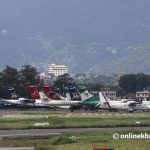
The situation is different on domestic routes in Nepal. Aviation fuel in Nepal currently costs Rs 249 per litre, while aircraft operating between Dhangadhi and Kathmandu generally have a maximum capacity of 72 passengers. Airlines also pay substantial fees to the Civil Aviation Authority of Nepal (CAAN).
During Dashain, the imbalance becomes more pronounced. Flights leaving Kathmandu are packed with passengers, while return flights to Kathmandu can operate with empty or only partially occupied seats. Airlines therefore offer lower fares on flights returning to the capital.
A former CAAN director general says comparing Delhi’s lowest fare with Dhangadhi’s highest fare is misleading.
“If you want to compare, compare Dhangadhi’s low fare with Delhi’s low fare,” he said. “It is not appropriate for the state to politicise airfares.”
Under Nepal’s current system, the government sets minimum and maximum airfare limits but allows airlines to determine fares within that range. Prices can therefore rise or fall depending on demand and supply.
“If you think Rs 22,000 for Dhangadhi is too high, then determine what the appropriate fare should be. Why politicise it unnecessarily?” the former director general said.
The debate has once again drawn the government into the issue. The Prime Minister’s Office said CAAN officials and representatives of domestic airlines held discussions on airfares on Thursday, with airlines being requested not to charge fares at the upper end of the permitted range.
But the government cannot simply penalise airlines or impose a different fare unless they are found to have breached the existing rules. CAAN spokesperson Gyanendra Bhul said there was no indication that airlines were charging above the maximum fares permitted by law.
That is why the dispute, which resurfaces almost every festive season, may have less to do with the airlines than with the regulatory framework itself.
The state has other options
The former CAAN director general argues that if the government believes fares charged by private airlines are too high, it has other ways to intervene.
One is to strengthen domestic operations of Nepal Airlines. The national flag carrier’s domestic service has effectively collapsed, with its two more than four-decade-old Twin Otter aircraft operating only limited flights, mainly to smaller airports.
“If the fare charged by private airlines in Dhangadhi is considered too high, why doesn’t the government operate Nepal Airlines flights to help control fares?” he asked.
The government could also use aircraft and helicopters operated by the Nepal Army if its priority is to provide cheaper air travel to the public, he said.
Airline operators, meanwhile, say a large share of the money passengers pay for tickets ultimately goes to government agencies.
According to airline companies, around 70 percent of the fare revenue goes to entities including Nepal Oil Corporation, CAAN and other government agencies. Airlines are left with around 30 percent, from which they must pay pilots and staff, operate their businesses, replace spare parts and make a profit.
“If the state ultimately wants tax revenue but also wants people to fly at lower prices, it should either reduce fuel costs or cut the charges imposed by CAAN for using airports,” the former director general said. “If the state is unwilling to give up anything, why blame the airlines alone?”
Airline operators say they are frustrated at being made the target of criticism for a problem they say is largely driven by state-imposed costs.
One airline operator told Onlinekhabar that the airfare ceiling was set when aviation fuel cost Rs 127 per litre. It has now risen to Rs 249.
“Let’s calculate the fares based on all these factors,” the operator said.
The price of the US dollar has also risen by around Rs 30 since the current airfare structure was set, the operator said, adding that this has pushed up the cost of spare parts as well.
Buddha Air says it is not charging the maximum fare
Buddha Air has separately clarified that it has not been charging the maximum permitted fare this year and accused social media users of spreading misleading information through AI-generated and Photoshop-edited material.
In a statement issued Thursday, the airline said a one-way ticket from Kathmandu to Dhangadhi was being offered for Rs 10,800. It said tickets at the minimum fare had been sold out on most flights on many days because of high demand.
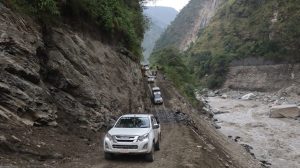
Buddha said it had introduced minimum fares during the Dashain-Tihar period after devastating floods and landslides in Rasuwa severely damaged highways and disrupted road transport.
The airline said it had announced the reduced fares until road connectivity returned to normal in an effort to provide passengers with affordable air services during the disruption.
It urged passengers not to form opinions about airfares based on misleading information or screenshots circulating on social media and other unauthorised platforms, and advised them to check Buddha Air’s official sales channels, website and mobile app for fare and ticket information.