
Kathmandu, October 7
The names on Wednesday’s cause list contained an unusual addition.
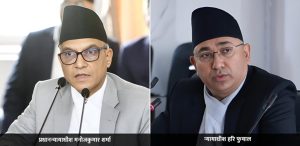
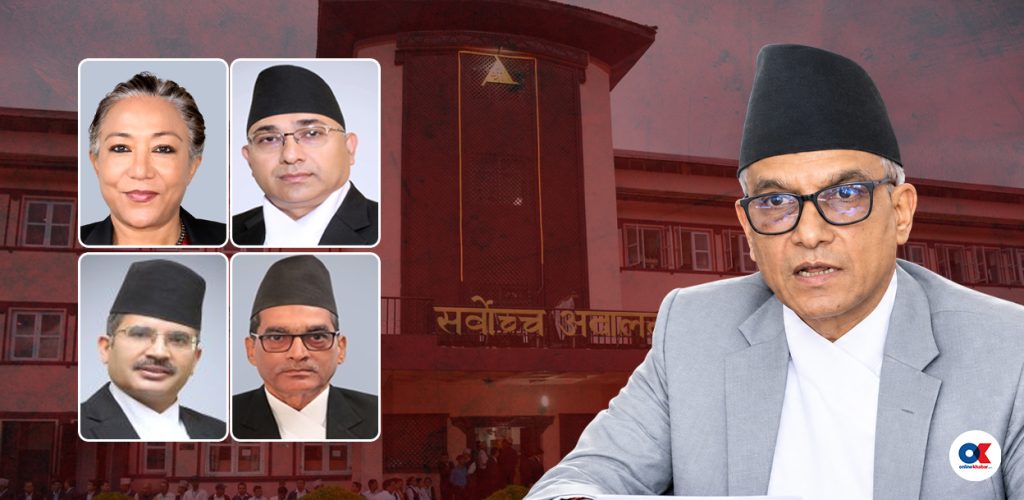
Since Dr Manoj Kumar Sharma became chief justice, Justice Hari Phuyal had not been included in any of the Constitutional Benches formed by the Supreme Court. But on Wednesday, his name appeared alongside those of Chief Justice Sharma and Justices Sapana Pradhan Malla, Nahakul Subedi and Abdul Aziz Musalman.
After the cause list was published, Phuyal went to the chief justice’s chamber, where all five judges were present.
According to one of the judges who took part in the discussion, Phuyal questioned the process by which the Constitutional Bench had been formed. He said he would be willing to sit on the bench only if the matter was discussed at the full court meeting the following day and a clear procedure was agreed upon for forming Constitutional Benches in the future.
Chief Justice Sharma responded that selecting the four judges to sit with the chief justice on the Constitutional Bench was his authority and did not require discussion at the full court.
That response prompted a sharper question from Phuyal.
“If that is the case, why was I not needed in the past, and why am I needed today? Why have you included me in the Constitutional Bench?” Phuyal said, according to the judge present at the meeting. “I cannot sit on a bench that is formed in such a subjective manner.”
The exchange continued.
Sharma reportedly pointed out that a similar practice had been followed during the tenure of former Chief Justice Prakash Man Singh Raut.
Phuyal responded that there was no comparison between Raut and Sharma.
“How can you compare Raut with you? You are not the same,” he reportedly told Sharma.
When Phuyal made clear that he would not sit on the bench, the other three judges also declined to proceed.
“If that is the case, then we cannot sit either,” they reportedly said before leaving the chief justice’s chamber.
The Constitutional Bench therefore did not sit on Wednesday. Phuyal, Malla, Subedi and Musalman returned to their respective chambers instead.
What lies behind the confrontation?
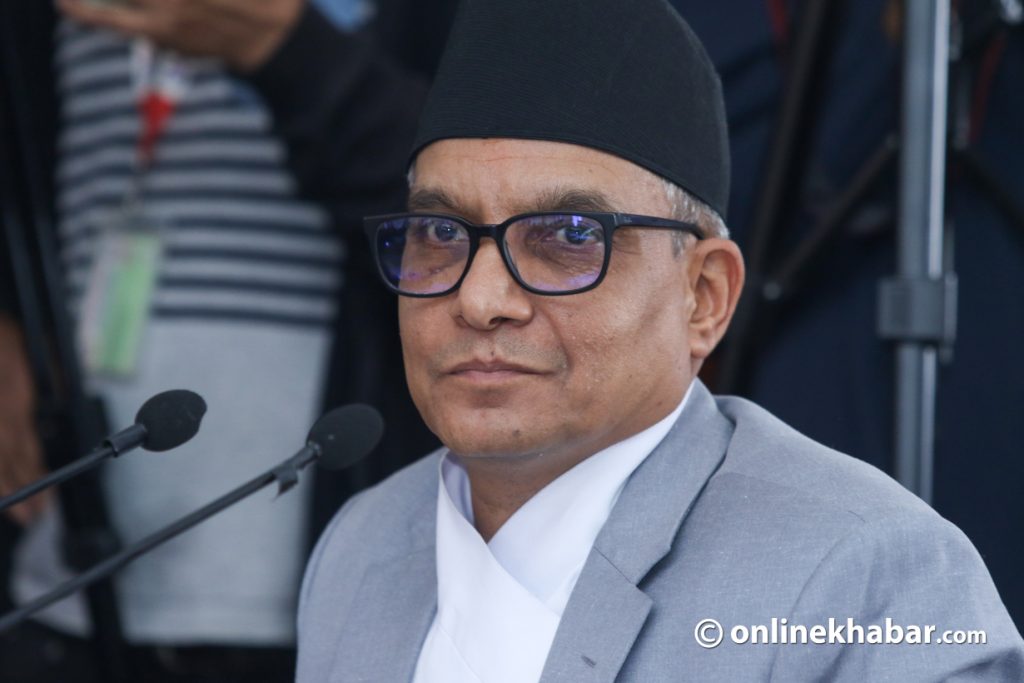
The dispute over Wednesday’s bench formation has brought to the surface deeper tensions that have been building at the Supreme Court since Sharma became chief justice about four and a half months ago.
Sharma was appointed chief justice despite being fourth in the seniority ranking at the time. According to several Supreme Court judges, more than half of the judges were dissatisfied with his appointment, while judges who had ranked ahead of him were particularly unhappy.
Some judges say the tensions that first emerged over the formation of Constitutional Benches gradually began spilling into the Supreme Court’s full court meetings.
A senior Supreme Court official said Sharma had failed to bring the dissatisfied judges into his confidence.
“He needed to work by taking those judges into confidence, but he did not appear to have the confidence to do that,” the official said. “Instead, he seemed comfortable within a small circle of judges and officials. The disagreement that began there appears to be widening.”
According to judges familiar with the matter, Sharma has not been able to win the confidence of some of the senior-most judges who would traditionally be expected to serve on Constitutional Benches.
Instead, they say, he began selecting judges according to his own preference.
That approach has also begun to affect the functioning of the bench, according to those judges.
At the time Sharma was appointed chief justice, judges senior to him included Sapana Pradhan Malla, Kumar Regmi and Hari Phuyal, along with Nahakul Subedi. Sharma was said to have shown little inclination to include some of them on Constitutional Benches, while judges such as Sharanga Subedi and Binod Sharma were selected instead.
Differences among judges also began emerging over whether interim orders should be issued in petitions challenging government decisions.
According to sources, the Constitutional Bench gradually became a more difficult environment for Sharma, leading to changes in its composition. In subsequent benches, judges such as Subedi and Sharma were increasingly selected.
Sources familiar with the Supreme Court’s full court say Sharma began altering the composition of Constitutional Benches and including senior judges after the Nepal Bar Association started publicly objecting to the practice.
But even after those changes, sources say Sharma never placed Malla, Regmi and Phuyal together on the same Constitutional Bench.
Indeed, Phuyal had not appeared on any Constitutional Bench since Sharma became chief justice — until Wednesday.
Discontent spreads beyond the Constitutional Bench
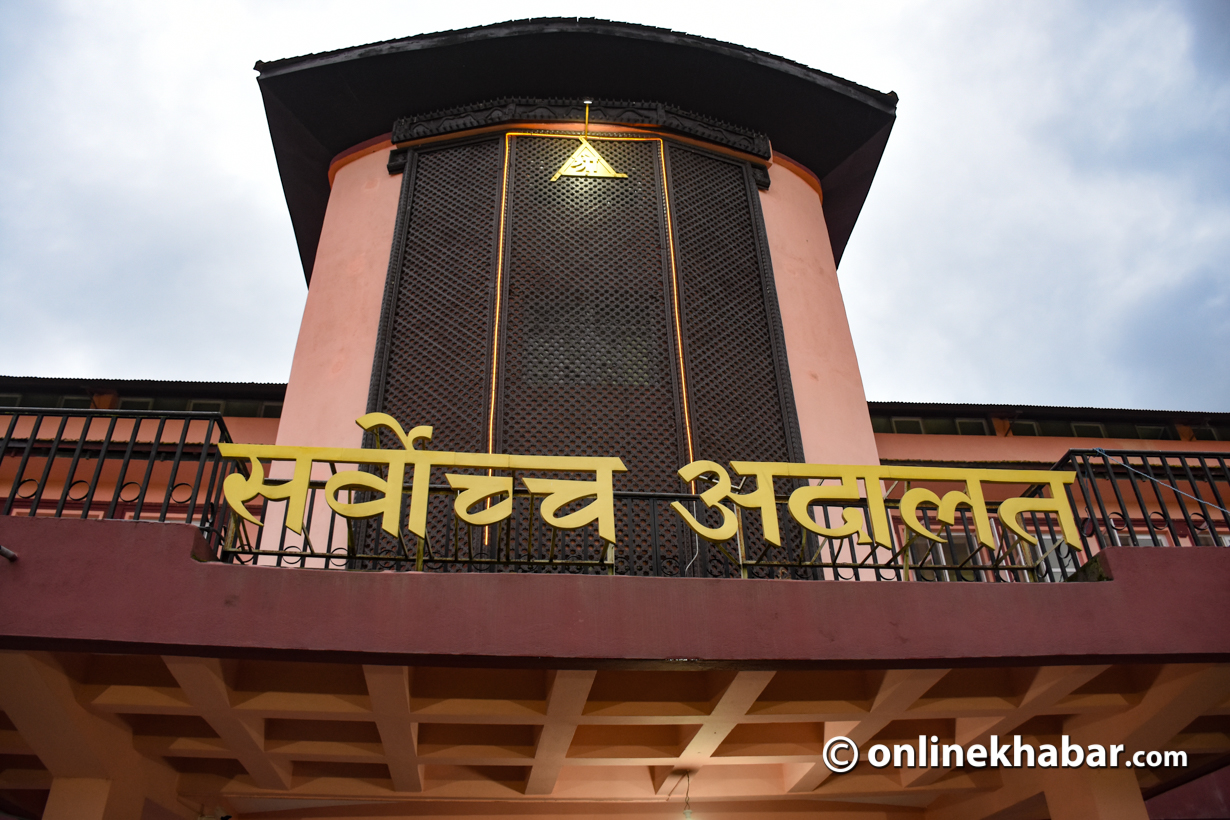
According to Supreme Court judges, the disagreement over Constitutional Bench formation was not the only source of tension.
Dissatisfaction also grew over other administrative and judicial decisions, including the appointment of High Court Butwal judge Basudev Acharya as chair of the Special Court and the promotion of District Judge Himlal Belbase to the High Court just four days before his retirement.
Both Acharya and Belbase had, in one way or another, been involved in orders concerning cases against Rabi Lamichhane, according to the source.
The decisions further contributed to unease among some judges, sources said.
Was Wednesday’s confrontation planned or coincidental?
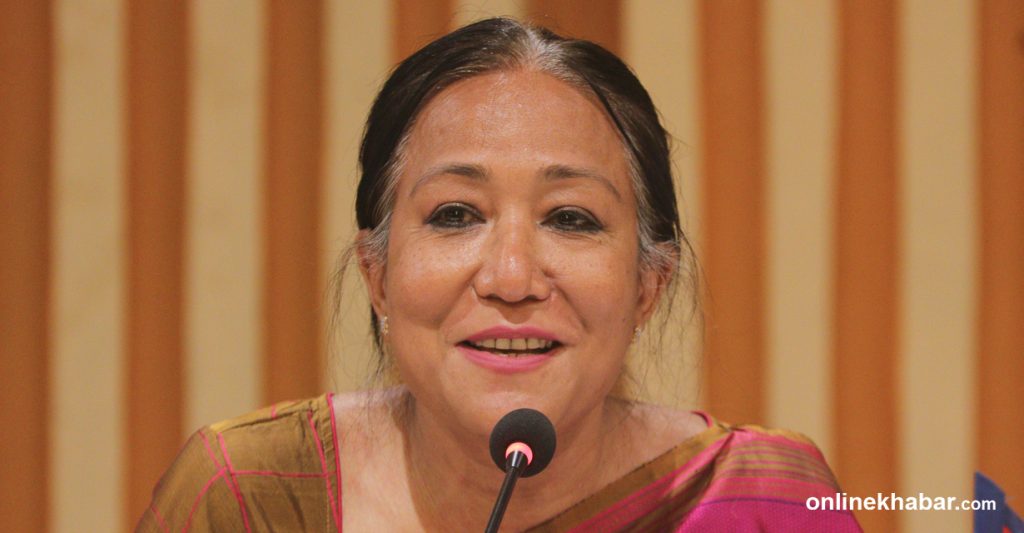
The timing of Phuyal’s appearance on the Constitutional Bench has also attracted attention.
On Tuesday, the Judicial Council recommended four judges for appointment to the Supreme Court. The nominees were High Court Chief Judge Dr Ratna Bahadur Bagchand and High Court judges Chandra Bahadur Saru, Janak Pandey and Gokarna Dangi.
A source close to the Judicial Council said Bagchand’s recommendation had become almost unavoidable because of an order he issued from the Pokhara High Court on May 15.
High Court Judge Janak Pandey is also a former classmate of Supreme Court Justices Sharanga Subedi and Sunil Pokharel, according to the source.
The source said Subedi’s support had helped clear the way for Pandey’s recommendation.
Dangi, a lawyer from Dang, had previously been appointed to the High Court with the backing of former Judicial Council member Padam Baidik. He has now been recommended for the Supreme Court.
Against this backdrop, the dispute over Wednesday’s Constitutional Bench has triggered another confrontation between the Supreme Court and the legal profession.
The Nepal Bar Association called an emergency meeting after the incident and sharply criticised Sharma’s working style, describing it as resembling the “Cholendra tendency” associated with former Chief Justice Cholendra Shumsher Rana.
There is another interesting detail.
All four names recommended by the Judicial Council had been proposed by Damodar Bhandari, who became a council member on the recommendation of the Nepal Bar Association. During the council meeting, Sharma himself reportedly responded to the nominations by saying he was “under compulsion” regarding them.
Sharma was already facing pressure over the Bar’s repeated objections to Constitutional Bench formation, while two members of the Judicial Council had also expressed dissent on council matters.
At the same time, posts began appearing on social media questioning why Phuyal had not been included in any Constitutional Bench since Sharma became chief justice.
According to sources, it was against this backdrop that Sharma decided to include both Sapana Pradhan Malla and Hari Phuyal on Wednesday’s Constitutional Bench, apparently in an effort to ease the growing dissatisfaction.
But instead of defusing the dispute, Phuyal’s inclusion triggered a fresh confrontation over the very process used to select the bench.
His refusal to sit ultimately meant that the Constitutional Bench could not convene.
Bar calls for objective criteria
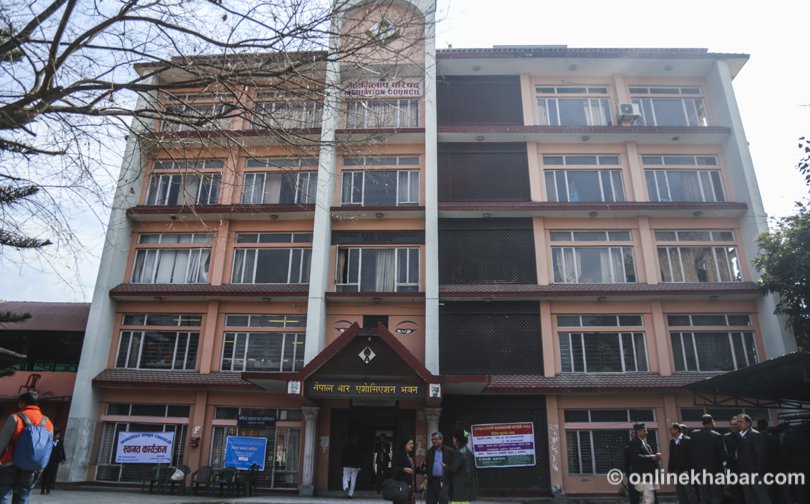
Following the incident, the Nepal Bar Association renewed its demand for a clear and predictable system for forming Constitutional Benches.
The Bar said benches should be constituted on the basis of seniority. If objective circumstances make that impossible, it said, a lottery system should be adopted.
The association argued that a Constitutional Bench should neither be treated as a private list of preferred judges nor as an area of personal discretion for the chief justice.
“Constitutional Bench formation is neither anyone’s private list of choices nor an area of personal privilege for selecting judges,” the Bar said in a statement. “Voluntary selection without clear, objective and predetermined criteria raises serious questions not only about judicial impartiality but also about the institutional credibility of the judiciary.”
The Bar also said the controversy had created the impression that practices seen during Rana’s tenure — when bench formation and judicial administration were widely criticised as discretionary and opaque — were beginning to re-emerge.