

Kathmandu, October 6
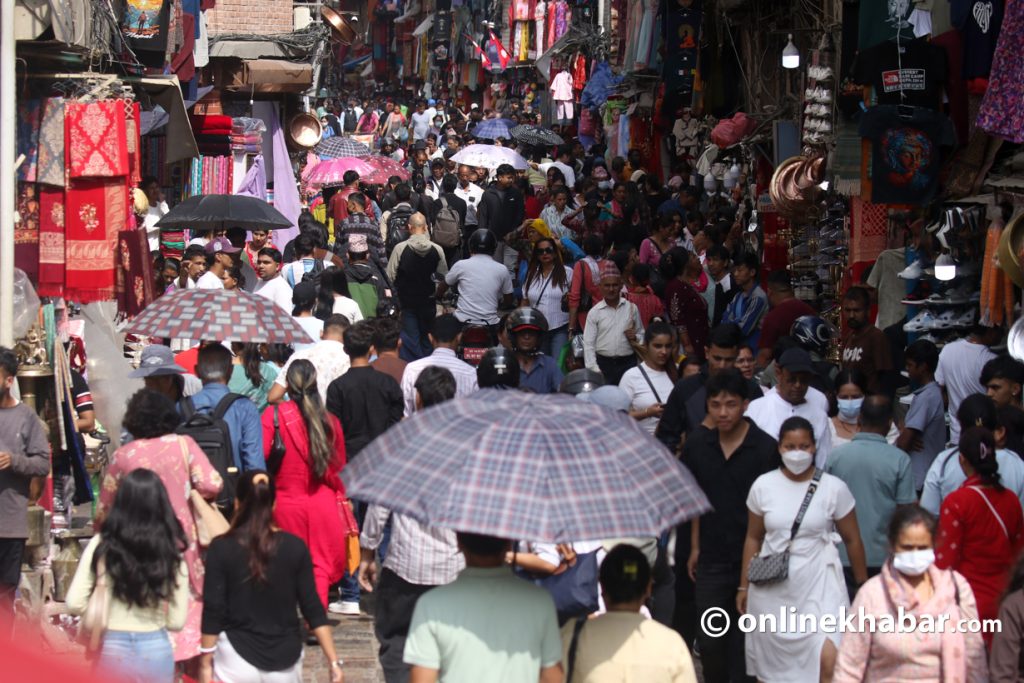
Dashain begins four days from now with Ghatasthapana. As in previous years, shopping activity has already picked up in Kathmandu’s major markets, including New Baneshwar, New Road, Asan and Bhrikutimandap.
Consumers typically begin buying clothes, shoes, bags and other goods for Dashain during the week leading up to the festival. But while the markets are busy this year, neither traders nor consumers appear particularly happy.
The damage caused by the flood in Rasuwa on August 26, particularly to the northern border routes to China, and the sharp increase in transportation costs are now being felt everywhere from roadside markets to large shopping complexes.
On Sunday evening, Sita Ghimire of Shantinagar was browsing for Dashain clothes for her 10-year-old son and seven-year-old daughter at an open market in New Baneshwar.
After visiting several shops, she complained that she could not find clothes at the prices or quality she was looking for.
“Clothes have become more expensive compared to last year,” she said. “Last Dashain, I bought my son a pair of trousers and a T-shirt for Rs 1,500. Now, they are asking Rs 2,200 to Rs 2,500 for a single set. The price of kurta-suruwal for my daughter is also far too high. With prices rising so much, it has become difficult to buy clothes for the children this year.”
Sumi Thapa, who had come to the same market to buy a kurta-suruwal, trousers and shoes, also found prices considerably higher than last year.
“Last year, I bought clothes for myself and my sister from here. A pair of trousers that cost me Rs 1,000 then now costs Rs 1,400 even after a lot of bargaining,” she said. “I still have to buy a kurta set for my mother, and the traders say those prices have also gone up. It doesn’t look like we will be able to buy clothes without spending a lot this year.”
The rising cost of Chinese garments, which have long made it easier for Nepalis to maintain the tradition of wearing new clothes during Dashain, is now putting thousands of consumers and traders like Sita and Sumi under pressure.
Gautam Sah, who has been selling clothes at an open market in New Baneshwar for the past three years, says there are plenty of inquiries but very little actual business.
“Compared to last year, there simply aren’t as many customers. People come, ask the price and leave saying it is too expensive,” he said. “People also don’t seem to be in much of a festive mood this year. The country has suffered such a major disaster.”
Sah said traders have been forced to raise retail prices because wholesale prices have increased.
“Cheap goods have become Rs 25 to Rs 50 more expensive at the wholesale level, while more expensive items have gone up by Rs 100 to Rs 200,” he said. “We also have to keep a small profit margin.”
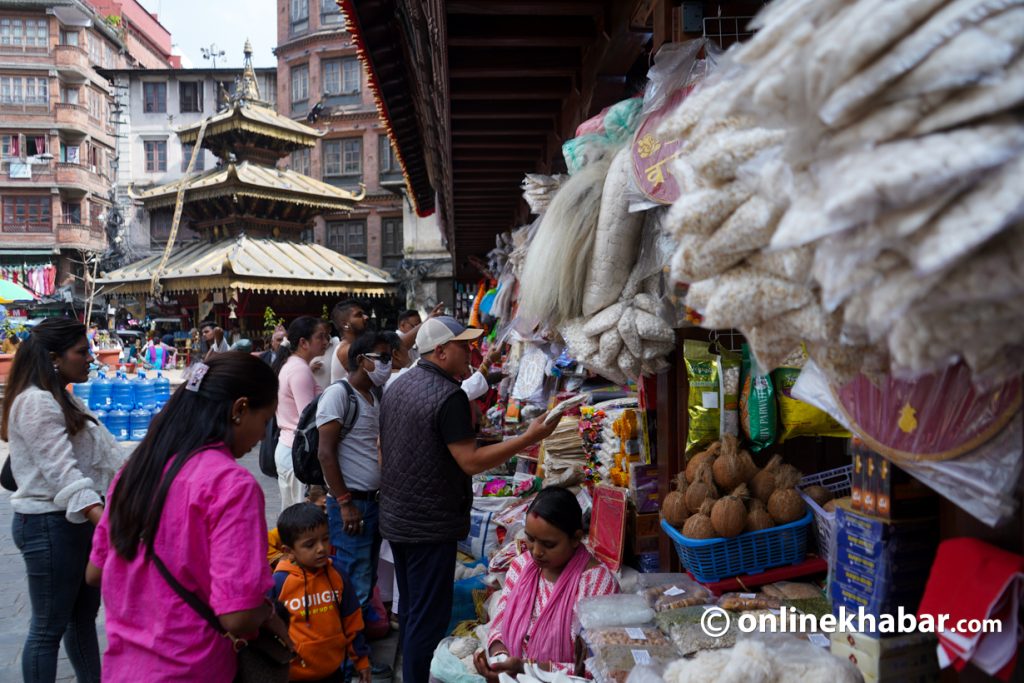
Kurta sets are imported from India. Traders say clothes imported from India are already relatively expensive, but transportation problems have made the situation even worse this year.
Another trader, Binod Oli, has had a similar experience. He sells kurta sets, tops and other clothing and says Chinese goods are in short supply, while the prices of whatever has reached the market have risen sharply.
Oli says it has become difficult to satisfy customers after having to buy goods at higher wholesale prices.
“A kurta-suruwal set that used to cost us Rs 1,500 to Rs 1,700 is now costing us Rs 2,200 to Rs 2,500,” he said. “Wholesalers say transportation costs have increased because the roads have been damaged. When we add Rs 200 or Rs 300 as profit and sell the goods, customers complain that they are too expensive and walk away. Business is in terrible shape.”
Prices of footwear have also risen along with clothing compared to last year.
Ramesh Thapa of Koteshwor was bargaining with a shopkeeper over a pair of shoes he liked because of its higher price.
“I was looking at a pair of Samba shoes for Dashain. Last year, they cost Rs 1,200, but now the seller won’t let them go for less than Rs 1,500,” he said. “I still have to buy other things, so it looks like my budget won’t be enough.”
The trader trying to sell the shoes, Mukesh Bishwakarma, said he could not reduce the price because the shoes themselves had become more expensive.
“The goods are stuck on the way, so we haven’t been able to provide customers with what they are looking for,” he said. “The limited goods that have reached the market have become more expensive because of transportation costs.”
Archana, who has been trading at the open market in Baneshwar for two and a half years, has a similar complaint. She said the new stock she ordered for Dashain is stuck in transit, forcing her to sell old stock.
“The new designs have not arrived. A heavy set that cost Rs 2,400 last year now costs us Rs 2,600,” she said. “Customers first bargain over the price and, if they find it expensive, they leave saying they will check two or three other places.”
The root of the current shortage and price increase lies at the northern border crossings.
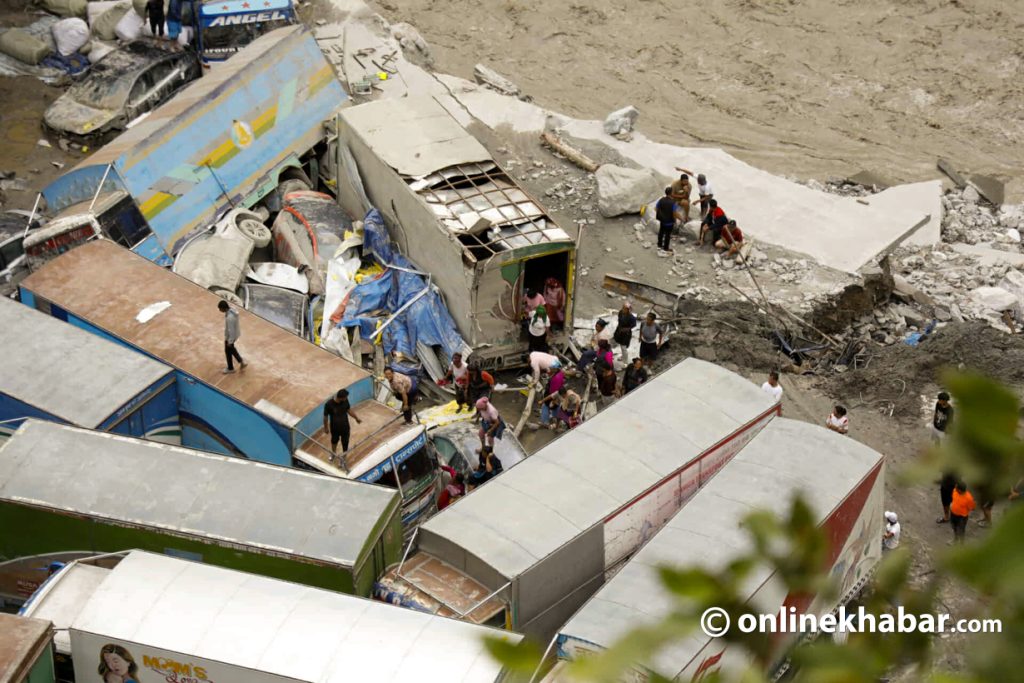
The flood in the Bhotekoshi River last month damaged roads leading to the Rasuwagadhi and Tatopani border points, leaving billions of rupees worth of goods ordered by traders for Dashain stranded along the routes.
Some goods have also been imported through the Korala border point, but that route is currently closed after continuous rainfall a week ago damaged roads and bridges. Reconstruction work is under way.
The government is making diplomatic efforts to reopen the Tatopani border crossing, but it appears that it will take some time.
Traders in New Road, one of the capital’s main commercial hubs, also say prices have increased because transportation charges have doubled.
Ratna Shrestha, a New Road trader, said customer traffic has increased as Dashain approaches, but most people are not actually buying.
“Not much stock has reached the wholesale market either. Retailers are reluctant to take goods because they cannot sell them at such high prices, although some are still buying,” he said.
He said even Dashain discounts and special offers have failed to attract much interest from customers.
Parshuram Dahal, chairman of the RB Complex Business Association in New Road, says the entire increase in prices currently seen in the market is due to the disruption at the northern border points and the doubling of transportation costs.
“No new goods have arrived in the market. All the routes are closed,” Dahal said. “I have always said that these northern border points have become an ambush for traders. We bring goods in, and then they get stuck there.”
He said the financial losses suffered by traders when festival goods are stranded in transit are impossible to quantify.
“Nearly 200 trucks and containers carrying goods from China were swept away by the floods. So much money has been lost, but nobody seems to care,” he said. “Goods coming from China are not insured, so traders themselves have to bear the entire loss when goods are swept away or rot on the way.”
Dahal believes the main reason for the increase in prices is not the traders but the higher transportation charges imposed by transport operators.
“Container transporters have doubled their charges. Transportation alone has increased the price of goods by 5 to 7 percent,” he said. “When transport costs rise, traders cannot simply pay the difference out of their own pockets. They have to raise prices. But there is no monopoly in the market now; it is competitive. Whoever offers the lower price will sell, so traders are not making excessive profits.”
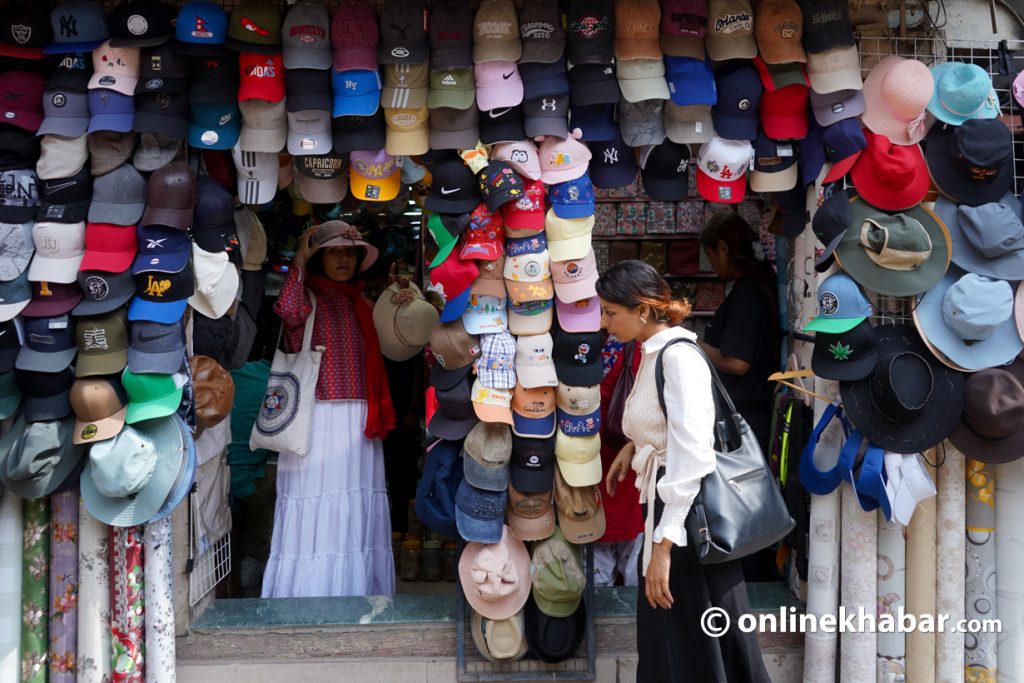
Business owners say they have grown frustrated with the recurring problems at the northern border points, where floods and landslides or unofficial restrictions disrupt supplies almost every festive season. They are now calling on the government to take serious measures to address the problem.
During the festive season, ordinary consumers visit roadside stalls and open markets hoping to find good-quality goods at affordable prices. But this year, natural disasters, rising prices and government shortcomings have left neither traders nor consumers satisfied.
In previous years, traders would barely have time to eat during Dashain because of the crowds. This year, many say they are sitting in their shops, scrolling through their phones and waiting for customers.
All photos: Aryan Dhimal