


Kathmandu, October 6
Nepali Congress President Gagan Thapa had previously signalled a departure from democratic socialism. In November 2021, when he was preparing to contest for the post of general secretary, he had presented a document that continued to shape his position until the party’s recent special general convention.
However, in the 46-page political document he presented at the 15th General Convention, Thapa has largely stood for the development and continuity of the party’s traditional ideology, with the term “social democracy” appearing only once, in passing.
Discussing the ideological debates across different societies in Europe and Asia, Thapa writes on page 25, “In different societies, including Europe and Asia, the traditions of democratic socialism and social democracy, despite their historical differences, are engaging in dialogue around shared questions of freedom, social justice, inclusion, economic opportunity and democratic accountability.”
Thus, five years ago, when he was contesting the 14th General Convention as a candidate for general secretary, Thapa forcefully promoted the agenda of social democracy. Today, however, in the political proposal he has presented as party president, he has returned to democratic socialism. Whatever terminology he uses, the substance of the two programmes appears broadly similar.
While the terminology Thapa used in the past generated considerable discussion and ideological debate, the political path he has proposed now as party president makes clear his effort to reconcile ideological ambition with the responsibilities of organisational leadership. When writing the main document for the convention, he appears to have clearly recognised the responsibilities that come with leading the party.
Questioning BP’s ideas
At the 14th General Convention five years ago, when Thapa was contesting for general secretary, he had presented a 60-page document arguing that the party should move from “democratic socialism” towards “social democracy.” At the time, he questioned the relevance of BP Koirala’s documents and argued that new thinking was needed to respond to a new era.
His argument then was that Nepali society in BP Koirala’s time and Nepali society today were not the same. The economy had changed, the middle class had expanded, the character of the state had changed and the role of the private sector had grown.
Thapa stated clearly at the time, “Democratic socialism seeks an alternative to the capitalist economic system. Social democracy, on the other hand, accepts that a capitalist economy will remain and seeks competition, reform and social justice within it.”
In that document, Thapa argued that individual freedom and a capitalist economy could coexist. Although capitalism produced negative consequences, he argued that the path of competition and reform should be pursued within that system. Rather than completely rejecting the market economy, his proposal embraced a welfare-oriented approach in which markets would be regulated through a democratic state, social security, equal opportunity and quality public services.
Thapa’s political line was not adopted at the time, but he was elected general secretary by a large margin. Some leaders within the Congress opposed him, arguing that he had abandoned BP Koirala’s socialist ideas.
Thapa had stated clearly at the time, “Democratic socialism seeks an alternative to the capitalist economic system. Social democracy, on the other hand, accepts that a capitalist economy will remain and seeks competition, reform and social justice within it.”
His document proposed advancing individual freedom alongside a capitalist economy while ensuring equal access to state resources and services through appropriate policy interventions.
He argued that the Congress could not answer the questions of a new society simply by repeating BP Koirala’s ideas word for word.
Thapa said at the time that he had been inspired by Chaitanya Mishra’s debates on social democracy. According to him, there was a tendency within the Congress to complain that BP’s agenda had been abandoned, but little effort had been made to reinterpret it in light of changing times. That, he argued, was why he wanted to clarify the idea of social democracy.
His document sought to connect markets and democracy with social justice rather than treating them as contradictory. This provides a clear picture of Thapa’s ideological position five years ago.
That position included markets, private initiative and individual freedom, but not an entirely unregulated market. The state was expected to ensure education, healthcare, social security and equal opportunity.
In other words, Thapa sought to move the Congress away from the traditional definition of socialism and towards a political project that pursued social justice within a market economy.
He had delivered a clear ideological message at the time: I want to shift the Congress’s ideological identity from BP’s democratic socialism towards modern social democracy.
In informal meetings with close associates, he used to identify former British Prime Minister Tony Blair as a political model and emphasise the need for an ideological shift within the party.
Socialist after becoming president
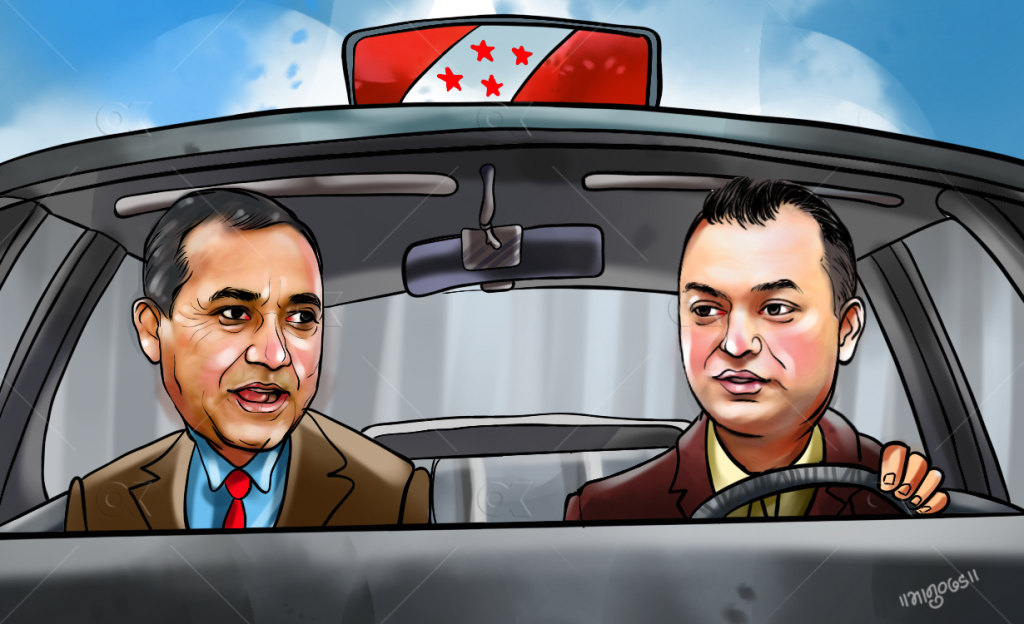
But in the political proposal titled “National Renaissance and Prosperity”, presented by Thapa as party president at the 15th General Convention, the term “social democracy” has not been put forward as an ideological identity. As mentioned above, it appears only in passing.
Instead, the document defines its ideological foundation in terms of nationalism, democracy and socialism, and advances it through the language of “democratic socialism.” In substance, describing the programme previously referred to as democratic socialism in slightly different democratic terminology amounts to much the same thing.
Thapa writes in the political proposal that the Congress’s ideological foundation has evolved through its glorious history, struggles, social experiences and debates, and has continually been refined through new knowledge.
“Nationalism, democracy and socialism are the fundamental pillars of this ideological tradition of the Congress. Their revival and effective implementation require both steadfastness towards core values and necessary changes in practice,” Thapa writes.
Thapa also offers an extensive explanation of democratic socialism.
“Democratic socialism creates the social, economic and human foundations necessary to enjoy freedom. Hunger, illiteracy, ill health, unemployment and discrimination restrict the enjoyment of rights,” he writes. “Easy and equal access to education, healthcare, nutrition, entrepreneurship, social security and justice enables citizens to make their own choices and develop their inherent creativity. Its purpose is not to make citizens permanently dependent on the state, but to make them independent, capable and creative.”
His conclusion is that nationalism separated from democracy becomes state-centric, socialism separated from freedom becomes controlling, and democracy without social and economic capacity is reduced to formal equality.
“The ideological strength of the Congress lies in maintaining a balance among these three,” he writes.
Thapa thus presents socialism not as a fixed slogan but as an idea that must engage with changing times. Having moved closer to Blair’s thinking along the path charted by Girija Prasad Koirala after 1990, Thapa has ultimately returned to BP.
But he has not simply stopped at BP’s ideas. He writes, “The democratic socialism developed by BP placed the life, human dignity, participation and opportunities of ordinary citizens at the centre of development, rather than merely statistical economic growth. While embracing BP’s historic symbol of the farmer ploughing the land, we have placed at the centre of economic development policy the reality of young people standing with passports in their hands or searching for opportunities within the country.”
It is important to remember that, in the meantime, the Rastriya Swatantra Party had developed its own interpretation of social democracy and adopted a document at its first general convention in June.
Now, as the Congress’s principal rival, the RSP presents one challenge, while communist parties continue to interpret socialism in their own ways. Thapa appears to be trying to find a balance in the language of his document so that the Congress can maintain a clear identity and distance from both.
On one hand, there is the need to listen to the voice of a changing society and changing times. On the other, there is the responsibility of carrying the party’s legacy on his own shoulders. To balance the two, Thapa has chosen a subheading for his ideological interpretation: “Permanent Ideals, Changing Times and a Dynamic Society.”
Thapa says the Congress’s political and ideological journey is inseparably linked to the fundamental ideals of nationalism, democracy and socialism.
“These three ideals are not merely political slogans of a particular period. They are permanent principles that define the relationship between the nation, citizens and society. In its own ideological tradition, the Nepali Congress has understood these three principles not separately, but as interconnected foundations of a single democratic vision,” he writes.
Thapa discusses how society, citizens’ aspirations, the economy and forms of production change over time, while technology transforms relations of power and consequently the challenges facing nations.
“In such circumstances, the ability to keep core values effective under changing conditions is the defining characteristic of a living political ideology. The society envisioned by the Congress is not only just, free and egalitarian, but also dynamic,” he writes.
In this way, Thapa has attempted in 2026 to restore within the historical language of Nepali Congress’s “democratic socialism” the ideological reinterpretation he had sought in 2021 under the banner of “social democracy.”
A strategic compulsion?
A natural question now arises: Has Thapa retreated from his ideological position? Why did Thapa, who proposed social democracy when seeking to become general secretary, return from the chairmanship to strongly advocate BP’s democratic socialism? Is this an ideological shift or a strategic compulsion?
The answer requires examining the substance of the document.
Thapa has not advocated a political system fundamentally different from social democracy under the banner of democratic socialism. In presenting a framework for ideological renewal, he identifies nationalism, democracy and socialism as the Congress’s core ideological foundations.
The document states clearly, “Nationalism, democracy and socialism are the fundamental pillars of this ideological tradition of the Congress. Their revival and effective implementation require both steadfastness towards core values and necessary changes in practice.”
By the time of the 15th General Convention, Thapa had become party president. A remarkable generational transition was taking place within the party. The faction led by former president Sher Bahadur Deuba, which had opposed this transition, had become considerably weaker and was looking towards the Supreme Court with hope as it talked about holding its own general convention in November.
Thapa is now in a position where he must provide answers rather than ask questions. He is responsible for bringing the party together rather than leading a rebellion.
A Congress office-bearer says Thapa therefore faces certain constraints.
“It appears that Gagan has paid attention to two things this time — his base within the party and the compulsions created by the circumstances,” the office-bearer said.
The leader argues that at a time when the party is moving towards a possible split, Thapa could not send the message that “I am the one carrying BP’s legacy” by introducing an entirely new ideology. He interprets this as a strategic compulsion rather than an ideological contradiction on Thapa’s part.
“To send this message, Gagan had to strongly invoke the slogan of democratic socialism. He also needed to convince the party’s traditionalist ranks and leaders who had left the Deuba faction that he had not moved outside the Congress’s mainstream ideological tradition,” the office-bearer said. “That is why it appears that he has emphasised democratic socialism.”
Ideological change is not easy in a political party built around a legacy. Ideas there are not merely theories. They are history, leaders, movements and emotional bonds shared across generations.
Thus, while one generation may see a new interpretation of BP’s socialism as natural ideological development, another may view it as a departure from the legacy.
Thapa may have recognised the risk of proudly standing in BP’s shoes while simultaneously challenging BP’s ideas and giving an advantage to a faction already preparing for the next convention.
So, has Thapa inserted a new ideology within the old terminology?
To answer that question, one must closely examine both the discussion under the document’s section on ideological direction and the broader political and economic programme contained within it.
Whatever the name, the substance is the same
Although Thapa has titled the ideological framework “democratic socialism,” the substance of the document appears to be a more refined interpretation of social democracy.
The document says the purpose of democratic socialism is neither for the state to make all economic decisions itself nor to treat the market as synonymous with freedom.
“Education, healthcare, nutrition, skills, employment, opportunities for entrepreneurship, social security, legal protection and a dignified life are not merely separate headings in economic policy. They are the social and economic foundations of citizens’ freedom,” the proposal states.
In presenting his economic roadmap, Thapa has also accepted the market economy. He identifies a liberal, pro-private-sector economy as one of the major pillars and seeks to establish the private sector as a major driver of prosperity.
The policy document envisions the government acting as a transparent regulator rather than becoming a trader or controller itself.
In principle, his economic proposals differ from the traditional objective of democratic socialism, which sought to replace capitalism and establish state ownership over the means of production. Thapa’s document instead places its economic approach within the concept of a “social market economy,” based on the idea that the market and the state are not necessarily in conflict.
“The state itself should not become a trader or owner. It should become an impartial regulator, guardian of good governance, builder of modern infrastructure and provider of quality public services,” the document states.
Seen in this light, the ideological debate Thapa sparked through his advocacy of social democracy at the 14th General Convention has, by the 15th General Convention, been brought under the cover of BP’s democratic socialism and reinterpreted for the present context.
Whatever the name, democracy ultimately means the inseparable connection between sovereignty vested in citizens and the mechanisms through which that sovereignty is exercised.
Today, political parties around the world are generally struggling not against non-democratic systems but against the consequences of democracy’s own shortcomings. Democratic institutions are becoming internally hollow and weakened as they contract. When state power becomes concentrated within circles of a limited power elite, institutions lose their genuine democratic legitimacy.
Our elections are increasingly becoming processes that merely legitimise the powerful. As a result, elections first lose their ability to produce governments that citizens actually want and eventually lose their legitimacy as well.
The depoliticisation created by the consumerist mindset and lifestyle promoted by neoliberalism is pushing traditional political mechanisms beyond citizens’ reach. Citizens are becoming little more than a vote — able to cast a ballot but unable to make their voices heard where it matters.
In the 21st century, refreshing the debate on democracy also requires changes to some of democracy’s basic grammar.
The question of how to bring economic power under the control of political power remains a question of enduring importance. The document does not appear to give sufficient attention to answering these questions.
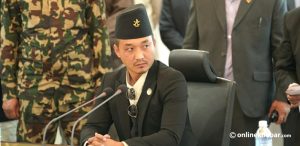
Opening the general convention, Thapa had said, “History is glorious, but history does not give us power; it gives us lessons.”
In other words, history can provide political power only when the lessons it offers are transformed into action in the present.
Just as BP interpreted socialism by reading the society of his time, can today’s Congress read today’s society and provide new political answers?
The proposal put forward by Gagan Thapa will now be tested in practice.