

Kathmandu, September 24
The Department of Immigration has cancelled the visas of 88 foreign nationals working at an under-construction meat processing factory in Marin Rural Municipality of Sindhuli, saying they were found to have worked in violation of the purpose of their visas.
The workers were employed at Jian Foods Pvt Ltd, which is developing the Nepal Heat Processed Buffalo Meat Export to China Project with financial partnership from Chengdu Tian Food Limited.
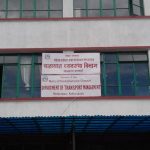
The Department of Immigration at Kalikasthan made the decision to cancel all 88 visas in a single decision on Wednesday.
The department has also started the process of deporting the workers, according to its spokesperson Tikaram Dhakal.
“Since they were found to have engaged in activities contrary to the purpose of their visas, their visas have been cancelled. In addition, the process of imposing fines and deportation has been initiated in accordance with the Immigration Act 1992,” Dhakal said in a statement.
Although the department said the workers had violated the purpose of their visas, it did not initially disclose which visas they had entered Nepal on or what work they were carrying out.
An immigration official said the workers whose visas were cancelled were Chinese nationals who had entered Nepal on business visas but were working at the meat factory project.
Asked why the visas of all 88 workers were cancelled at once, Immigration Department Director General Ram Chandra Tiwari said they had entered Nepal on business visas but were found to be working in violation of the purpose of those visas.
“They came on business visas. But since they were found to have worked contrary to the purpose of their visas, action has been taken in accordance with immigration law,” Tiwari said.
Immigration says workers entered on business visas
According to department sources, most of the Chinese nationals had entered Nepal on business visas after registering IT companies.
Immigration officials said the foreigners had registered IT companies under different names through the Office of the Company Registrar and the Department of Industry, and then worked at the under-construction meat factory.
Officials said IT companies are often registered because they are not subject to the same investment threshold applicable to other businesses.
The department suspects that the business visas were used primarily as a means of entering Nepal rather than for conducting business.
“They appear to have obtained business visas simply to enter Nepal. There are companies on paper, but they appear to have been working without actually conducting business,” an immigration official said.
Company says workers are skilled technicians
The company developing the meat factory, however, has a different explanation.
Jian Foods has said it had been trying to obtain work visas for the Chinese workers and that the sudden cancellation of their existing visas could create a shortage of skilled manpower, making it difficult to complete the project on schedule.
Onlinekhabar has obtained a letter sent by Jian Foods requesting approval for work visas.
On July 17, the company wrote to the Department of Agriculture under the Ministry of Agriculture, Forest and Environment, requesting approval for work visas for its Chinese technical workers.
“We would like to submit applications for labour permits and work visas for Chinese technical workers in connection with our company’s plans to operate a large food-processing project in Nepal,” the letter said.
The company said construction was underway to establish a modern buffalo slaughterhouse and food-processing factory in Marin and that the foreign workers involved were technically skilled personnel.
It argued that the factory’s production lines were complex and highly technologically advanced and therefore required experienced technical specialists.
The company said it had prioritised foreign workers with the necessary technical expertise because of the requirements of the project.
“Our company requires a team of 500 foreign specialists. This number is less than 5 percent of our 10,000 local permanent workers, and therefore fully complies with the government’s labour management regulations,” the company said in the letter.
It added that the production equipment could not be operated without the foreign specialists being present in Nepal.
The company had planned to bring the meat factory into full operation from January. Construction of the slaughterhouse is underway on around 50 bighas of land.
A major China-bound buffalo meat project
The project is linked to an agreement reached during former Prime Minister KP Sharma Oli’s visit to China to export buffalo meat from Nepal to China.
After the investment was approved, Oli announced on Facebook that the Department of Industry had approved foreign direct investment of Rs 20 billion for the project.
According to Oli’s announcement, Chengdu Jian Food Company of China’s Sichuan province had proposed establishing the factory in Marin Rural Municipality-4, Sindhuli.
The company has set a target of producing 200,000 tonnes of meat annually along with 55,000 tonnes of by-products, including hides, internal organs and heads.
The project has been promoted as having potential benefits for Nepal’s livestock sector and economy.
Its proponents have said it could help develop a standardised buffalo farming industry and directly benefit around one million Nepali farmers.
The factory is also expected to create employment for around 10,000 Nepalis and generate up to $1.5 billion annually in foreign exchange through exports of processed buffalo meat to China.