Kathmandu, September 14
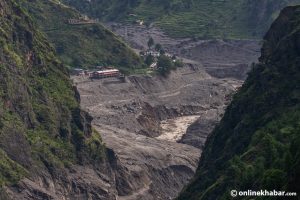
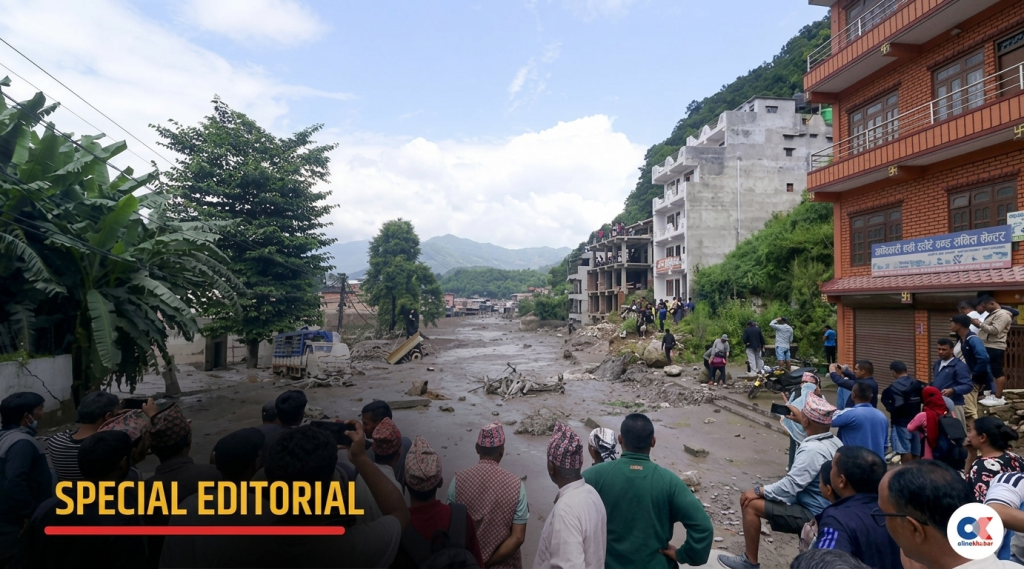
The National Disaster Risk Reduction and Management Authority says the Rasuwa flood claimed at least 1,386 lives, with 5,130 people still unaccounted for.
According to the Authority’s rapid damage and needs assessment report, the flood caused more than Rs 408 billion in damage, and reconstruction and risk-reduction work is expected to cost around Rs 712 billion.
In his address to Parliament on September 2, Prime Minister Balendra Shah called the September 10 flood an “unimaginable disaster.” But was it really unimaginable, as the Prime Minister described it? Past study reports suggest otherwise.
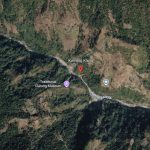
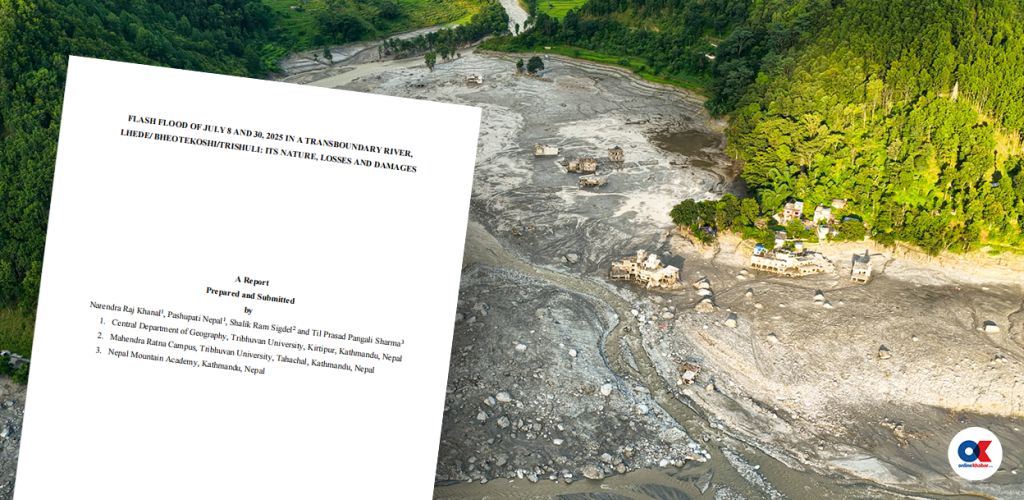
Just 14 months before this devastating flood, another flood from the same Lhende (Bhotekoshi) river had already caused major damage in Rasuwa. In the flood of July 8, 2025, 18 people went missing, with damage exceeding Rs 1.8 billion at the time. A study prepared after that flood had warned that glacial lake outburst floods were likely to increase in the future.
That report, titled “Flash Flood of July 8 and 10, 2025 in a Transboundary River Lhende/Bhotekoshi/Trishuli: Its Nature, Losses and Damages” — noted that such floods can come in multiple waves, with water flow partially blocked and then bursting through again.
A separate report from Tribhuvan University’s Central Department of Geography, Mahendra Ratna Campus, and the Nepal Mountain Academy warned that unplanned infrastructure expansion narrowing the natural river channel, as seen in areas like Rasuwagadhi and Timure, increases the risk of loss of life and property. The experts behind that report include geographer Prof. Dr Narendra Raj Khanal, Pashupati Nepal, Shaligram Sigdel, and Til Prasad Pangali Sharma.
According to the disaster authority’s rapid assessment, the hydropower sector alone suffered more than Rs 150 billion in damage, with reconstruction estimated to cost nearly Rs 400 billion. The report prepared after last year’s flood had specifically called for heightened caution in the hydropower sector, noting that delays in opening dam gates had contributed to damage, and recommending development of technology that allows faster gate operation.
At the Rasuwagadhi, Chilime, and Langtang Khola hydropower projects, the outlet structures for releasing water sit just below the normal flood level, meaning that during glacial lake outburst floods, high flows carrying mud and logs entered through the outlets and damaged the powerhouses. The report had recommended this be factored into future hydropower project design.
One of the report’s authors says the recommendations were never implemented; the government didn’t even take formal notice of it. This, they say, is just one example: nobody seems to track where such post-disaster studies on floods and landslides, from Thame, Sunkoshi, Melamchi, and elsewhere, end up filed away.
OnlineKhabar has previously reported that a similar report submitted to the Rasuwa District Disaster Management Committee after the 2025 flood, with recommendations on disaster management, compensation, relief, reconstruction, rehabilitation, preparedness, early warning systems, and cross-border coordination, was also shelved.
Experts stress that the government needs to incorporate evidence-based research findings into policy, implement them, and prioritise studies conducted through comprehensive, multidimensional approaches.
Former Water Resources Secretary Dr Dwarikanath Dhungel says that no matter how much research and how many recommendations are produced, nothing gets implemented because of a pattern of only reacting after disaster strikes.
“Everyone knows we’re sitting on something like an atom bomb, but those in Singha Durbar only seem to spring into action once something happens; I don’t see any report or research actually being implemented,” he said.
Dhungel says lessons haven’t been learned from past research on floods, landslides, glacial lake outbursts, and forest fires, and he doesn’t see much prospect of that changing going forward.
“Both the government and Parliament should be asking who studied what about the past floods on the Bhotekoshi,” he said. “But going by experience, we’ll likely forget about this flood too within a few days, and only really start discussing what should have been done after the Bhotekoshi flood once an even bigger one hits.”