Kathmandu, September 9
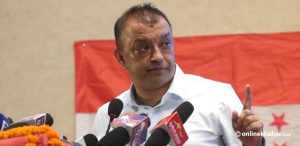
Rastriya Swatantra Party (RSP) chair Rabi Lamichhane has defended the government’s response to the Rasuwa floods, saying the state mobilised its resources quickly for rescue, treatment and relief.
But speaking in the House of Representatives on Wednesday, Lamichhane also urged the government and his own party to be patient with flood victims who lash out in anger, saying their frustration should be understood as an expression of grief and an appeal for help.
“I don’t think we should look at the government’s work during this disaster through the traditional lens of government versus opposition,” Lamichhane said. “From the very first hours of the disaster, the government mobilised all its resources and began rescue, treatment and relief operations.”
He said thousands of security personnel had been deployed to the affected areas and described the scale of the government’s air rescue operation as unprecedented in recent times.
Lamichhane said he saw little reason to question the government’s immediate response in rescuing and treating the injured and arranging temporary accommodation and food for displaced people.
Responding to those asking, “Where is the state?” and accusing the government of doing nothing, he said the state’s presence should be demonstrated through its actions.
“The strongest rebuttal to the claim that the state did nothing is to show, with evidence and visibility, where the state was,” he said.
‘Don’t attack people who have lost everything’
Lamichhane, however, said anger from people who had lost everything in the disaster should not be met with ridicule or criticism.
“Let us stop, right now, the petty comments and sarcasm on social media and in public spaces targeting the natural anger of people who have lost everything in this disaster,” he said.
He urged the government to take action against anyone found abusing disaster victims.
“It is not enough for the government to issue a statement saying we will be ruthless against those who mistreat people in pain,” he said. “Show it in a way that citizens can actually feel that the state is serious and that it stands with the victims.”
He extended the same warning to members and supporters of his own party.
“The Rastriya Swatantra Party does not need blind supporters who belittle citizens crying in the middle of a disaster,” Lamichhane said. “We need members who stand with ordinary people in grief and pain and wipe their tears.”
He said action would be taken against anyone at any level of the party found making degrading comments or engaging in cyberbullying against disaster victims on social media.
‘Anger is not an attack on the state’
Lamichhane also asked the state machinery and his party ranks to accept the anger expressed by citizens during a time of grief.
“When people are deeply hurt and experience unexpected grief, they may even curse God. So what is this government? What is the RSP?” he said.
He said such anger should not be interpreted as an attack.
“We should understand the anger of citizens not as an attack against us, but as an expression of their expectations and their final cry for help from the state,” he said. “The true power of the state today is the ability to listen to that anger, endure it and wipe the tears of those people.”
‘This is not the time to play politics’
Lamichhane also called for political parties to work together in the aftermath of the disaster instead of using it to attack one another.
“There is a disease we see even after a devastating disaster and destruction: turning disasters into opportunities to play the blame game and looking for ways to bring each other down,” he said. “This is not the time to cook political rice on the fire of a disaster.”
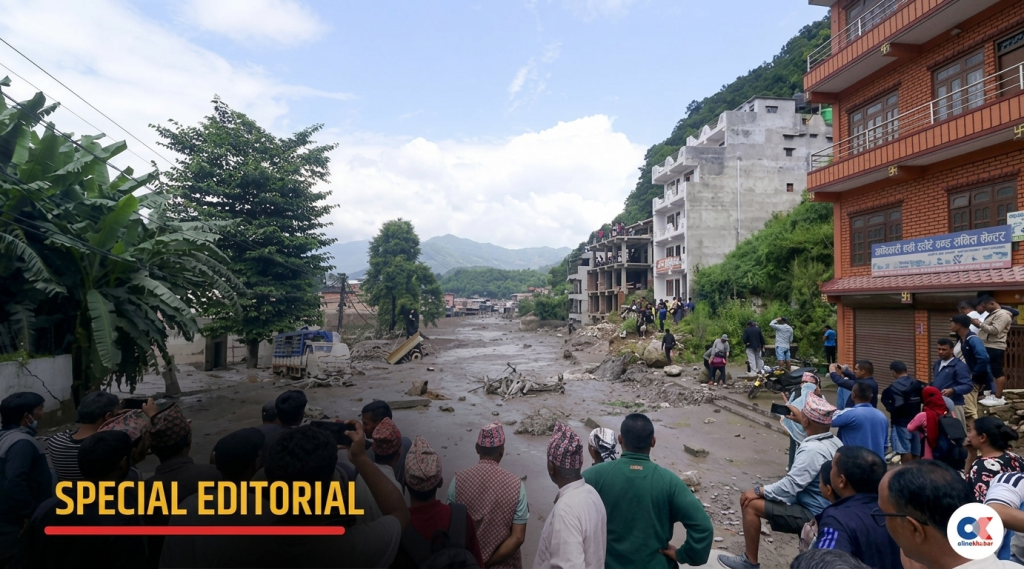
The Bhote Koshi flood struck Rasuwa on August 26, leaving the country facing a major search, rescue and relief operation.
Lamichhane said the situation required political forces to move forward together.
The day after the disaster, he had called an all-party meeting attended by senior leaders from the RSP, Nepali Congress, CPN-UML, CPN, Shram Sanskriti Party, Rastriya Prajatantra Party, Janata Samajbadi Party and Janamat Party.
The meeting adopted a 10-point commitment, with the final point proposing the formation of a high-level all-party mechanism for a long-term response to disasters.
The commitment calls for a parliamentary mechanism to work on post-disaster reconstruction, climate adaptation, updating the national disaster policy and providing continued advice, support and monitoring of the government’s work.
It also envisions the mechanism working beyond immediate crises to build national consensus on disaster preparedness and sustainable development and to support policy reform.
Lamichhane did not elaborate on that proposal in his Wednesday address.
Opposition parties, however, praised the commitment they had made to stand with the government during the disaster.