Jhapa, September 7
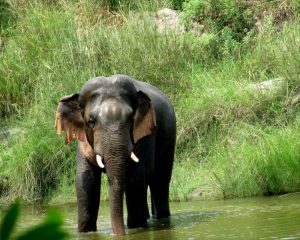
A group of 22 elephants that had been camped out in various community forests across the district for the past month has headed back toward India this morning, elephant conservationist Shankar Luitel reported.
The herd, which included calves, had been causing near-daily disturbances in Bahundangi, Shantinagar, and surrounding areas. The elephants had been destroying residents’ homes, feasting on ripening paddy in the fields, trampling crops, and breaking betel nut trees, forcing residents of Jhapa’s northeastern region to live in fear and stress for a long time.
After a month, locals felt great relief once the large herd that had come from India returned to its natural habitat.
According to resident Neel Kantha Tiwari, fear among residents eased to some extent once the herd left. However, residents were startled again this morning when a lone elephant wandered into Birtamod Municipality-7. After the elephant was spotted right in a residential yard early in the morning, locals were forced to flee.
Journalist Pushpa Baral reported that the lone elephant, after roaming the settlement for about four hours in the morning, headed toward the tea gardens in Butabari. In Jhapa, elephants typically cross the Mechi River from forests in India’s Assam and West Bengal and enter Nepal via Bahundangi in search of food and shelter.
According to Tiwari, elephants are able to enter Nepal easily because the solar fencing (an electrified barrier meant to deter them) along the Nepal-India border has grown old and worn down. Every year in the district, people lose their lives to elephant attacks, alongside crop and property damage worth millions of rupees.
— RSS