
Kathmandu, September 6
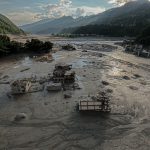
Across parts of Rasuwa, Nuwakot and Dhading, communities that had always depended on roads to reach markets, hospitals and neighbouring towns were suddenly cut off. The Bhotekoshi flood had erased much of the usual way in and out. There was, however, one way still open: the sky.
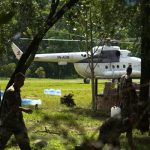
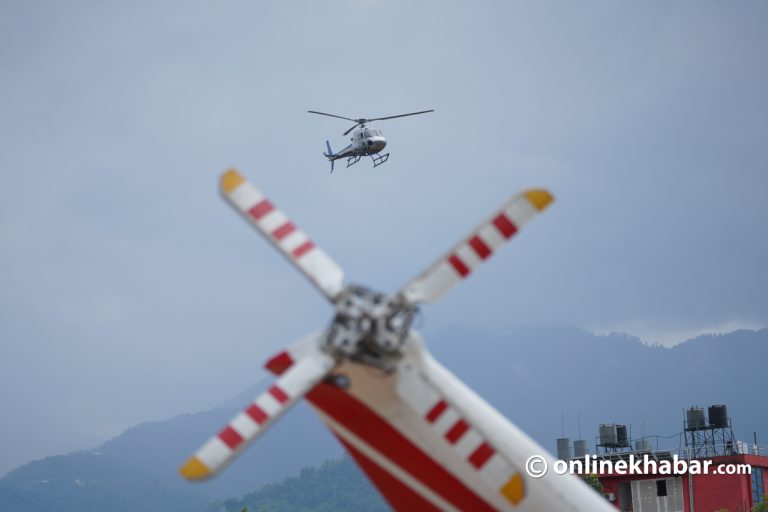
Within hours of the disaster on August 26, Nepal’s helicopter operators were called into action. Military and private helicopters began flying into some of the country’s most difficult terrain, carrying out people stranded by the flood and taking food, medicine and other relief supplies into places that could no longer be reached by road.
More than a week later, the operation continues.
According to the latest figures from the National Disaster Risk Reduction and Management Authority, 1,341 people have died and nearly 5,000 remain missing. A total of 13,095 people have been rescued so far.
The Nepal Army has rescued 4,157 people, Nepal Police 4,068 and the Armed Police Force 4,870.
Among those airlifted by the Nepal Army were 273 foreign nationals and 3,684 Nepali citizens.
The numbers illustrate the scale of an aerial rescue operation that has unfolded across the mountains and river valleys of northern Nepal.
Flights coordinated by the Nepal Army have reached 881, while private helicopter companies have conducted another 129 flights. On Friday alone, 96 flights were made. But the helicopters have done more than evacuate people. They have become the bridge between isolated communities and the outside world.
When the roads disappeared

The destruction left behind by the flood explains why the helicopters have become so important.
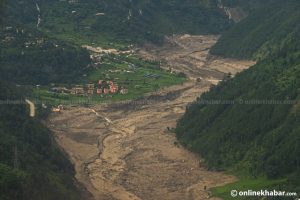
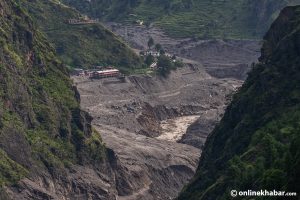
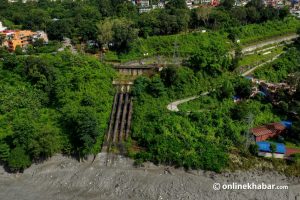
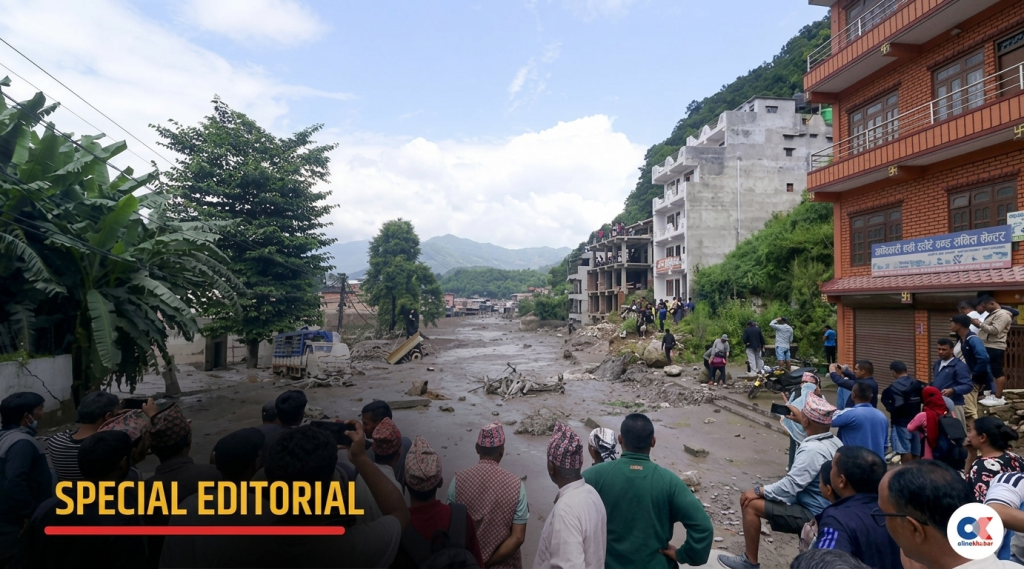
Between Rasuwagadhi and Muglin, 41 bridges were damaged and 35 were swept away. Of the 64 suspension bridges along the same stretch, 53 were destroyed. The result was a huge break in Nepal’s transport network.
Much of Rasuwa, large parts of Nuwakot and some areas of Dhading were effectively cut off. For people living in these areas, the problem was not simply getting out of a disaster zone. It was getting anything in.
Food and relief materials had to reach communities. Rescue teams had to move. People with urgent medical needs had to be evacuated. Families searching for missing relatives needed access to places that could no longer be reached by road.
That was where the helicopters came in.
“The helicopter has once again demonstrated its importance during a crisis,” said Pratap Jung Pandey, president of the Airlines Operators Association of Nepal and managing director of Kailash Helicopter.
A fleet mobilised for a national emergency
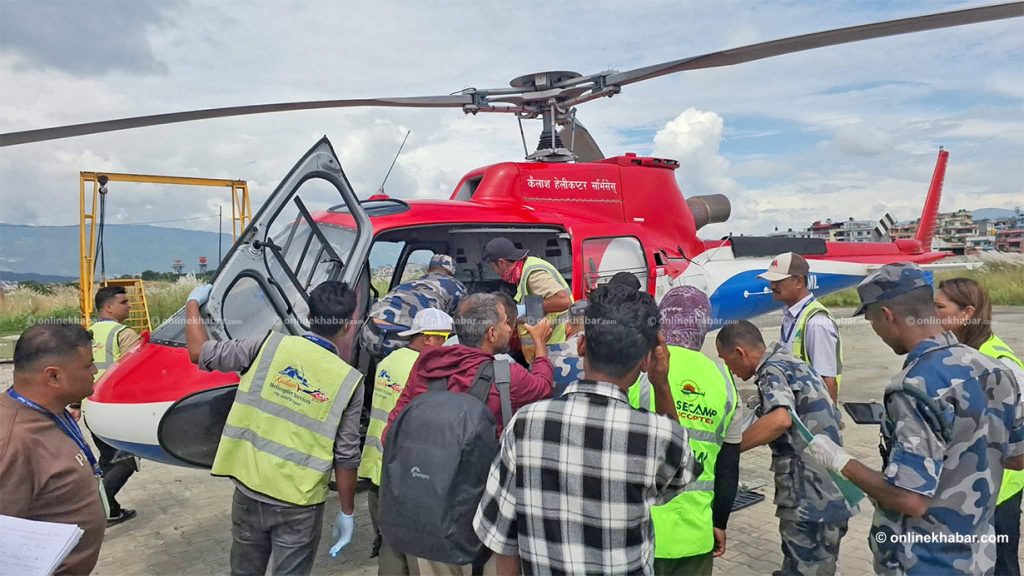
The Nepal Army established helicopter bases at Tribhuvan International Airport in Kathmandu and Battar in Nuwakot, creating two key points from which rescue operations could be coordinated.
The mobilisation began almost immediately after news of the flood reached the authorities on August 26.
Pandey said the government instructed all helicopter companies to remain on standby for rescue operations. Helicopters based in Kathmandu and nearby areas were then deployed to the affected areas.
Since then, the aircraft have been moving continuously between the capital and the disaster zone—bringing people out and supplies in.
For communities surrounded by destroyed roads and bridges, each flight has meant a connection that otherwise would not exist.
Flying where the geography is unforgiving
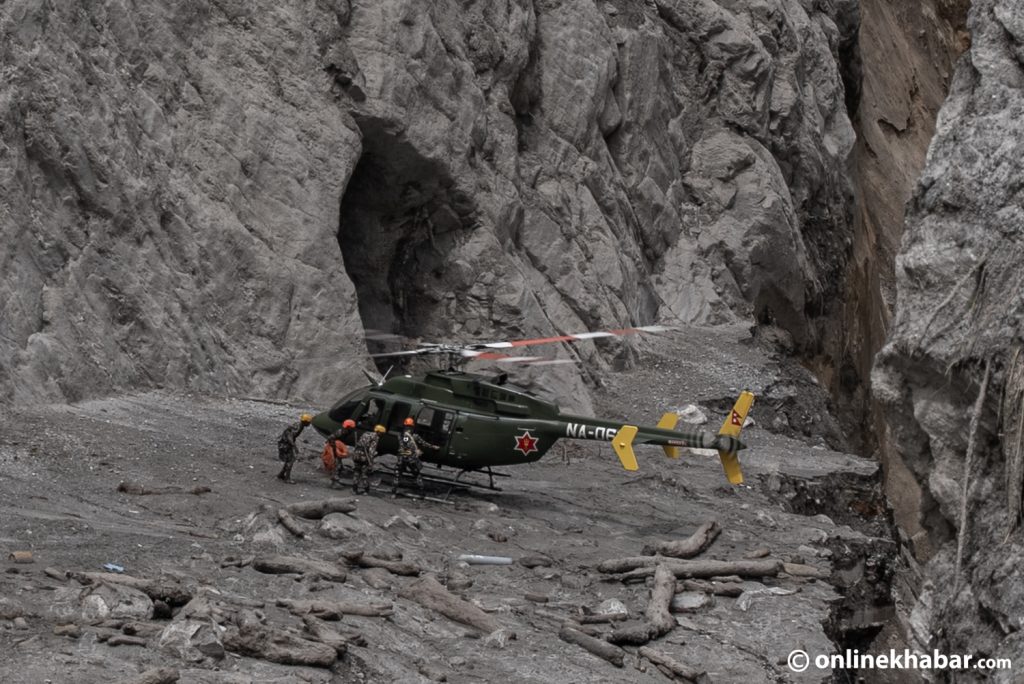
Getting a helicopter into the mountains is not as simple as flying from one point to another.
The affected areas are surrounded by steep terrain, narrow river valleys and rapidly changing mountain weather. This time, pilots also had to contend with unusually heavy air traffic over the disaster zone.
Mukesh Dangol, director general of the Civil Aviation Authority of Nepal, said the rescue flights are being conducted under what is known as a Class G operation.
Unlike controlled airspace, aircraft operating in Class G airspace are not under the direct control of an air traffic controller in the same way. Pilots must rely heavily on communication with one another and maintain constant awareness of other aircraft in the area.
Then came another complication: drones.
The destruction in Rasuwa and the rescue effort attracted intense attention from national and international media. Numerous drones were flown over the affected areas to capture images and video.
The increased drone activity posed an additional risk to helicopters operating at low altitude. The Civil Aviation Authority had to issue NOTAMs several times after drone flights began affecting helicopter operations.
Despite the difficult terrain, changing weather and crowded skies, aviation authorities say flight safety has been maintained.
Pilots accustomed to the mountains
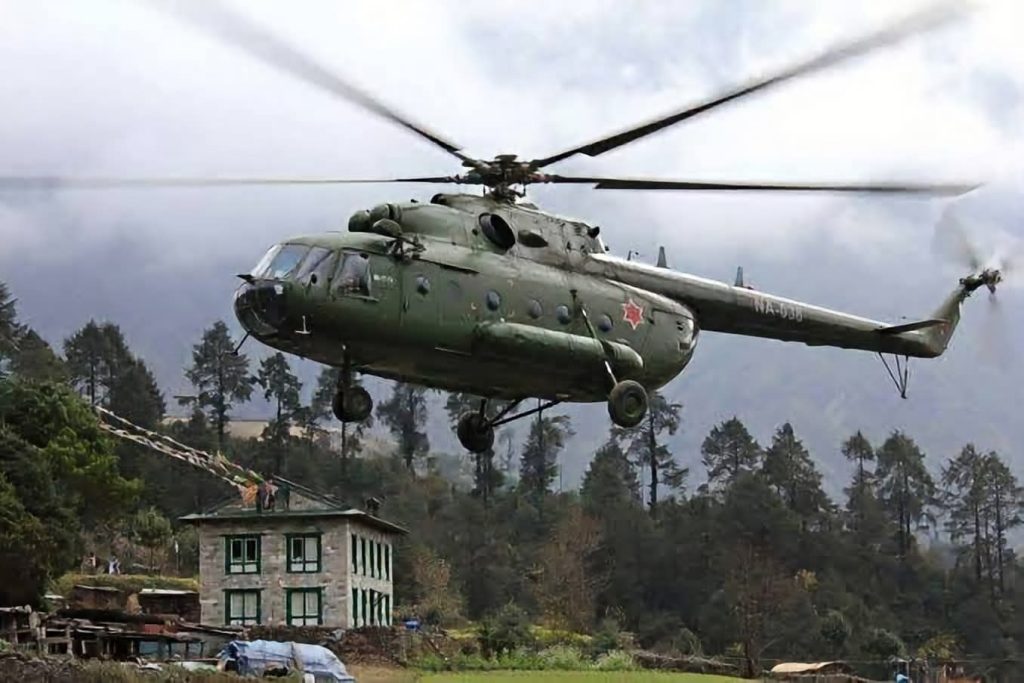
Nepal’s geography, difficult as it can be for aviation, has also given its helicopter pilots years of experience in precisely the conditions they are facing now.
Helicopters regularly fly through narrow mountain valleys and river gorges. Pilots operating in Nepal are accustomed to weather that can change within minutes and landing sites where there is little room for error.
Pandey said most of the pilots involved in the current rescue operation are Nepali.
“This is the offseason, so we do not have foreign pilots,” he said.
He said Nepali pilots had been able to handle the demanding rescue operation because of their experience flying in challenging conditions.
The current operation, he said, is comparable in some ways to the intense helicopter activity seen around Lukla during the spring tourism season.
“Continuous flying has made our pilots accustomed to this,” he said.
The Nepal Army’s own pilots have also played a central role, flying into areas where roads and other forms of transportation have disappeared.
The first day set the pace

The intensity of the operation can be seen in the flight records from Tribhuvan International Airport.
On August 26, the day the flood struck, helicopters made 49 flights from Kathmandu to affected areas.
Sixteen flights were made between Kathmandu and Timure, six to Trishuli, six to Rasuwa and nine to Dhunche. There was also one flight to Mailung, two to Dhading and nine to Syafrubesi.
Nine flights had to be diverted.
Six Nepal Army helicopters and 10 private helicopters were involved that day.
The following day, another 40 flights were made from Kathmandu. Operations were particularly concentrated around Trishuli and Dhunche, with Dhunche alone receiving 17 flights.
On August 28, the third day after the disaster, 21 flights were made, including six each to Trishuli and Rasuwa.
The operation continued at a steady pace: 21 flights on August 29, 22 on August 30, 34 on August 31, 27 on September 1, 24 on September 2 and 28 on September 3.
The figures do not include flights operated from the Trishuli helicopter base.
A rescue operation against a staggering loss
The helicopters are operating against the backdrop of one of the country’s most destructive recent disasters.
The floods have damaged 7,570 private homes, according to the latest government figures, while the estimated economic loss has reached around Rs 400 billion.
Rasuwa, Nuwakot, Dhading, Gorkha and Chitwan have all been affected, with the destruction particularly severe along the Bhote Koshi and Trishuli river corridors.
For those caught in the disaster, however, the economic cost is secondary to the immediate human toll.
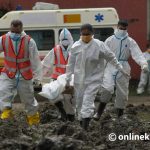
People are still searching for missing family members. Thousands have lost homes. Communities are waiting for food and other basic supplies. And in places where bridges and roads have disappeared, reaching those people remains a challenge.
The helicopters have filled that gap.
A small fleet carrying a huge burden
Nepal has around a dozen helicopter companies with a combined fleet of 32 helicopters, according to the Airlines Operators Association of Nepal.
The sector currently has around 45 helicopter pilots, with operators usually adding more pilots during the peak tourism season.
That is a relatively small fleet for a country with Nepal’s geography—and an even smaller one when confronted with a disaster of this scale.
Yet virtually the entire available capacity has been pushed into the response.
The helicopters have carried thousands of people away from danger, delivered relief supplies and kept isolated communities connected to the rescue operation.
They have also offered something less tangible but equally important: a way into places that, after the flood, appeared to have no way in.
When the Bhote Koshi swept away roads and bridges, it severed the physical links connecting northern Nepal.
The helicopters became the link that remained.