
Rasuwa, September 4
For 10 days, there had been no word from the people believed to be trapped inside the Upper Trishuli-3A hydropower project tunnel.
Then, somewhere deep inside the darkness, a rescuer called out.
“Hello.”
A voice answered.
“Hajur.”
It was an ordinary Nepali response to an ordinary greeting. But after 10 days without knowing whether anyone was still alive inside, it was the sound the rescuers had been waiting for.
The rescue team had reached roughly 200 metres into the tunnel when they heard it. For a moment, the rescuers stopped.
Nepal Army personnel, Armed Police and Nepal Police officers, together with technical experts from the Nepal Electricity Authority, looked at each other in the darkness. Some were overcome with emotion. Then they moved.
There was still a wall of mud and broken rock between them and the people inside.
The team had been working its way through the debris since the flood devastated the area. Now, knowing that there were survivors somewhere beyond the blockage, every decision became more urgent—and more dangerous.
They discussed drilling through the debris, as they had done at other points while trying to locate the tunnel. If the rock could not be cleared that way, they would use controlled explosives to break it apart and widen a passage for rescuers. But there was a risk.
The people they were trying to save could be on the other side.
The Army’s Special Forces, Combat Engineers and Collapsed Structure Search and Rescue team had to spend hours assessing whether they could blast through without harming anyone inside.
Once they were satisfied that the operation could proceed safely, they called out again.
“Hello.”
“Hajur.”
The voice came back. The rescuers knew then that they were close.
They pushed oxygen cylinders further into the tunnel and brought in more lights. They moved through thick mud, careful not to become trapped themselves. A rope became a lifeline, helping the rescuers negotiate the treacherous passage.
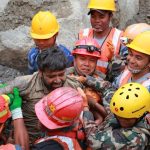
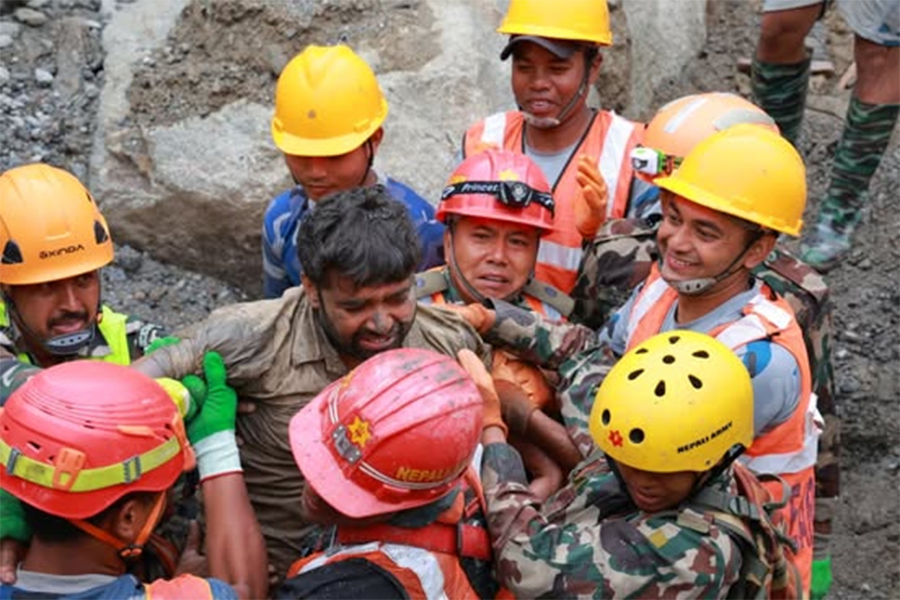
Then they found Sanjay Sah. He was alive.
The team immediately informed those outside through their communication equipment and began preparing to bring him out.
But the rescue did not end there.
Another faint voice came from deeper inside. It was Kabir Maharjan, a supervisor at the project. He too was found alive and brought out.
For the rescue teams, the two men were more than two survivors. They were proof that the 10-day-old search still had a chance of producing more lives.
Lieutenant Colonel Ganga Baral of the Nepal Army, one of the officers involved in the operation, said the breakthrough was the result of sustained coordination between the different rescue teams.
“It took time, but ultimately we succeeded in rescuing two people alive,” Baral told Onlinekhabar. “We have shown that Nepalis can deliver a remarkable result even in a disaster rescue operation considered almost impossible.”
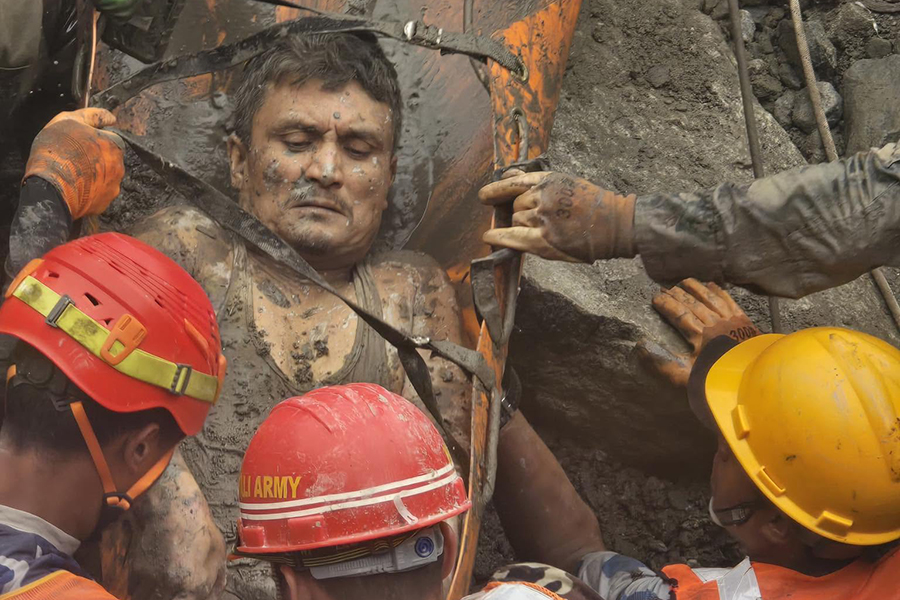
The rescue teams themselves had little time to savour the moment.
Keshav Dhakal, an engineer with the Nepal Army, has been at the site since August 27, the day after the flood. He credited the success to the entire team that had continued working despite the conditions.
For the rescuers, the job was not to celebrate the breakthrough but to use it.
They continued sending oxygen into the tunnel, hoping there could be others alive inside.
Deputy Superintendent of Police Amrit Thapa of the Armed Police Force said the condition in which the two men were found strengthened that hope.
“When we found them, they were able to open their eyes and look at us,” Thapa said. “When we heard them calling out, we became even more alert and intensified the rescue.”
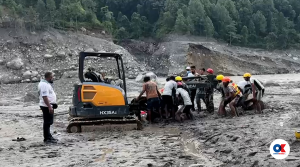
The operation has required rescuers to cut through metal, concrete, rock and the debris that came down with the flood.
“Our team’s main contribution was cutting through metal and removing concrete,” Thapa said. “We have now cleared the mountain of debris and entered the tunnel, so the risk is not as high as before.”
The Armed Police team has been working around the clock in three shifts, with six personnel in each shift. For commanders, there has been no such thing as a shift ending.
Home Minister Sudan Gurung also spent time at the site as the rescue continued. He stayed near the operation, at a tent close to the tunnel entrance, while the teams worked underground.
When news came that two people had been rescued from about 200 metres inside, Gurung went to the tunnel entrance and helped carry an oxygen pipe.
The response has unfolded amid criticism that senior government officials were not spending enough time on the ground. But the rescue teams say that what mattered inside the tunnel was coordination, sustained effort and quick decisions.
The breakthrough at Trishuli-3A has now given fresh impetus to searches elsewhere in the disaster zone.
At the under-construction Trishuli-3B tunnel near Simle in Nuwakot, rescuers have advanced 426 metres inside, according to the Nepal Army’s Directorate of Military Public Relations and Information.
At Rasuwagadhi Hydropower, 93 people remain unaccounted for.
According to company secretary Narnath Neupane, those missing include 51 regular employees, one board member, two daily-wage workers and 39 workers employed by three contractor companies.
Search efforts there have been hampered by poor weather.
At Chilime Hydropower, a team including Nepal Army personnel has advanced beyond 150 metres into the tunnel.
At Langtang Hydropower, rescuers have drilled through several sections and created passages about eight feet long and three feet wide to continue the search.
At Rasuwagadhi, an Army team has advanced nearly 300 metres into the tunnel.
The Upper Trishuli-3A rescue is also being watched far beyond Nepal.
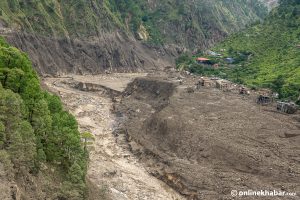
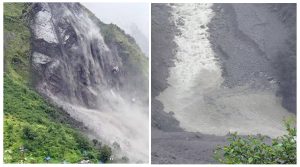
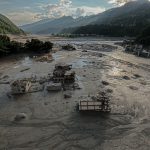
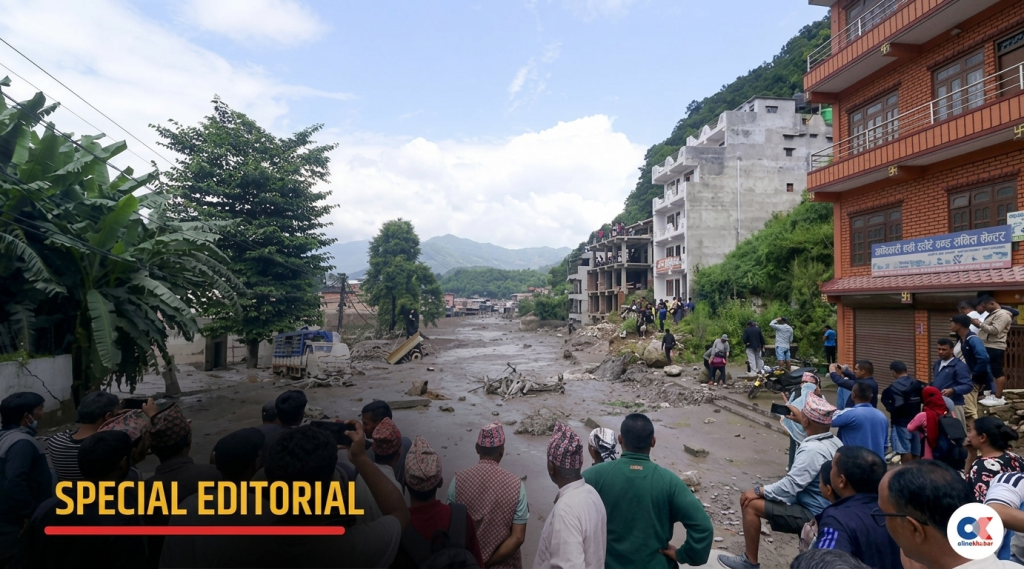
Ten days after what authorities have described as a “Himalayan tsunami” began in the Bhotekoshi area, the disaster remains a major international story. International media have gathered around the affected hydropower projects, following the tunnel searches and waiting for news of survivors.
Security officials have urged people not directly involved in the rescue to stay away from the sites, warning that unnecessary crowds could complicate an already dangerous operation.
Anil Pokharel, former chief executive of the National Disaster Risk Reduction and Management Authority, has described the crisis in the Bhote Koshi and Trishuli corridors as a test extending beyond Nepal.
The region’s hydropower infrastructure has been badly hit. The powerhouse and other major structures of Upper Trishuli-3A are largely located in Kispang Rural Municipality-5 of Nuwakot, while its dam lies in Uttargaya Rural Municipality of Rasuwa.
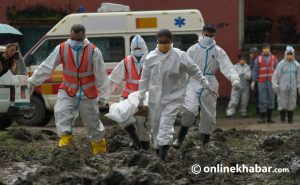
One body has so far been recovered from the tunnels. The search for the others continues.
For the rescuers, the two men brought out of Upper Trishuli-3A have changed one thing after 10 days of darkness: there is now a reason to believe that someone else might answer when they call out again.
“Hello.”
“Hajur.”