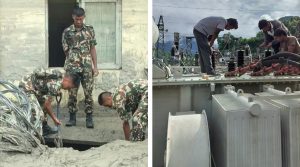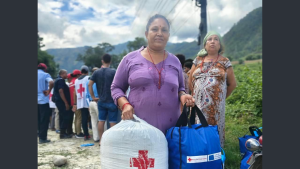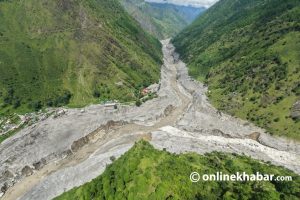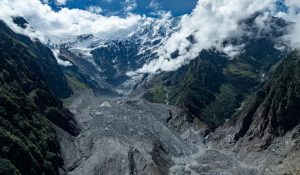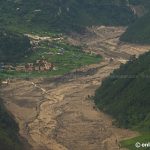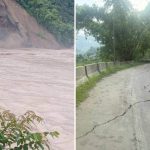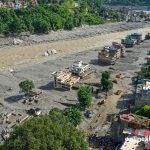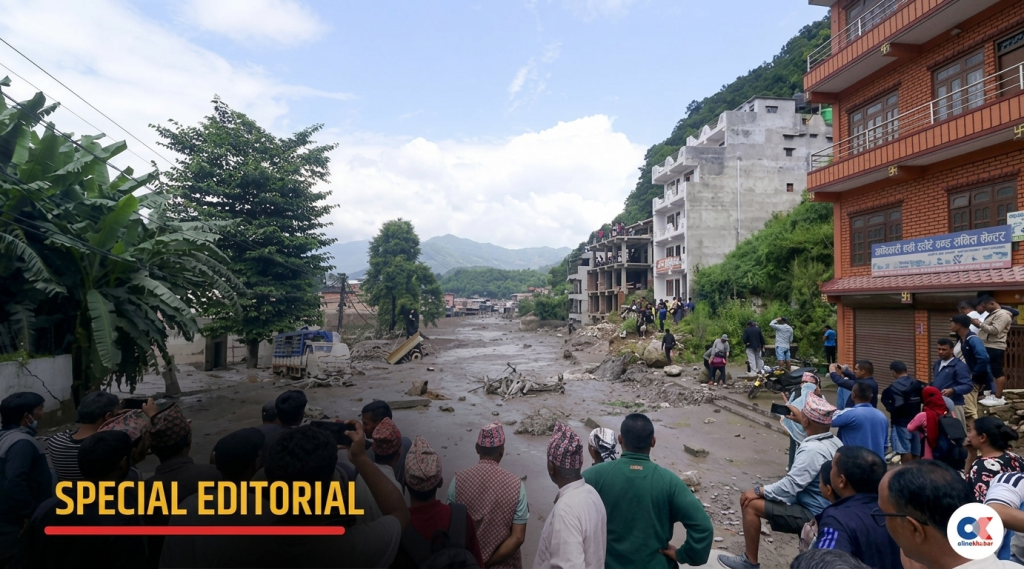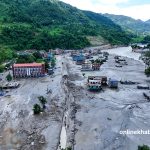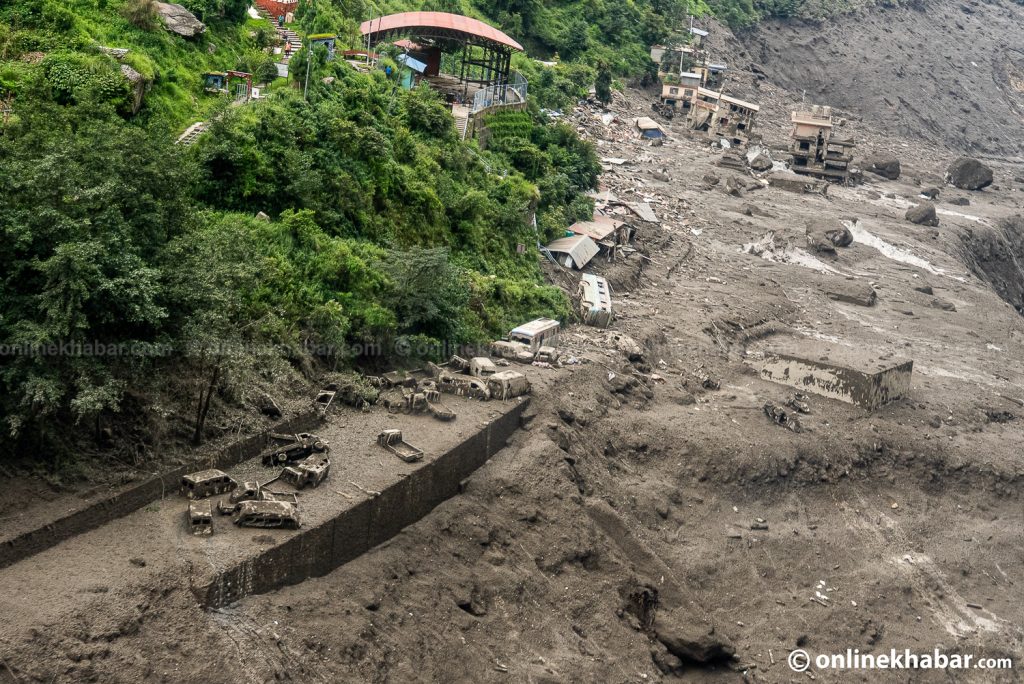
Within mere hours on August 26, a sudden deluge of mud, boulders, and roaring water tore through the high-altitude mountain communities of the Bhotekoshi region in Rasuwa, Nepal. Entire villages were destroyed overnight, vital transit corridors were severed, and families were cast into darkness, displacement, and absolute uncertainty.
The physical destruction was severe, but the true toll of the devastating flash flood extends far beyond what cold metrics, infrastructure audits, or financial damage calculations can reveal about the human cost.
Disasters are typically reported through numbers: lives lost, homes leveled, bridges snapped, and economic losses tabulated. Yet numbers cannot capture grief. A statistic cannot convey the silence inside a home after loss, a damage report cannot measure the trauma of a family waiting beside a swollen river for someone who may never return, and an economic assessment cannot reflect a community’s broken identity.
In Nepal, a sovereign nation home to approximately 29.6 million people, it is not aggressive industrial advancement or fossil-fueled factory outputs that are being disrupted; it is innocent human beings who are being killed, swept away, and buried under climate-induced debris.
The real impact of the Rasuwa tragedy is recorded in human struggle and silent grief: a family waiting anxiously beside a collapsed riverbank for news of missing loved ones, holding onto the smallest hope for a safe return; a parent carrying the unbearable grief of losing a child, sustained only by memories of shared laughter and love; a farmer watching years of hard work, dreams, and family security vanish as fields, livestock, and livelihoods wash away into a churning river; an elder standing before the ruins of an ancestral home that held decades of family celebrations; and a child forced to flee the only sanctuary they ever knew, facing fear and an uncertain future.
The Rasuwa flash flood is not an isolated natural mishap or an unavoidable fate of mountain geography. It is a human tragedy of intense suffering, loss of life, and displacement that underscores a dangerous, growing pattern of climate risk across the Himalayan arc.
Comprising a mere 0.1 percent of the Earth’s total land area, Nepal spans an extraordinary elevation gradient, rising from near sea level in the southern Terai plains to the top of the world at Sagarmatha, Mount Everest, standing at 8,848.86 meter . Within an average width of just 193 kilometers, the country has eight of the world’s fourteen independent mountain peak above 8,000 meters, serving as the crown jewel of global mountain geography and the primary headwaters for massive river systems that sustain over 1.6 billion people downstream.
Despite its small territorial footprint, Nepal harbors over 1.5 percent of global biodiversity. The country is home to nearly 8.9 percent of the world’s bird species. It protects roughly 3.96 percent of global mammal species, 3.72 percent of butterflies, and nearly 2.8 percent of global flowering plant species, including hundreds of endemic varieties found nowhere else on the planet.
Dense subtropical forests, temperate mountain woodlands, and alpine pastures provide critical sanctuary for iconic, globally endangered species such as the snow leopard, the red panda, the Royal Bengal tiger, and the greater one-horned rhinoceros. These ecosystems render Nepal a vital regulator of the regional climate system, water towers, and carbon storage.
However, rapidly rising global temperatures driven by external industrial emissions are destabilizing this delicate high altitude environment, turning peaks that once symbolized protection into landscapes of extreme peril.
Nepal stands as one of the clearest examples of global climate injustice. The nation contributes less than 0.1 percent of global carbon dioxide emissions, while 77% of global emissions are shared by G20 member countries. Its annual per capita carbon footprint stands at a modest 0.63 tonnes of CO₂, a fraction of the global average of 4.7 tonnes per person, and a negligible drop compared to the massive per capita footprints of industrial world powers.
It has not waited for international prompts to practice progressive environmental stewardship. Through decades of community-managed forestry programs, Nepal increased its national forest coverage from 39.6 percent to 46.08 percent, reversing historical degradation and expanding vital global carbon sinks. More than 90 percent of Nepal’s national electricity is generated from clean, renewable hydropower. Policy incentives have driven the domestic sales share of electric vehicles (EVs) from 8 percent to approximately 73 percent.

Here lies the painful paradox of the climate crisis: those who contributed the least suffer the most. Innocent communities who have actively protected their forests, powered their grid with running water, and adopted clean electric transport are bearing the catastrophic cost of environmental degradation caused by heavy emitters elsewhere.
Nepal’s fragile high-altitude topography, reliance on climate-sensitive agriculture, and limited infrastructure compound its extreme vulnerability. For mountain farmers and rural families, climate change is not an abstract policy debate or a distant environmental metric; it is an everyday reality affecting whether crops can be harvested, whether children can safely reach school, whether pregnant mothers can access emergency medical care, and whether entire communities can survive once the floodwaters recede. Wealthy nations grew rich from fossil fuel-driven growth, whose emissions built the crisis Nepal is now suffering from.
The impact of a disaster does not end when the floodwaters retreat. Often, the most dangerous phase begins in the aftermath. The flash flood is far more than an immediate search and rescue mission; it is a severe threat to community health, safety, sanitation, and human dignity. Flooding destroys community Water, Sanitation, and Hygiene (WASH) infrastructure, contaminating drinking water sources with municipal waste, silt, and agricultural runoff. These triggers immediate outbreaks of waterborne and vector-borne diseases, including cholera, typhoid fever, acute diarrheal illnesses, and severe skin infections.
Children, the elderly, pregnant women, and economically marginalized group bear the highest risk. When steep mountain roads collapse, pregnant women experiencing complex labor, infected infants, or severely injured survivors are cut off from regional health facilities. In rugged mountain terrain, a destroyed road transform a manageable medical concern into a fatal emergency, undermining even basic human dignity.
Extreme disasters also leave deep psychological wounds that linger across generations. Survivors cope with severe post traumatic stress, chronic anxiety, depression, and profound grief after losing their loved ones, homes, and economic safety nets. A house can eventually be rebuilt and a road repaved, but healing emotional trauma requires long term empathy, community support, and sustained psychosocial care to protect and safeguard vulnerable populations and restore basic human dignity. Protecting the environment is no longer just an act of conservation; it is a vital public health intervention to preserve human life.
When disasters strike vulnerable, low-emitting nations, the international community’s standard response is to offer humanitarian sympathy, international media coverage, and modest packages of discretionary emergency aid. However, sympathy does not rebuild destroyed highways, nor does charity compensate for lost lives, ruined harvests, and fractured identities. Frontline nations do not need pity; they demand climate justice and financial accountability. Nepal deserves climate restitution, not short term aid, donations, or charity.

Supporting nations on the frontlines of the climate crisis is not an act of international benevolence; it is a mandatory global obligation. Climate justice is anchored in established principle, primarily the Polluter Pays Principle and the foundational agreement of the United Nations Framework Convention on Climate Change (UNFCCC).
The establishment of the Loss and Damage Fund at recent COP summits signaled formal global consensus that high-emitting economies carry a legal and financial liability to compensate vulnerable nations facing non-reversible climate impacts.
Yet, climate finance remains grossly inadequate and structurally flawed. A substantial portion of global climate assistance is still delivered in the form of high-interest development loans or conditional aid.
Forcing a low-emitting nation to accumulate sovereign debt in order to rebuild infrastructure destroyed by external global emissions is an unacceptable compounding injustice. Innocent nations that preserve their natural environment, expand their forest canopy, and maintain minimal emissions should never be forced to divert national fund away from public education, healthcare, and poverty alleviation to cover the costs of climate disasters. Major industrial emitters must fulfill their global commitments by providing direct, predictable, non-repayable grant compensation through loss and damage mechanisms. On the other hand, loss and damage are huge.
The establishment of the fund at COP28 in Dubai has resulted in a promised amount that falls painfully short of the necessary funds for recovery. While pledges hover in the hundreds of million, vulnerable societies face hundreds of billions in annual destruction. Rebuilding destroyed lives, homes, and local economies is not a matter of charity; it is a fundamental requirement for human dignity and social justice.
“We did our part. We barely caused this crisis. Why are we paying for it with our lives?” This question echoed across the mud caked valley of Rasuwa; it is not merely a localized cry of pain; it is a profound moral indictment of global climate governance.
Nepal has demonstrated that responsible environmental management, forest expansion, and renewable energy adoption is entirely possible even within a developing economy. Yet domestic action alone cannot hold back monsoons intensified by foreign industrial emissions, nor can local conservation stop glacial lakes from bursting their banks when global temperatures climb. Nepal’s devastating flash flood is a narrative of immense human loss, but it is equally a testament to community resilience and the enduring strength of mountain peoples. It serves as an urgent, unyielding warning that climate change is not a distant future scenario; it is happening right now, tearing through homes and killing innocent lives.
The Himalayas are speaking. The rivers are speaking. Mount Everest and the frontline communities living in its shadow are speaking to a delinquent global community.
Let this warning reverberate through the gilded halls of international summits, pierce the complacency of high-emitting capitals, and vibrate across every policy document that treats human lives as negotiable statistical trade-offs.
The critical question facing high-emitting nations is whether they will continue to offer empty declarations and token sympathy, or finally step up, take structural responsibility, and pay their climate liabilities. The time for promises and humanitarian pity has run out.
Global climate justice requires immediate action, rapid emission cuts by historical polluters, and direct financial compensation for the innocent communities defending Earth’s natural sanctuaries. No ifs, no buts: it’s an unequivocal warning to the world that it must pay its climate debt to the innocent lives for their justice. If the roof of the world collapses under the weight of global delinquency, the cascading shockwaves will inevitably engulf every nation on Earth