
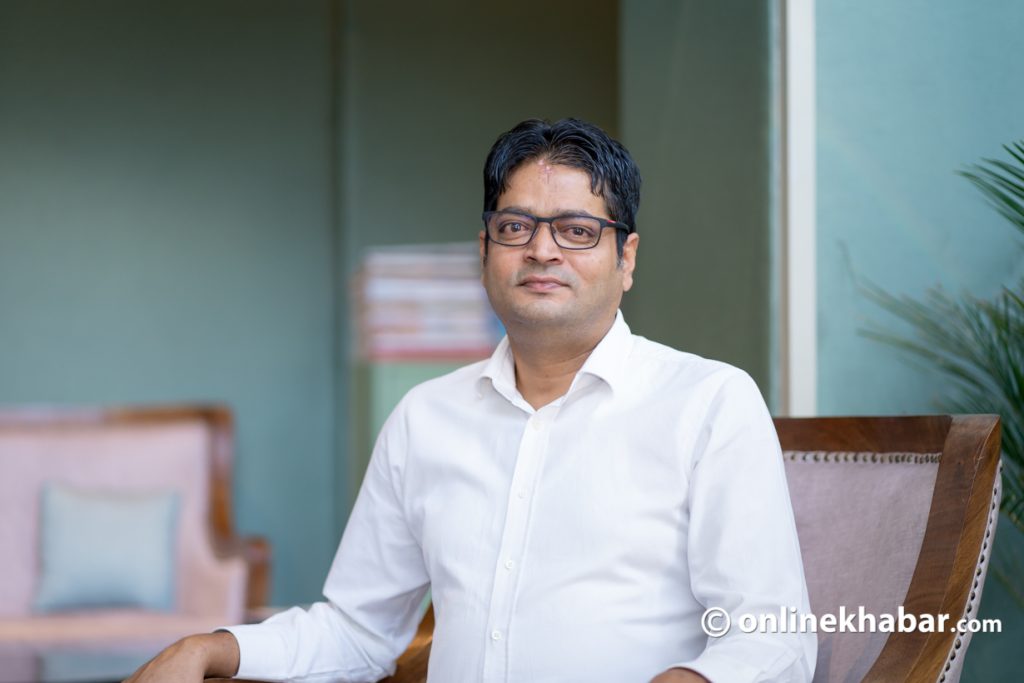
When Dr Binod Sah’s father became seriously ill, the doctor found himself in a role he was less accustomed to playing.
He was a son.
At 60, his father had developed a heart condition and kidney failure. Treatment was not possible in Nepal, so orthopaedic surgeon Dr Chakraraj Pandey gave Sah blunt advice: take him to Türkiye.
It was not an easy journey. His father was critically ill, needed oxygen and was not in a condition to take a long flight. Sah arranged an ambulance, oxygen cylinders, nurses and doctors. From Delhi to Türkiye, his father travelled on a stretcher.
“I held his hand and kept telling him, ‘Father, you will survive. You will survive,’” Sah recalls.
After they reached Türkiye, his father’s condition deteriorated further. He spent 25 days in intensive care, undergoing dialysis, ventilation and continuous monitoring.
Sah barely left the hospital.
“I was a doctor, but I was also a son,” he says.
Eventually, his father opened his eyes.
He smiled at his son.
“You saved me.”
For Sah, the moment carried a significance that went far beyond a successful medical treatment. Much of his life had been shaped by the same man lying in that hospital bed: a father who had once forced a reluctant, mischievous boy to become a doctor.
That boy had grown up in Golbazar, Siraha, with little interest in books and a preference for games and mischief.
His father had other ideas.
‘If you study, you will become a doctor’
Dr Binod Sah was the only son among his sisters. His father wanted him to become a doctor.
The boy himself had no such ambition.
“I was very mischievous when I was young,” Sah recalls. “I wasn’t interested in studies. I preferred playing and having fun.”
His father worried about him.
One day, he told his 13-year-old son: “If you study, you will become a doctor. If you don’t, you will become a thief or a thug.”
The words stayed with him.
His father decided that what the boy needed was discipline and sent him to St Joseph’s Boarding School in Biratnagar.
For Sah, accustomed to the freedom of village life, the school felt like a prison. So after two months, he ran away.
He returned to Golbazar, where his mother welcomed him. His father, however, did not.
“You cannot enter this house. Go back,” he told him.
That night, at around 11pm, his mother fainted. His father nevertheless arranged a vehicle and sent his son back to boarding school.
“That was the most difficult moment of my life,” Sah says. “My father’s strictness forced me to change direction.”
He says he has rarely had time to settle at home since.
“I left home at 13 against my wishes. My career and profession have always kept me moving. I don’t even remember having much free time at home.”
His father’s determination was rooted partly in his own experience.
The family was poor. In the village, Sah’s father earned a living by carrying sacks and goods from house to house. He saved money little by little until he could buy a horse, which he used to transport goods. That was how the family survived.
For his father, education offered a way beyond that life.
“Even if I have to sell my kidney, I will make you a doctor,” he would tell Binod.
Sah did not yet share the dream.
The first failure
Binod Sah passed his SLC examination in the first division in 1994.
He was an average student. He came to Kathmandu after SLC and lived with friends in Kalimati.
The city offered plenty of distractions. He spent time at Dasharath Stadium and with friends, and studying was still something he did largely because his father told him to.
He enrolled at Amrit Science Campus and began preparing for the MBBS entrance examination.
He failed on his first attempt.
“I thought everything was over,” he recalls.
His father, once again, refused to let him give up.
“You can do it. If you give up now, you will regret it for the rest of your life.”
Binod Sah prepared again, this time with his roommates Hemraj, Shivraj and Prabhakar. All three would eventually build medical careers in Nepal and Europe. But even then, Sah was uncertain about the path he was taking.
“For a long time, I felt this was my father’s dream, not mine.”
In 1994, he sat for the entrance examination again.
This time, he ranked 23rd on the MBBS scholarship merit list. In Golbazar, the news was celebrated with sweets.
The community had around 25,000–30,000 people, and Sah was the first person from the village to win such a scholarship. His achievement was reported in national newspapers.
The scholarship allowed him to study at any medical college in Nepal. His father, however, wanted something more.
“If you stay in Nepal, you will become a doctor, but you won’t become a complete person. Go abroad. Face challenges.”
Eventually, Sah received a full scholarship to study in Türkiye.
A night at the airport
He travelled to Türkiye with his friend Manju Shrestha. The country was unfamiliar. Neither knew the language and they had little money.
And they arrived on a Sunday, when the airport offices were closed. With nowhere else to go, they spent the night at the airport.
“My friend Manju became so frightened in the unfamiliar place that she developed a fever,” Sah recalls. “We were hungry and thirsty. It was Ramadan, so many shops were closed.”
Eventually, someone helped them reach the right place. Then Sah heard his name.
“In such a huge country, someone called my name for the first time. I felt I had finally reached the right place.”
The difficulties were only beginning.
Before medical school, Sah had to learn Turkish. He passed the language course with 97%. He could choose to study medicine in English or Turkish. He chose Turkish.
The decision immediately tested him.
During his first lecture, his professor spoke in an older form of Turkish that Sah could barely understand.
“In a 45-minute class, I understood only about 20 to 25 percent. I thought I had made the wrong decision. I thought my future was ruined. I sat in the first row and started crying.”
His friends reassured him. Even Turkish students, they told him, understood only about half of what the professor was saying.
For Sah, 25% was not failure. It was a beginning.
Medical school itself was fiercely competitive. Millions of students competed for limited places each year.
Binod Sah also struggled financially. His scholarship did not provide enough to cover his food expenses, so he applied for an additional food scholarship.
He got it.
For three consecutive years, he ranked first in his class.
After six years, he completed his MBBS and returned to Nepal. But Türkiye was not finished with him.
Becoming a pediatrician
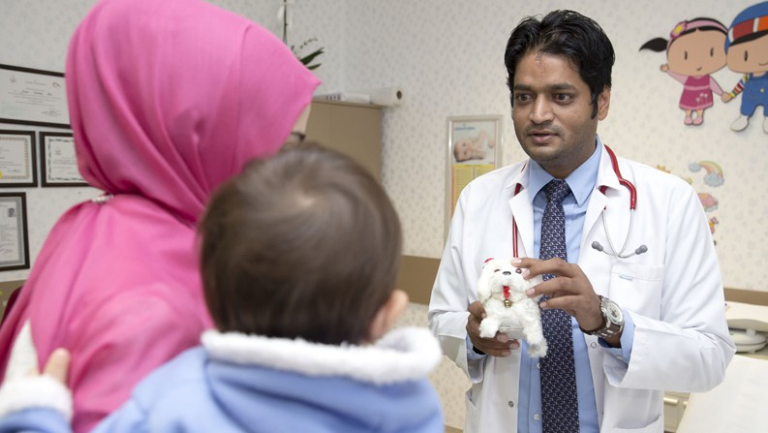
At 27, Sah returned to Türkiye on a scholarship to pursue an MD in pediatrics.
He joined the Department of Pediatrics at Hacettepe University, considered among the world’s leading institutions in the field.
That same year, his research on neonatal medicine earned him recognition as one of the four leading researchers in the world in the field.
He subsequently completed a DM in neonatology.
His career continued to develop around some of the smallest and most vulnerable patients.
In 2015, the Turkish government honoured him with its Best Doctor of the Year presidential award for his contribution to child and neonatal healthcare.
In 2024, he received the Best Child Doctor award.
But the moments that stayed with him were not necessarily the ones involving awards.
One came on a cold night in 2011.
48 minutes
Binod Sah was on night duty at Hacettepe University Hospital when a mother gave birth to triplets.
All three were premature and two of them had died.
The third was also close to death. The baby had stopped breathing.
Medical protocol generally limited CPR to around 45 minutes.
Sah, however, continued for 48 minutes. Eventually, the tiny heart began beating again and the baby survived.
Two years later, the child returned to the hospital. This time, there was no medical emergency. The child was running and laughing and came straight into Sah’s arms. The mother had tears in her eyes.
“That was the most emotional moment of my life,” Sah says.
It was one of several moments that would shape how he understood his work.
Years later, another came in Nepal.
A child in Pokhara
The child of the South Asia bureau chief of Reuters suddenly lost consciousness while the family was visiting Pokhara.
The child was taken to hospital by helicopter.
Binod Sah had arrived in Nepal only two days earlier. It was around midnight.
The child was in critical condition.
The medical team was considering one course of treatment, but Sah’s experience suggested another.
He intubated the child, adjusted the settings and carefully balanced the insulin dose.
He worked through the night.
The child stabilised and was eventually discharged.
“For me, it was normal work,” Sah says. “But for the family, it was a miracle.”
The parents later told him that had he not been there, their child might not have survived.
By then, however, Sah was already thinking about something beyond individual patients.
He wanted to build something that would remain after he left.
Bringing intensive care to Nepal
In 2016, Sah decided to return to Nepal. Two things influenced him.
One was Dr Chakraraj Pandey, an orthopaedic surgeon who had also studied in Türkiye. Pandey told him that Nepal needed NICU and PICU services and encouraged him to return.
The other was the dream of the father who had pushed him towards medicine all those years earlier.
“If my father could dream of making me a doctor when there wasn’t even a doctor in our village, I should do something for the country,” Sah thought.
He joined Grand International Hospital in Kathmandu and led its pediatrics department.
At the time, Nepal did not have a dedicated pediatric intensive care unit.
Sah established the country’s first Pediatric Intensive Care Unit (PICU) at Grand International Hospital.
He introduced modern equipment, trained staff and protocols based on international standards.
“Child and neonatal mortality was high in Nepal. I believed a PICU could save many lives,” he says.
By 2018, the unit was fully operational after which Sah handed it over to the hospital.
“My goal was to create a system that would continue even after I left.”
Why Türkiye?
The question was not whether Binod Sah loved Nepal.
He returned every year during Dashain. He conducted health camps and awareness programmes. And he still hopes to establish a pediatric hospital in Nepal that can provide quality care to children from rural communities.
But he had also experienced the limitations of the country’s healthcare system.
“In Türkiye, hospitals have modern equipment, internationally recognised protocols, research funding and a medical system that is continuously updated,” he says.
When a patient dies unexpectedly, hospitals hold mortality and morbidity meetings. Doctors, nurses and technicians examine what happened, what went wrong and how procedures and documentation can be improved.
“Every incident is treated as a lesson. The system makes doctors accountable, but they are not afraid. They learn from mistakes.”
Nepal had fewer resources.
“There might be one ventilator, one incubator, and even then there were power cuts. There were administrative complications and budget problems.”
He says institutional interference was an even bigger challenge.
“It became difficult for doctors to focus on their work.”
At Grand International Hospital, Sah says, he fought to bring in equipment, train staff and introduce protocols.
But improving a healthcare system, he came to believe, could not be the work of one person alone.
“Doctors in Nepal are good. The system binds them. I tried many times to improve healthcare, but I realised it wasn’t possible alone.”
So he returned to Türkiye.
His professional life continued.
His connection to Nepal did not end.
Back to the beginning
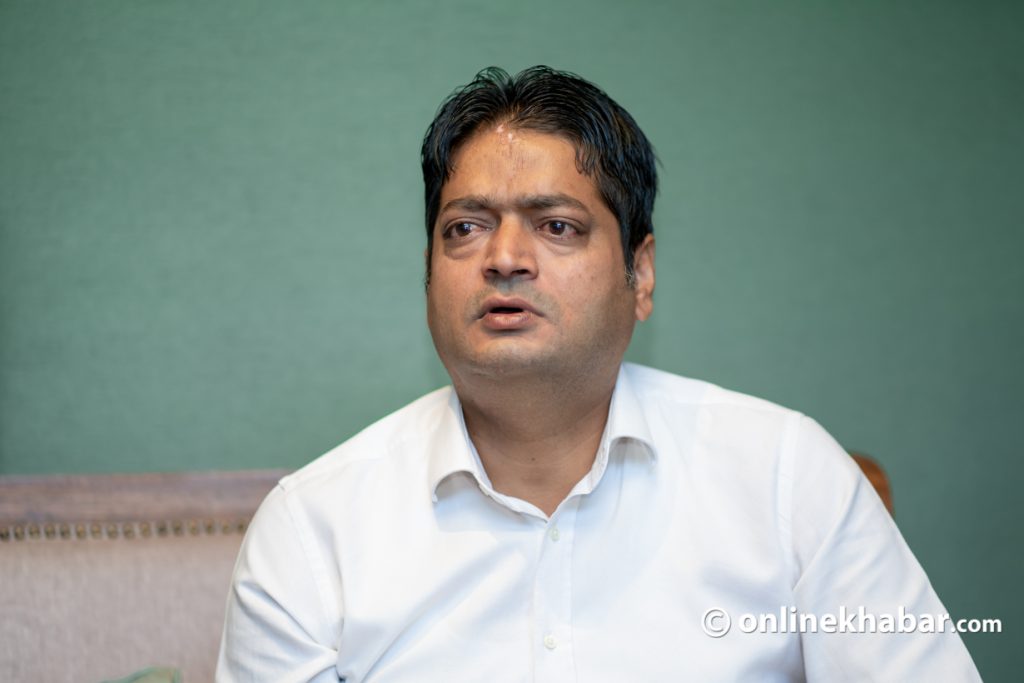
By then, Sah had a modern pediatric clinic in Ankara. From 8am until 7pm, parents arrive with newborns, premature babies, children and teenagers.
Sah sees them one after another.
He listens to worried parents. He reassures them. He treats their children.
For a doctor who has spent decades caring for some of the most vulnerable patients, the routine remains demanding.
But his career has taken him a long way from Golbazar.
And then came the moment when his father became critically ill. His father spent 25 days in intensive care in Türkiye. The doctor who had spent his life saving other people’s children now sat beside his own father.
Eventually, the older man opened his eyes.
“You saved me.”
That same year, Sah received the Best Doctor of the Year award.
His father attended the ceremony in a wheelchair.
“I don’t have to worry even if I die now,” he told his son. “My son saved me. My dream has come true.”
Sah becomes emotional when he remembers those words.
“I couldn’t show my father that I had become a doctor. But I was able to show him that I could save him.”
He says every achievement is dedicated to his father.
“My father had the eyes that dreamed the dream. But I had the feet that carried that dream.”
From a boy who once ran away from boarding school to an internationally recognised pediatrician, researcher and healthcare pioneer, Sah’s life has travelled through poverty, scholarship, migration and medicine.
The boy who did not initially want to become a doctor eventually became one.
And the dream that began with his father did not end there.
It crossed borders—from Golbazar to Kathmandu, from Nepal to Türkiye—and eventually came full circle beside a hospital bed, where the doctor became a son.