Kathmandu, August 23
Of children with disabilities, 24.20 percent are out of school. Of these, 16.55 percent have never attended school, while 7.65 percent attended at some point but are not currently studying.
According to Prem Devkota, program manager at the Blind Youth Association, 1.25 percent of children aged 0–17 have an identified disability. Looking at school access among children with disabilities, 75.91 percent are currently enrolled in school, while 16.55 percent have never attended and 7.65 percent attended previously but are not currently studying.
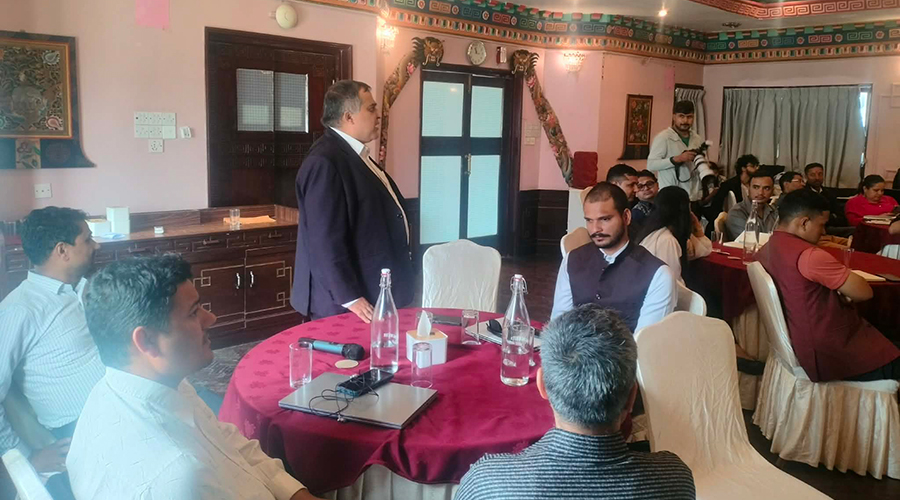
Devkota said this shows that ensuring continuity is just as challenging as getting children with disabilities enrolled in the first place. He cited the figures from a UNICEF study on children at an event held Sunday in Kathmandu.
According to the data, 84.05 percent of children with disabilities in Karnali Province are currently enrolled in school. In Madhesh Province, the figure is only 65.05 percent, with 28.85 percent of children with disabilities there having never attended school.
The report attributes children with disabilities being out of school to factors including geographic conditions, access to schools, lack of disability-friendly infrastructure, learning environments, family economic status, and social attitudes. It also notes that even children who do enrol may drop out midway if schools lack necessary support, assistive materials, and accessible physical infrastructure.
The data also shows a gender breakdown: among the total population with disabilities, 54.25 percent are male and 45.85 percent are female. The disability rate is 2.65 percent in rural areas compared to 2.05 percent in urban areas.
Nepal’s constitution establishes education as a fundamental right under Article 31, guaranteeing free and compulsory basic education for every citizen, free higher education for citizens with disabilities and those who are economically disadvantaged, and free education in Braille for visually impaired citizens and in sign language for deaf and speech-disabled citizens. The government has enacted the Compulsory and Free Education Act 2075 to implement this. Despite this, a large share, 24 percent, of children with disabilities remain out of school.
Ramchandra Gaire, chair of the Blind Youth Association, said the organisation is working with universities on disability issues.
“We are coordinating and collaborating with universities,” he said.
Shishir Khanal, chair of the Nepal Association of the Blind, spoke about representation in state mechanisms, noting that 617 people with disabilities are in the teaching profession and 35 are in the civil service. He said the government is amending the Disability-related Act and stressed the need for provisions aligned with current times as the amendment proceeds.