Kathmandu, August 23
A US federal court has struck down the Trump administration’s policy suspending the issuance of immigrant visas to citizens of 75 countries, including Nepal, ruling that the policy violates federal law.
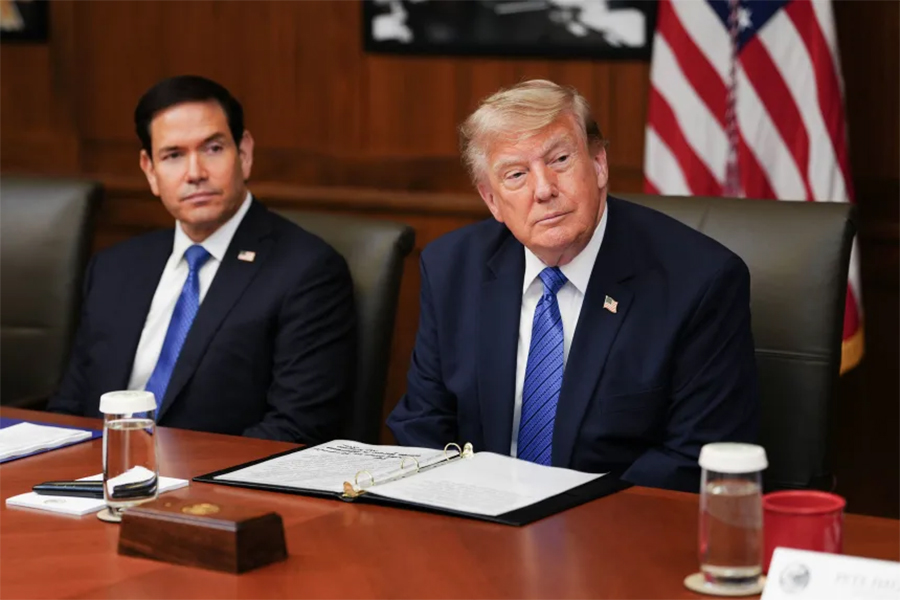
US District Judge Jeannette Vargas in Manhattan ruled that Secretary of State Marco Rubio lacked the legal authority to implement the policy. The State Department had suspended immigrant visa processing in January for nationals of the 75 countries, covering nearly 40 per cent of countries worldwide.
The administration had justified the policy by arguing that a large proportion of immigrants from the targeted countries could rely on government assistance and public benefits.
However, Vargas said US law requires visa decisions to consider an applicant’s individual circumstances, including financial status, age, health, skills and family situation. She found that officials had instead been instructed to deny visas based on an applicant’s country of origin, even when applicants provided evidence that they could support themselves financially.
The judge also ruled that the policy conflicted with a 1965 law prohibiting discrimination in visa issuance based on nationality and exceeded limits on the secretary of state’s authority over individual consular decisions.
The ruling does not automatically reverse visa denials made on other legal grounds. The extent to which previously denied applications will be affected remains unclear.
The 75 countries include nations in South Asia, Africa, the Middle East, the Caribbean, the Balkans and Southeast Asia. The administration had selected the countries based on data indicating that more than 30 per cent of immigrant households from those countries received some form of government assistance.
Vargas, appointed by former President Joe Biden, distinguished the case from a 2018 Supreme Court ruling upholding a version of Trump’s travel ban, saying that the case concerned entry into the United States, while the current case concerns the issuance of immigrant visas.
The parties have been given until September 11 to submit proposals on how to proceed with the remaining issues in the case.