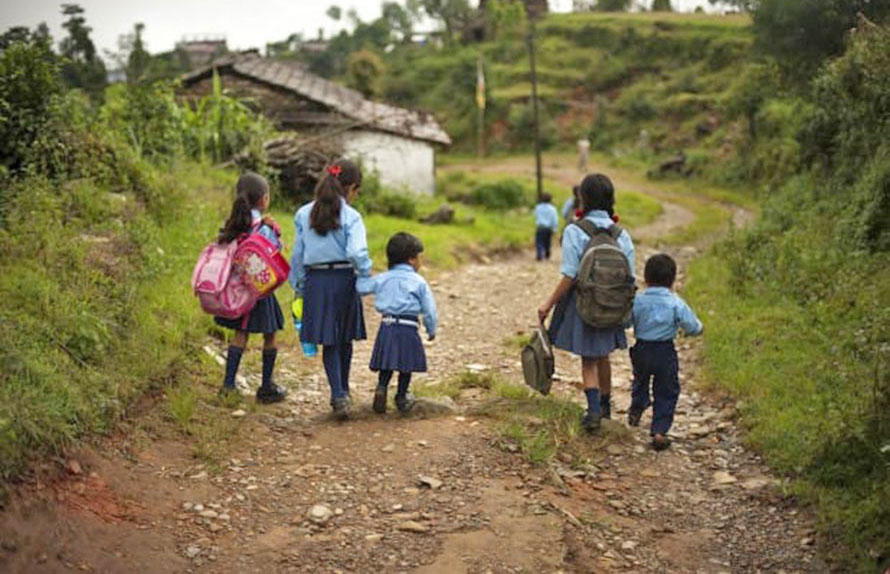
The education system already provides for multiple aspects of a child’s growth. However, implementation has always been a challenge. Nowadays, schools conduct various activities under the continuous assessment system to support the holistic development of students. This has become a new benchmark for modern education. However, marks still remain the simplest and most dominant measure in the education system.
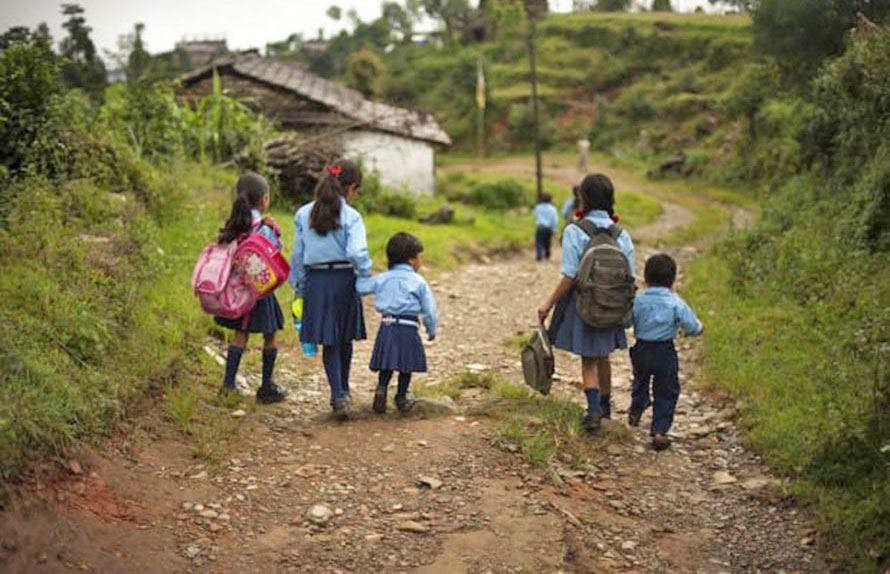
In Nepal, education has long been evaluated through a simple scale of marks. High scores in examinations are often seen as the ultimate goal of schooling, defining intelligence, success and even future security. For decades, this system functioned in a relatively stable world where degrees directly led to jobs and academic performance reflected real-world capability.
But that world no longer exists.
We are now living in an era of rapid technological transformation, artificial intelligence, automation, global competition and unpredictable career pathways. In this new reality, marks alone are no longer enough to guarantee success. In fact, they may not even be the most important factor.
The question we must ask is no longer, “How can students score higher marks?” but rather, “How can education prepare students for a constantly changing world?” The real issue is why the education system needs urgent transformation and what schools must teach to truly prepare students for the future.
AI is changing careers faster than education can adapt
Artificial intelligence is no longer a concept of the future; it is already reshaping industries. Jobs that once required human effort are now being assisted or replaced by machines. Routine tasks in data entry, customer service and even analysis are increasingly automated. In Nepal, too, students are preparing for careers that may not exist in the same form by the time they graduate.
The problem is that education is still focused on memorisation while the world is moving towards automation, innovation and creativity. If students only learn to reproduce textbook answers, they will struggle in a world that demands problem-solving skills, critical thinking, adaptability, creativity and digital literacy. Marks measure how well a student remembers the past, but success depends on how well they adapt to the future.
The problem with traditional education in Nepal
Nepal’s education system, like many South Asian systems, remains heavily exam-oriented. Students are trained to memorise textbooks, reproduce answers in exams, follow fixed patterns and avoid mistakes. In recent years, schools have introduced presentations, problem-solving activities and opinion-based learning.
Still, in most cases, students are ultimately judged by numbers. Although many educational institutions have adopted a letter grading system under the continuous assessment model, these grades are still largely based on marks. While this system may produce high scorers, it often fails to develop independent thinkers.
Many students who achieve excellent grades struggle when faced with real-life situations such as managing personal finances, communicating effectively, working in teams or solving practical problems. This creates a gap between academic success and real-world success. A student may top board examinations yet still feel lost when making career decisions or facing life challenges. This is because traditional education often ignores essential life skills.
The missing link: Practical skills
One of the biggest gaps in Nepali education is the lack of practical learning. Students may learn accounting formulas but rarely understand how businesses actually operate, how financial decisions are made, how money flows in real life or how taxation, investment and budgeting work. Similarly, in many other subjects, theoretical knowledge is rarely connected to real-world applications.
Education should answer the question: “Where will I use this in real life?” Without that connection, learning becomes mechanical and forgettable. Schools need to shift the focus from “What do you know?” to “What can you do with what you know?”
Emotional intelligence: The invisible success factor
Another major area missing from traditional education is emotional intelligence (EQ). Success in life is not determined only by intelligence (IQ), but also by the ability to manage emotions, handle stress, understand others, build relationships and remain motivated during failure. In today’s world, teamwork, leadership and communication are essential in almost every profession.
Yet students are rarely taught how to deal with failure, manage anxiety before examinations or interviews, resolve conflicts or build confidence. In the long run, an emotionally strong student is likely to outperform one who is only academically strong.
Financial intelligence: The skill schools ignore
One of the most critical gaps in Nepal’s education system is financial literacy. Students graduate without understanding how to manage money, how savings and investments work, how loans and interest function or how to build financial independence.
As a result, many young adults enter working life without financial discipline. They earn money but struggle to manage it. Financial intelligence is not just about becoming wealthy; it is about becoming responsible.
Imagine if students learned about budgeting, compound interest, basic investment principles and financial risk from an early age. This could create a generation that is financially aware, independent and confident.
Communication and creativity: Essential modern skills
In the modern world, communication is power. No matter how intelligent students are, if they cannot clearly express their ideas, their opportunities become limited. Similarly, creativity is becoming one of the most valuable skills in the job market. Machines can compute, but humans create meaning, ideas and innovation.
Schools now need to encourage public speaking, debate, discussion, storytelling, creative writing and problem-based learning. The future belongs to those who can think differently and express themselves confidently.
To prepare students for the future, Nepali schools need a major shift in both curriculum and mindset. Education must include life skills such as decision-making, problem-solving, time management, resilience and discipline. Financial education can no longer be ignored.
Schools should also introduce concepts such as budgeting, saving, investing, entrepreneurship and understanding income and expenses. Another important area is digital and AI literacy, including understanding how AI works, the responsible use of technology, digital safety and productivity tools.
Emotional intelligence training should also become part of education. Self-awareness, mindfulness, empathy, stress management and communication skills can help students become resilient individuals. Creativity and innovation must also be prioritised. Project-based learning, design thinking and real-world problem-solving can help students become more prepared for life.
Education should become less about “studying for exams” and more about “preparing for life”.
The role of teachers in this transformation
Teachers are the most powerful agents of change. In the traditional system, teachers are expected to complete the syllabus. In the future-oriented system, teachers must become facilitators of thinking, mentors of life skills and guides for personal development.
This transformation also requires training, institutional support and a shift in mindset. Teachers must evolve from information providers into creators of inspiration.
Imagine an education system where students learn financial management before they begin earning, where creativity is valued as much as memorisation, where failure is treated as part of learning, where emotional intelligence is taught in classrooms and where AI tools are used as teaching partners rather than threats.
This is not a distant dream. Many educational institutions have already started introducing such concepts, but a stronger central policy and coordinated implementation are necessary to ensure meaningful transformation for the future. Nepal has the opportunity not only to catch up with the world but also to lead in meaningful and practical education.
Marks will always have a place in education, but they cannot remain the only measure of success. The world is changing too quickly for outdated systems to remain effective. Students need more than academic excellence; they need readiness for life.
The future belongs to those who can think critically, adapt quickly, communicate effectively, manage emotions, understand money and generate new ideas. If Nepal’s education system embraces these transformations, it will not only produce good students but also responsible citizens, capable leaders and innovative thinkers.
Marks may open a door, but skills determine how far a student can go beyond it.