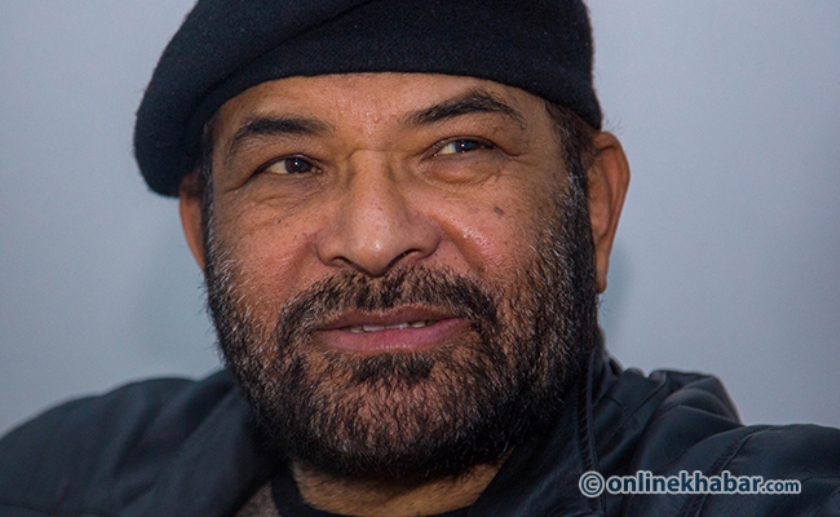
Tulsi Ghimire is known as a “school” of narrative tradition in Nepali cinema. His strength lies in portraying Nepali society, culture, and emotions through a simple yet deeply touching visual language. Through stories rooted in village life, family relationships, love, sacrifice, and pain, he connects with audiences. His filmmaking journey, which began with Bansuri, has passed through Koseli, Chino, Deuta, Dakshina, Balidan, and Darpan Chhaya, and now arrives at Pahad.
The film, set for nationwide release on April 14, calls on Nepalis living abroad to return home. Ghimire, who has strengthened the tradition of making films centred on “Nepaliness,” presents cinema not merely as entertainment but as a medium to tell society’s stories. In this context, Onlinekhabar spoke with Tulsi Ghimire.
Your film, Pahad, addresses youth migration and the emptying of villages, a highly sensitive issue in today’s Nepal. What inspired you to tell this story?
This is the story of all hills, whether in Nepal, Garhwal, or Assam. They are all becoming empty. Lands cleared by our ancestors are turning back into forest. The idea was inspired by the “Back to the Village” campaign from King Mahendra’s era. We had liked the topic for a long time, even before thinking about making a film.
When we visited different places, we saw hauntingly empty villages. The villages are beautiful, but overgrown with weeds. Houses built with love are collapsing. Only elderly people remain, while their children are in the USA or Australia, and they don’t even return anymore.
We make films to entertain, but we also want to talk about our own problems. That’s how this concept began.
The new government says it will bring back migrant workers. Does your film support that idea?
This new “wave” is very strong. It’s something we had hoped for. What we wanted to say is now being implemented, and we feel encouraged by that.
How does Pahad balance the economic benefits of foreign employment with its social costs?
If Nepalis worked in Nepal with the same effort they put abroad, they would earn double; this is a fact. I have seen Nepalis herding donkeys in Gulf countries. If they did similar work at home, it would be more beneficial.
Remittance sustains the country, but the suffering behind it is painful. Some succeed, but many struggle. The reality is harsh; even remittance comes from red-light areas abroad. That must stop.
Nepalis are known globally as hardworking and brave. That strength exists within us. Through the film, we try to suggest that if we want to build the nation, we must return.
You wrote the story, screenplay, and dialogue yourself. How did that shape the film?
I don’t claim I wrote all the dialogues alone. I guide actors like Bipin Karki to express in their own language. Artists like Madan Krishna Shrestha have their own style.
Sunil Thapa was excited about his dual-character role, strong on the outside, cunning within. Arun Chhetri has a complete “hero package,” reminiscent of actors like Rajesh Hamal.
After Appa, many see this as your comeback. How do you see it?
I started as a director, but while working with the new generation, I became a student. They corrected my old thinking. It became a true team effort.
What is the biggest change in filmmaking from your early days to now?
Earlier, our imagination was limited. Now technology allows everything, from stunts to visual effects. We used to work on 16mm film; now we use advanced technology like Hindi cinema. Skilled manpower has increased. This is a golden time for storytelling in Nepali cinema.
How do you engage today’s audience?
If we interestingly present our own context, it will always work. Films rooted in culture and society succeed more than imported ideas. Pahad is for everyone, young and old alike.
Your daughters, Panchami and Bhawana, debut in this film. How was that decision?
They struggled and learned in Mumbai. I told them, if you can perform, come. After watching the film, people will realise it’s not nepotism but capability. Working with experienced actors helped them grow.
There are talks of you receiving honorary Nepali citizenship. Your reaction?
I feel love when people ask me that. Nepal is like my mother’s home, my grandmother’s place. I haven’t received anything official yet, but the emotional response itself means a lot to me.
What should audiences feel after watching Pahad?
The film won’t change society overnight, but it will make people think, should we consider returning? Creating an environment is necessary, but to create it, we must return.
From Devkota’s Muna Madan to today, migration has been a long story. Pahad asks everyone one simple question: Please return to your village.