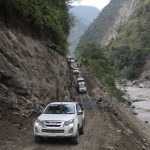


Mudslides and floods disrupted Central Nepal on August 26, 2026, with children being one of the most affected ones. The devastating flood served as an alarming reminder of Nepal’s evolving disaster scenario. It signalled that familiar monsoon floods and landslides are not the only concern of Nepal. We must now prepare for complex and rapidly developing hazards originating in its high mountains. In this scenario, strengthening infrastructure, monitoring glaciers and improving forecasting are essential. Nepal’s preparedness strategy should also focus on its people, particularly children and students.
Disaster risk reduction gets limited attention in Nepal’s school curriculum. A small amount of information is included in social studies, science, and other subjects, but much of it remains theoretical and disconnected from the hazards surrounding individual communities. A definition of a landslide in a textbook cannot prepare a student to respond when a slope starts eroding. Reading about floods does not teach children how to identify a safe evacuation route, react to an early warning, help a younger student, or communicate with family members after phone networks fail. Preparedness must therefore extend beyond classrooms and examinations. Students need regular simulations and drills based on the hazards in their own communities. Schools along riverbanks should practice flood evacuation.
Some private and community schools conduct simulation drills in partnership with NGOs, humanitarian organisations and donor agencies in Kathmandu Valley, and a few cities. However, activities supported through temporary projects may stop when funding ends. Whether a child learns how to survive a disaster should not depend on whether their school happens to have an external partner. Teaching DRR to children and students is very important because they are vulnerable during disasters. In fact, it’s a long-term investment in Nepal’s collective knowledge, behaviour and resilience. A child who learns about landslide warning today might be a teacher, engineer, health worker, journalist, business owner, government officer or minister tomorrow. He/She will carry risk awareness into consideration while making future decisions about where houses will be built, how roads should be designed, how public funds must be spent and how communities must respond to warnings.
Students trained in preparedness can also carry knowledge from school to their homes. Furthermore, they can encourage family members to identify evacuation routes, prepare emergency contact information, store essential medicines safely and avoid crossing flooded roads. In many communities, children may be among the first family members to receive organised information about disaster risks. Communities will respond calmly and quickly to early warnings. Children should not be expected to replace government agencies or emergency responders. The responsibility for reliable early warning systems, safe infrastructure, organised evacuation and emergency relief remains with public institutions. Nevertheless, warnings can save lives only when people understand, trust, and know what action to take.
An inventory prepared by ICIMOD alongside UNDP identified around 2,070 glacial lakes in Nepal. It has classified 21 lakes as potentially vulnerable and in need of regular monitoring. This does not imply that all 2,070 lakes are likely to burst. Each of them has different levels of stability and risk. The inventory reinforces the urgency to educate students about the hazards affecting Nepal’s mountains and river basins. A glacial lake assessment carried out by ICIMOD found that the changing climate is contributing to glacier retreat and the formation and expansion of glacial lakes.
A normal student does not need to become a glaciologist to understand these risks. They must simply be able to differentiate between a normal seasonal flood, a flash flood and a glacial lake outburst flood. They should understand warning signals, safe locations and trusted sources of information. Nepal government has recently tabled a bill in parliament through the National Service Corps (NCC) focusing on secondary level students (Grade 8-12). If approved, it will set up the legal framework for training students as cadets and, if needed, deploying them as volunteers for national duty, mostly in times of war and disaster.
Nepal already has a Comprehensive School Safety Framework in action. It covers disaster risk reduction, resilience education, safe learning environments, and school disaster management. On paper, it gives a strong foundation for improving school safety and ensuring that classes continue in the case of an emergency, but implementation is the biggest challenge. This framework is part of the School Sector Development Plan (SSDP) 2016–2023 and the CSS Master Plan. It covers the minimum activities that are to be implemented to achieve a minimum level of safety in schools. Many schools lack updated hazard maps, comprehensive emergency plans, qualified focal teachers, preparedness kits, and clearly marked evacuation routes.
Children in Nepal are not well prepared for hazards. There is no curriculum in Nepalese schools that teaches what should be done in times of disaster, when evacuation should be done, and how preparedness should be carried out. In a few schools, networks such as Junior Red Cross and Scouts teach students about first aid, simulation drills, etc.
In Kathmandu Metropolitan Municipality, Lalitpur Metropolitan Municipality and other big cities, schools that are financially and resource-rich have DRR education somewhat implemented at the school level through programs like Book Free Friday, Training of Teachers on DRR education, etc. But this education system is also not an accessible, accepted education system in the context of Nepal overall. We need a more inclusive, learnable education system applicable to all students and children of Nepal. More resources must be allocated for integrating both theoretical and practical aspects of DRR.
The school children are highly vulnerable to disasters. A very large number of Nepal’s public schools are sited along riverbanks or near rivers and pond areas, narrow valley floors, and unstable slopes without multi-hazard zoning or climate-resilient construction and infrastructure. The vulnerability is higher in the upper Himalayan region, as it has very weak access to standard roads and basic amenities to combat disasters and post-disaster effects.
While DRR topics are now somewhat formally included in the national curriculum, the delivery remains theoretical. It also heavily lacks practical execution, including disaster practice sessions: regular multi-hazard drills are very rare, teachers receive minimal actionable emergency response training, and curricula seldom address local risks. Age- and context-specific DRR education should be started in the early grades and continue through secondary and higher education. Small children can learn basic warning signs, emergency contacts, and safe behaviour.
Elder students can study local hazard maps, climate risks, first aid, evacuation processes, and responsible communication. Universities and colleges should integrate DRR into the curriculum. Then, future engineers, teachers, health workers, planners, journalists, and public officials can make decisions that influence disaster risk. Therefore, preparing each student is more than a school safety program. It’s an effort to create a culture of risk awareness.
Not every disaster can be rendered harmless by a drill. However, skilled people are better able to identify danger, comprehend warnings, evacuate more efficiently, and make safer choices across their lifespans. Soon, students in Nepal’s schools will be governing towns, managing municipalities, creating buildings, and instructing the next generation. They are better able to defend the nation and themselves if they are raised with an awareness of disasters, preparedness, and resilience. Thus, training children and pupils involves more than just keeping them safe. It is about preparing Nepal for future calamities.