

For Nepali doctor and professor Dr Suraj Bahadur Thapa, the question of how migration affects mental health is more than an academic pursuit. It is a subject that has shaped much of his professional life, from studying the experiences of refugees to researching trauma and displacement in Norway.
Thapa, who works at the University of Oslo and Oslo University Hospital, has spent much of his career examining the mental health of refugees, displaced people, survivors of war and trauma, and migrants rebuilding their lives in unfamiliar societies.
His work spans clinical practice, teaching and research. But his journey to Norway’s universities and hospitals did not begin with an ambition for academic distinction. It began with a childhood tragedy in Dhapasi, Kathmandu, that left him with a question that would stay with him for years.
A childhood loss that shaped his ambition
Growing up in Dhapasi, Dr Suraj Bahadur Thapa remembers a place very different from the densely built-up neighbourhood it is today. There were fields, a village-like atmosphere and a modest family life. His father worked in government service, while the family was also involved in farming.
Then, during his childhood, his two-year-old sister fell ill. Healthcare was not as readily accessible in Dhapasi and the surrounding areas as it is today. Unable to receive the treatment she needed in time, she died. The memory stayed with him.
“I kept wondering whether my sister might have survived if she had received treatment in time,” he recalls. “After that, I began thinking that I should become a doctor.”
His ambition was born out of personal grief, but it eventually led him towards medicine, research and, ultimately, the study of mental health.
After completing his School Leaving Certificate at Shivapuri Secondary School, Thapa pursued science. He considered several possibilities, including engineering, studying abroad and becoming a doctor. He even had the opportunity to study at Pulchowk Campus. But his childhood determination to enter medicine prevailed.
He began medical studies around 1990, completing five and a half years of medical education followed by a year of internship. He graduated with an MBBS degree from Tribhuvan University, earning a gold medal in internal medicine.
His professional career began to take shape in Kathmandu, where he worked at Norvic Hospital. Alongside clinical practice, however, another interest was developing — research.
His involvement in research on Bhutanese refugees in Nepal brought him into closer contact with the psychological consequences of displacement, torture and trauma.
The experience led him to a question that would eventually define his research career. What happens to people’s mental health when they leave their homes and countries behind?
From medicine to the Nordic world
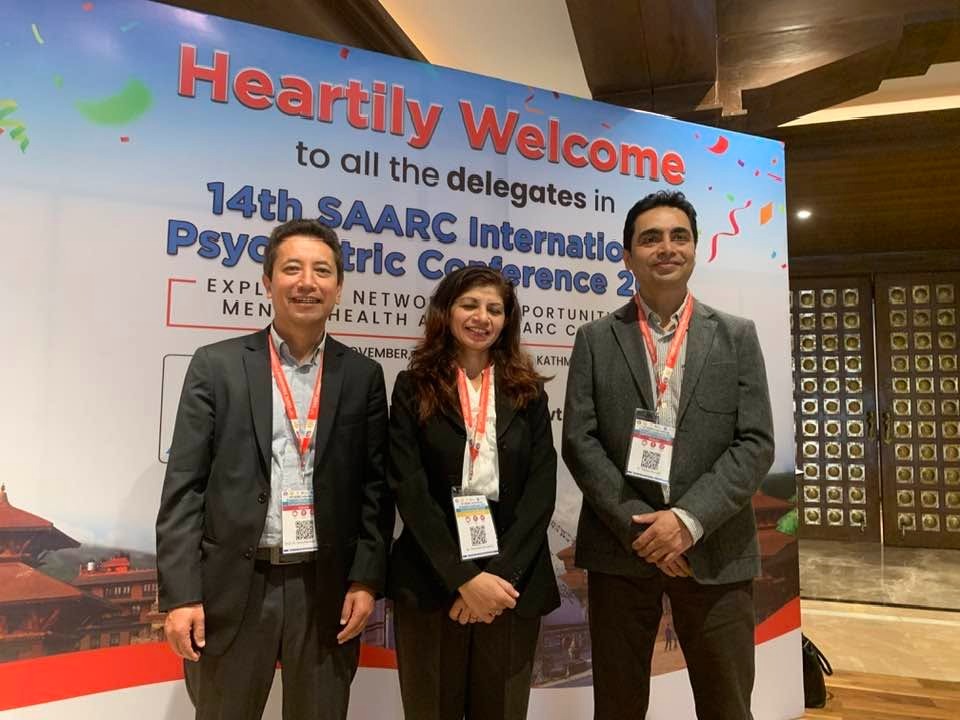
Dr Suraj Bahadur Thapa’s first encounter with Scandinavia came in 1995, when he travelled to Sweden through a student exchange programme. He spent about a month there, gaining a first-hand glimpse of Scandinavian society, its healthcare system and the way public services were organised.
Four years later, in 1999, he travelled to Norway for further studies.
After completing a two-year MPhil programme, he returned to Nepal in 2001 and spent about a year working with hospitals, non-governmental organisations and international research initiatives.
But Nepal was experiencing growing political conflict and instability, leaving him reconsidering his options for further study and professional development.
A former professor and mentor encouraged him to return to Norway to pursue a PhD. Thapa followed the advice and went back in 2002.
This time, his academic direction became clearer. He chose to study migration and mental health, drawing on research involving Bhutanese refugees and other migrant and displaced communities.
The move marked an important shift in his professional life. He was no longer concerned only with treating illness in individual patients. He was increasingly interested in understanding how changes in a person’s country, society and circumstances could affect their psychological wellbeing.
His research would examine the experiences people carry with them when they migrate, as well as the challenges they encounter after arriving in a new country.
What happens to the mind after migration?
For Dr Suraj Bahadur Thapa, migration is not simply the physical act of moving from one country to another. Its psychological consequences begin well before a person boards a plane or crosses a border.
A person’s reasons for leaving, their preparation, family circumstances, financial situation and expectations all influence how they experience migration.
“Whether someone is going abroad, how prepared they are, their family and financial circumstances, and what they expect from the move can all affect their mental health,” he says.
The journey itself can also be traumatic. While some people travel relatively safely, others flee war, violence, persecution or human trafficking, or undertake dangerous journeys in search of security.
Such experiences can leave lasting psychological effects.
Yet arriving safely in a new country does not necessarily mean the difficulties are over. For many migrants, another struggle begins after arrival.
“Post-migration factors are very important,” Thapa says. “Language, employment, social relationships, family, one’s status and the process of integrating into a new society can have a significant impact on mental health.”
For migrants, the gap between expectations and reality can be particularly difficult.
Someone who enjoyed professional recognition or a comfortable social position in Nepal may find themselves doing work far removed from their qualifications and experience after moving abroad. They may be earning money and supporting their families while privately struggling with a loss of identity or status.
“People can lose the status they had in their own country after moving abroad,” Thapa says. “That can affect their self-esteem and mental health.”
The distinction matters because migration is often viewed through the visible measures of success — employment, income, remittances and material improvements. The emotional costs can remain hidden behind those achievements.
Recognising when something is wrong

Nepalis living in Europe have diverse experiences. Some are students, others are labour migrants, business owners, doctors, engineers or professionals in other fields.
Their circumstances differ, but several pressures can affect their mental health, including language barriers, separation from family, social isolation, financial stress, insecure employment and difficulty finding work that matches their qualifications.
For families who migrate together, another set of challenges can emerge.
Parents who grew up in Nepal may hold different cultural expectations from children raised in Europe. Differences in language, values, social norms and lifestyles can create misunderstandings and tension within families.
Dr Suraj Bahadur Thapa encourages Nepalis abroad to maintain connections with their own communities without withdrawing from the wider society in which they live.
“People should preserve their culture and identity,” he says. “But they should also integrate into the society they live in, learn the language, understand the system and build relationships with the local community.”
Integration, in his view, does not mean abandoning one’s roots. It means retaining valued aspects of one’s culture while learning from the society around them.
He also emphasises the importance of recognising changes in everyday behaviour that may signal a mental health problem.
Losing interest in activities that once brought pleasure, withdrawing from friends, becoming persistently irritable, experiencing disrupted sleep, losing one’s appetite or weight, feeling increasingly anxious, having recurring negative thoughts or constantly blaming oneself are all signs that should not be dismissed.
Mental health problems are still surrounded by stigma in Nepali society, where people may hesitate to discuss their struggles or seek professional help.
“Mental health problems are not a weakness,” Thapa says. “Mental health is also part of our overall health.”
His advice is to talk about difficulties rather than conceal them. That might mean speaking to family members, friends or someone trusted. If the problems persist or begin to interfere with daily life, professional help may be necessary.
Treatment depends on the individual. Some people may benefit from counselling or psychological therapy, while others may require medication as part of their treatment.
The important thing, Thapa says, is to recognise the problem and seek help in time.
Doctor, professor and research leader
While pursuing his PhD in Norway, Dr Suraj Bahadur Thapa continued developing his clinical career. He learned Norwegian, completed the requirements for medical authorisation and began working in hospitals.
After working in medicine, surgery and geriatric care, he turned his attention towards psychiatry and subsequently specialised in the field.
Since August 2006, he has been associated with Oslo University Hospital. In 2016, he began taking on teaching and research responsibilities at the University of Oslo.
He now works as a professor and holds research leadership responsibilities in mental health, while remaining connected to the hospital’s clinical and research work.
His responsibilities extend well beyond treating patients. He teaches students, mentors emerging researchers, conducts studies and contributes to academic and institutional leadership in mental health.
Migration, refugee experiences, war, displacement, trauma and psychological wellbeing remain central to his research.
He has been associated with more than 50 international research publications.
But the significance of his work, he believes, lies not simply in the number of studies published or positions held. It also lies in connecting research with the realities of people’s lives.
Understanding the psychological consequences of migration, for example, requires looking beyond individual symptoms to the circumstances that shape them — the experience of leaving home, the challenges of settling elsewhere and the relationships that can either support or undermine a person’s wellbeing.
Bringing knowledge back to Nepal
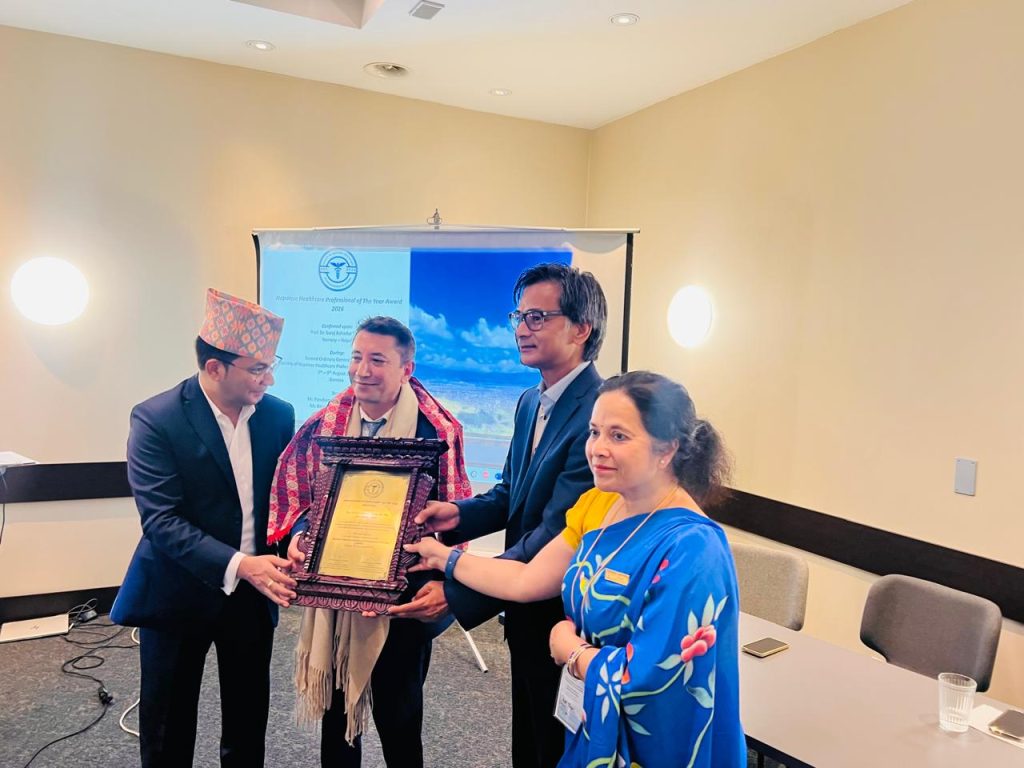
Although Norway became the centre of his professional life, Dr Suraj Bahadur Thapa maintained a strong connection with Nepal.
He wanted to use the knowledge and experience he had gained abroad to contribute to mental healthcare in his home country.
“Nepal educated me and helped me grow. I felt a sense of regret that I had not been able to do more there, and I felt that I should contribute to Nepal even while living in Norway,” he says.
That motivation led him to work with Nepali doctors and colleagues on mental health initiatives involving Tribhuvan University Teaching Hospital, the Institute of Medicine and Kanti Children’s Hospital.
The collaboration developed through seminars, conferences and academic programmes designed to facilitate exchanges between doctors, professors, psychologists and students in Nepal and Norway.
“We organised seminars with Teaching Hospital, the Institute of Medicine and the psychiatry department. Later, we held a larger conference and also received grants from Norway,” he recalls.
Over five to six years of sustained efforts, the partnership facilitated academic exchanges involving around 150 students and professors between the two countries, according to Thapa.
Nepali doctors and psychologists were given opportunities to study and conduct research in Norway, while exchanges also helped strengthen professional links between the countries.
Thapa says six Nepali psychiatrists and psychologists received opportunities to pursue PhDs in Norway through these collaborative efforts.
The work also extended to developing and revising academic curricula for mental health education in Nepal, including PhD, master’s and MD programmes. Collaboration in child mental health was another area of focus.
“We developed the PhD curriculum, revised the master’s and MD curricula, and began collaboration in child mental health in Nepal,” he says.
Thapa views these initiatives as part of a broader effort to strengthen Nepal’s capacity for mental health research, education and clinical practice.
“While living in Norway, I have been working to develop mental health research and build capacity in Nepal,” he says.
For him, international collaboration is not simply about giving Nepali professionals opportunities to train abroad. It is also about ensuring that the knowledge, skills and research experience gained through those opportunities can contribute to institutions and services back home.
Staying connected to the Nepali community
Alongside his academic and clinical responsibilities, Thapa has remained involved in the Nepali diaspora.
He has served as president of the Non-Resident Nepali Association in Norway and as a member of its International Coordination Council. Through these roles, he has remained connected to different parts of the Nepali community.
He has also been interested in linking Nepali doctors and researchers with academic opportunities and exploring further cooperation between Nepal and Norway in health and education.
One of his ambitions is to make knowledge about mental health more accessible to the general public in Nepal.
He plans to write books in Nepali explaining subjects such as depression, post-traumatic stress disorder (PTSD), the effects of trauma on the mind and body, how to recognise mental health difficulties and when to seek professional support.
The aim is to present research-based information in language that ordinary readers can understand.
For Thapa, specialist knowledge should not remain confined to consulting rooms, university departments or academic journals. It should also be available to the people who may need it in their everyday lives.
What Nepal can learn from Norway
More than two decades of working as a doctor, researcher and professor in Norway have given Thapa a close understanding of its healthcare system.
Having begun his medical career in Nepal, he has also had the opportunity to compare two different approaches to healthcare and consider what his home country might learn from the Norwegian experience.
The first issue he highlights is access to health and education.
He believes healthcare should be treated as a fundamental responsibility of the state rather than a privilege determined by a person’s financial circumstances or social standing.
He also stresses the importance of evidence-based medicine, ensuring that patients receive treatment appropriate to their needs and avoiding unnecessary medication.
The careful use of antibiotics is one practice he considers particularly important.
A strong healthcare system, in his view, is not measured simply by the number of hospitals or the availability of medical equipment. It must also ensure that people receive the right treatment at the right time and have equitable access to services.
He acknowledges that Nepal and Norway operate in different economic and social circumstances. Norway’s healthcare system cannot simply be transplanted wholesale into Nepal.
Nevertheless, he believes there are fundamental principles Nepal can learn from, including equitable access to treatment, the state’s responsibility to provide healthcare and the use of scientific evidence to guide medical decisions.
His experience in Norway has therefore become more than a professional achievement. It has given him another perspective from which to examine the strengths and weaknesses of the system in which he began his career.
For Thapa, the relationship between the two countries is not limited to migration or academic exchange. It also offers an opportunity to translate experience gained abroad into improvements in Nepal.
The childhood loss that first drew him towards medicine remains part of his story. Over time, his work has expanded from the treatment of individual patients to research into the social and psychological forces that shape people’s health.
From Nepal to Norway, and from clinical medicine to the study of migration and trauma, his career has been guided by a continuing interest in understanding what people experience when their lives change.
And in a world where migration is often discussed in terms of jobs, remittances and economic opportunity, his work points to a question that is easier to overlook: what happens to the person behind the migrant?