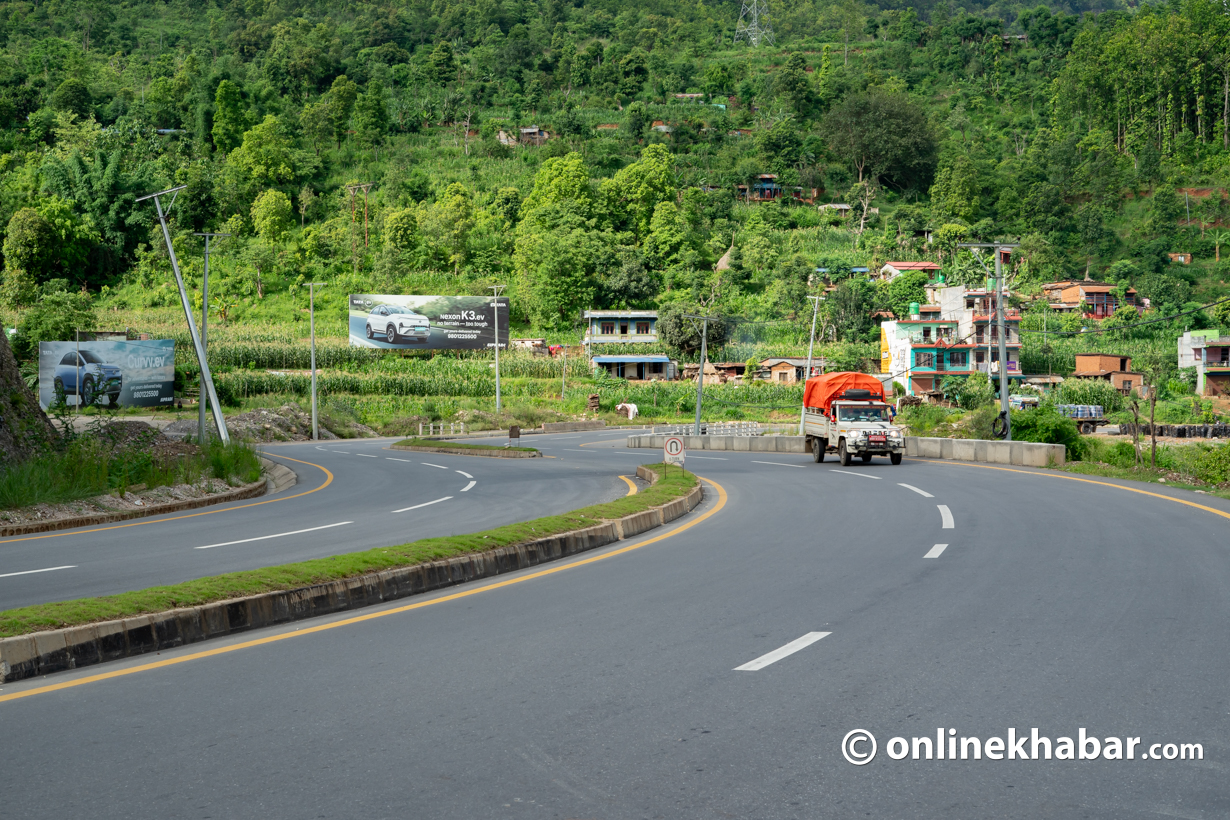


A road crash can happen in seconds. A momentary lapse in attention, excessive speed, poor visibility, a sudden change in road alignment or an unsafe overtaking manoeuvre can turn an ordinary journey into a dangerous situation.
On the Mugling–Pokhara Highway, drivers encounter sharp curves, bridges, intersections, settlements and mixed traffic amid changing terrain and visibility. Recognising hazards early and adjusting speed accordingly are therefore essential to safe travel.
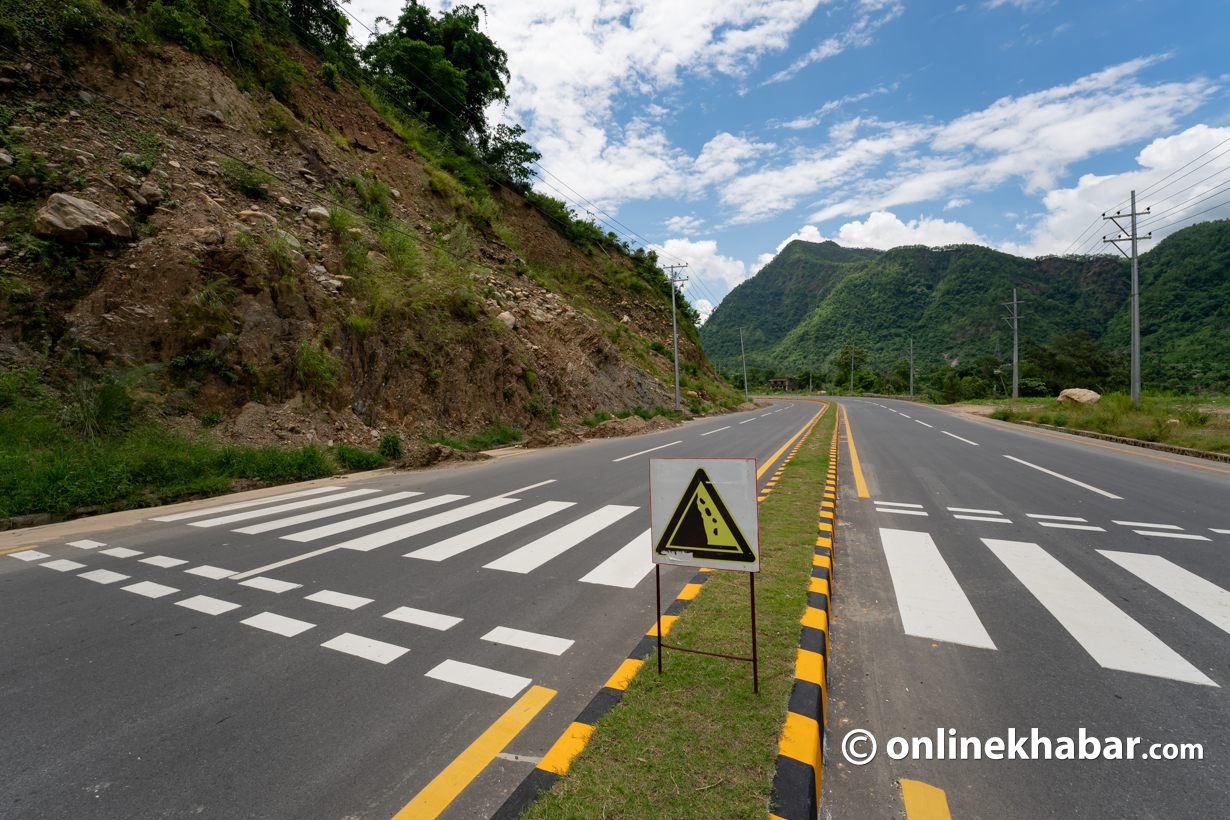
Rumble strips installed at selected locations provide an additional warning. As vehicles pass over them, the resulting sound and vibration can alert drivers, draw their attention back to the road and prompt them to adjust their speed or driving behaviour before reaching a potential hazard.
Although simple in design, rumble strips can serve as an important layer of protection alongside speed management, road signs, markings, barriers and other safety measures. They cannot prevent every crash, but they can provide drivers with an additional opportunity to respond to danger.
A warning built into the road
Rumble strips are textured or raised road-surface treatments designed to produce audible and tactile feedback when vehicles pass over them. The resulting sound and vibration signal that drivers may need to pay closer attention, reduce speed or adjust their driving.
They do not replace sound road design, clear signage, traffic enforcement or responsible driving. Instead, they provide an additional warning that may interrupt the sequence of events leading from driver inattention to a crash.
This is particularly relevant on the Mugling–Pokhara corridor, where mountainous terrain, curves, intersections, settlements and variable visibility create different driving risks. Department of Roads design documentation for the highway improvement works identifies hazards including run-off-road, head-on and side-swipe crashes, as well as unsafe overtaking where visibility is restricted. Rumble strips and other audio-tactile treatments form part of the wider range of safety measures intended to address such risks.
The principle is straightforward: a road should not merely carry traffic; it should also communicate potential hazards to those using it.
Why a few seconds matter
When a vehicle approaches a hazardous location at an inappropriate speed, the time and distance available to respond safely may be limited. A rumble strip can provide an additional sensory warning before the vehicle reaches the hazard, prompting the driver to slow down, maintain lane position or make another appropriate adjustment.
The effectiveness of this warning depends on several factors, including the strip’s location and design, the vehicle’s speed, road conditions and the driver’s response. Rumble strips should therefore be understood as a supporting safety measure, not a guarantee against crashes.
Assessing their effectiveness also requires more than counting accidents. A reduction in crashes may indicate improved safety, but establishing whether rumble strips contributed to that improvement requires systematic monitoring. Useful evidence includes vehicle-speed measurements, crash and near-miss records, field observations, road-safety audits and before-and-after assessments.
This is an important distinction in preventive road safety. When a driver notices a warning, slows down and negotiates a curve safely, the intervention may leave no visible trace. However, the absence of a crash alone does not prove that a rumble strip prevented one. Its contribution must be evaluated alongside other safety indicators and changes in road conditions.
Better roads require better safety management
The Mugling–Pokhara Highway improvement project involves upgrades to pavement, drainage, structures, alignment and roadside safety. As a strategically important corridor connecting Kathmandu and Pokhara and serving communities, businesses and travellers along the route, the highway’s safety depends on both infrastructure quality and road-user behaviour.
Improved road surfaces and geometry can make journeys smoother and more comfortable. However, they may also encourage drivers to travel faster. Without appropriate speed management and clear warnings, better infrastructure does not automatically translate into safer journeys.
This is especially important at curves, junctions, settlements and other locations where terrain, visibility and roadside activity demand greater caution. Road design must work alongside measures that encourage drivers to recognise changing conditions and respond appropriately.
A safe highway should help drivers understand where they can travel efficiently and where they need to slow down, pay closer attention or change their driving behaviour. Rumble strips are one way to reinforce that message.
One treatment, multiple layers of protection
Rumble strips are most useful as part of an integrated road-safety strategy. Their effectiveness depends on appropriate placement, design, spacing and maintenance, as well as coordination with other interventions.
Depending on local conditions, these may include speed-limit and warning signs, road markings, delineators, protective barriers, lighting, safer intersections, pedestrian facilities, traffic enforcement and public-awareness campaigns.
This layered approach recognises that crashes rarely have a single cause. Speed, road geometry, visibility, weather, vehicle condition, driver behaviour and roadside activity can combine to create dangerous situations. A resilient road-safety system seeks to prevent one mistake or unsafe condition from resulting in a serious crash.
Rumble strips can contribute to that system, but they cannot compensate for inadequate road design, missing safety infrastructure or unsafe driving.
Measuring what does not happen
Evaluating preventive road-safety measures presents a particular challenge. Crashes leave visible evidence, including damaged vehicles, injuries, fatalities and police records. Successful prevention, by contrast, may amount to little more than a driver slowing down and continuing safely.
Nevertheless, the contribution of rumble strips can be assessed through changes in vehicle speeds, crash frequency and severity, near-miss reports, observed driving behaviour and road-safety assessments. Comparing conditions before and after installation, while accounting for changes in traffic volume, road geometry and other safety interventions, can help establish whether the measures are working as intended.
Monitoring can also identify locations where rumble strips need maintenance or where additional interventions are necessary. On the Mugling–Pokhara corridor, such assessments will become increasingly important as traffic volumes, vehicle types, roadside development and travel patterns evolve.
The objective should not simply be to install safety features, but to determine whether they are delivering measurable benefits and to improve them where necessary.
A small intervention with a larger purpose
Compared with bridges, tunnels, retaining walls and widened road sections, rumble strips may seem like a minor addition to a highway. Their purpose, however, is significant: to give drivers an additional warning at moments when a timely response can make a difference.
Highway safety depends on sound engineering, appropriate speed management, clear signs and markings, roadside protection, responsible driving, enforcement and continuous monitoring. No single intervention can eliminate crashes, but well-designed measures working together can reduce risks and provide multiple opportunities to prevent serious incidents.
A driver may encounter a rumble strip, slow down and safely negotiate a hazardous section without giving the warning a second thought. Passengers may notice only that the vehicle has reduced speed. No crash occurs, no emergency response is needed, and nothing appears in official records.
That is the purpose of preventive road safety: not merely to respond when crashes happen, but to create road conditions in which they are less likely to occur.