Kathmandu, November 18
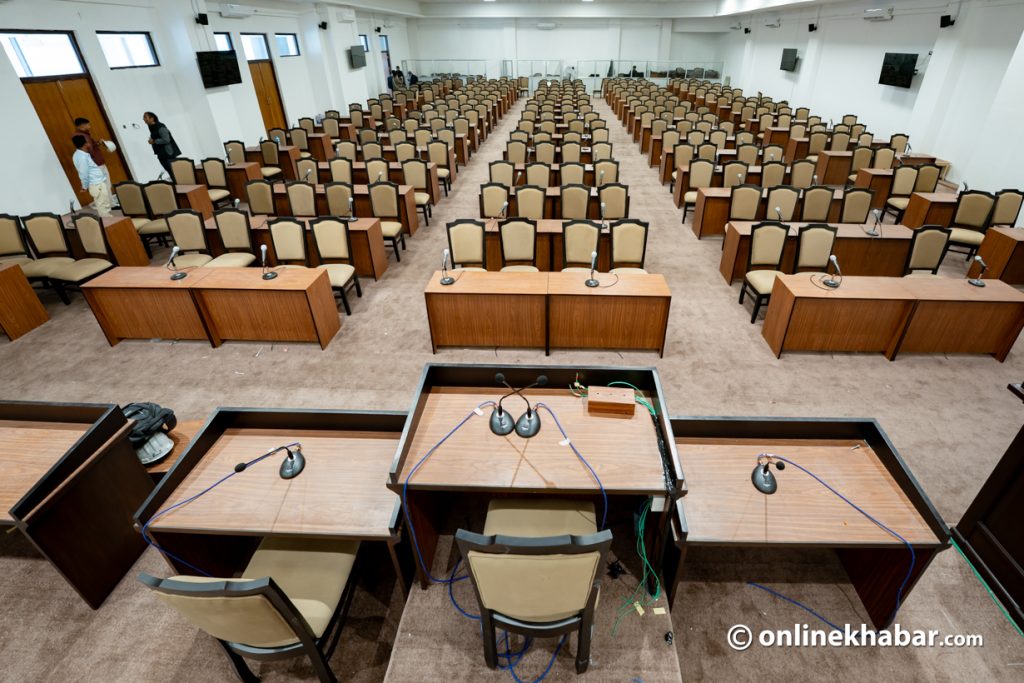
Opposition parties have stepped up pressure to activate parliamentary committees and strengthen oversight of government activities by demanding meetings of key committees and the summoning of the Federal Parliament.
The Nepali Congress has registered separate applications seeking meetings of the State Affairs and Good Governance Committee and the Public Accounts Committee. Lawmakers from the Rastriya Prajatantra Party (RPP) and the Nepali Communist Party have also demanded a meeting of the State Affairs Committee.
Under Rule 181 of the House of Representatives Regulations, if a committee is not holding meetings, one-fourth of its members can submit a written request to the chairperson, specifying the issues and reasons for discussion. The chairperson must then set a date and time for the meeting within five days.
The State Affairs Committee has 27 members, including its chairperson Hari Dhakal, while the Public Accounts Committee has 26 members, including chairperson Bharat Bahadur Khadka. At least seven members are therefore required in each committee to trigger the mandatory meeting procedure.
According to Federal Parliament Secretariat spokesperson Ekram Giri, a request from one-fourth of the committee members obliges the chairperson to schedule a meeting within five days. Requests from fewer members can also be registered and forwarded to the chairperson, but they do not create the same mandatory requirement.
However, scheduling a meeting does not guarantee that it can proceed. A quorum is necessary, and the committee must consider the seriousness of the issues and the immediate need for discussion. The agenda must also remain focused on the subjects raised in the written request.
The Nepali Congress has sought discussions in the State Affairs Committee on alleged middleman involvement, particularly the Inam Sapkota controversy, alleged misuse of state agencies, issues involving the Nepal Police inspector general, and the arrest and release of journalists.
In the Public Accounts Committee, the party has demanded discussions on the cancellation of the contract for the Sunkoshi-Marin Diversion Project, implementation of the Public Procurement Act, the procurement process involving technically selected companies whose financial proposals were not opened, and the detention of the director general of the Department of Water Resources and Irrigation and the project chief.
RPP parliamentary party leader Gyan Bahadur Shahi and Nepali Communist Party Chief Whip Yubraj Dulal have also submitted written requests to State Affairs Committee Chairperson Dhakal. They have sought discussions on an audio recording linked to alleged middleman Inam Sapkota, the disclosure of information concerning a person in police custody, reported differences between the government and the Nepal Police chief, and the arrest and release of journalists.
Shahi has demanded that the committee summon the prime minister, home minister, home secretary and Nepal Police inspector general to seek explanations. Dulal has also called for clarification on how the audio recording became public and the role of government agencies in the arrest and release of journalists.
Meanwhile, an immediate meeting of the State Affairs Committee appears unlikely, as Chairperson Dhakal is currently visiting China as part of a 20-member delegation led by Rastriya Swatantra Party General Secretary Bipin Kumar Acharya. The delegation, which left on November 15 at the invitation of the Communist Party of China, is scheduled to return on November 26.
However, Dhakal’s absence does not remove the procedural obligation arising from a valid request by one-fourth of the committee members.
Opposition parties have also been demanding that the Federal Parliament session be convened without delay. At a meeting called by the Nepali Congress on November 2, opposition parties had concluded that Parliament needed to discuss issues concerning national interests, people’s livelihoods, democracy, the Constitution, and post-disaster relief and reconstruction.
The latest demands for parliamentary committee meetings have further strengthened their call for the summoning of the parliamentary session.