Kathmandu, October 27
CPN-UML Chair KP Sharma Oli has taken a swipe at what he described as the proliferation of “fake gods,” criticising blind devotion and the tendency to associate yoga with religious beliefs.
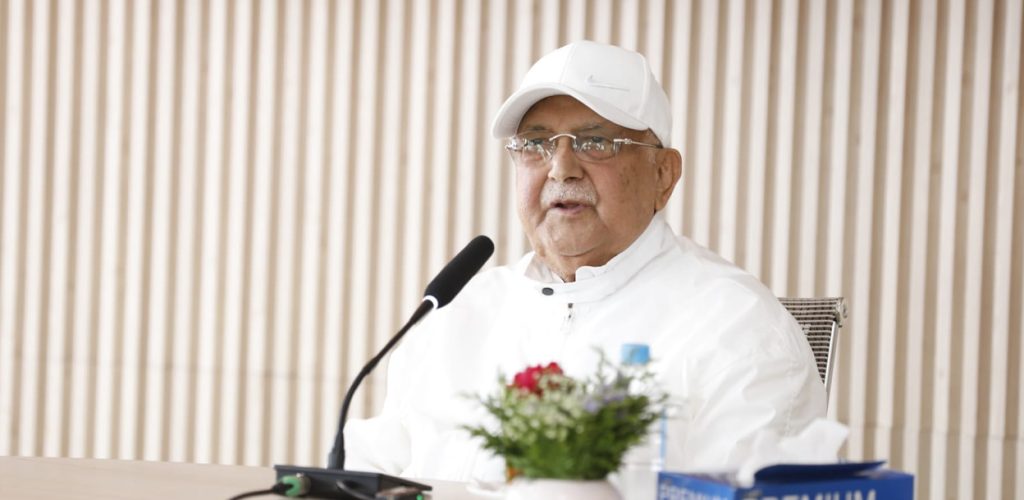
Speaking at a programme to launch a commemorative publication by the Madan Bhandari Memorial Foundation, Oli offered a satirical interpretation of religious beliefs about the birth of gods and argued that yoga should be understood through its philosophical principles rather than religious claims.
Oli said that, according to the account he was discussing, the birth of divine offspring stopped after Parvati cursed the gods, but the emergence of what he called fake gods had continued.
“After Parvati cursed them, the gods could no longer have children. But now, fake gods have emerged and are causing trouble,” Oli said.
He also criticised what he described as a tendency among people to show unquestioning reverence to religious figures, particularly visiting ascetics.
“We have this habit ourselves. When ascetics come from the south, we immediately feel like grabbing their feet and bowing to them,” he said.
Oli argued that the ethical principles of yoga should guide people’s conduct and social relationships. Referring to the first two limbs of Ashtanga Yoga — yama and niyama — he said they emphasise non-violence, truthfulness, peace and respect for other people’s property.
He said these principles encourage people to avoid violence and falsehood, follow the path of peace and refrain from coveting what belongs to others.
“What we seek is precisely that — not coveting another person’s property and being content with what is rightfully ours,” Oli said.
He added that truth, justice and humanism should form the foundation of people’s thinking and actions.
Oli also argued that yoga’s philosophical traditions should be distinguished from theism. He claimed that yoga became associated with belief in God in the philosophy of Patanjali, whereas other traditions, including Samkhya and Shaivism, did not necessarily link yoga with theism.
Referring to Shiva as the Adiyogi, Oli said the emphasis was on yoga itself and the pursuit of a healthy body and mind.
He maintained that yoga could help people develop physical and mental well-being, stressing its practical and ethical dimensions rather than an unquestioning attachment to religious figures.