For years, “You might be transferred to Olangchung Gola” was a familiar expression among government employees, used to describe an exceptionally remote posting. Even in rural Taplejung, people would jokingly say a football kicked far outside the field had “reached Gola.”
The settlement, however, has always had an identity beyond its isolation.
Located around 75 kilometres from Taplejung district headquarters, Olangchung Gola is a historic Himalayan settlement known for its Walung community, yak and chauri herding, Tibetan trade and traditional wooden-roofed houses.
It is also the birthplace of renowned ophthalmologist Dr Sanduk Ruit, whose international reputation helped put the remote settlement on Nepal’s wider map.
But Olangchung Gola is changing.
A village once defined by distance
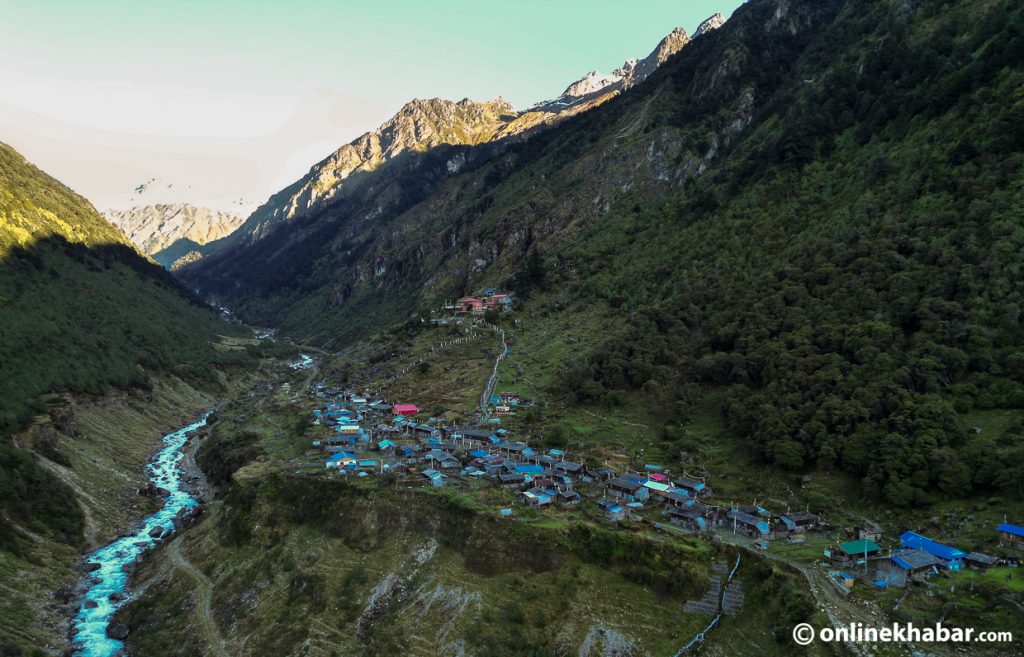
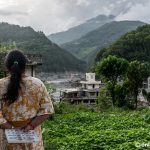
Olangchung Gola lies beneath the approximately 800-year-old Diki Chhyoling Monastery. Around 50 to 60 traditional houses remain in the settlement, built in a style reflecting the area’s Himalayan heritage.
The Tamor River flows through the valley after originating near the Tiptala Pass. The Singjema River, which grows substantially in volume downstream, eventually joins it.
The name Olangchung Gola itself is associated with an old story. According to local accounts, Tibetan pilgrims once lost their way while travelling through the area. A small animal resembling a mongoose is said to have shown them the route. The animal was called “Olung”, and the name is believed to have gradually evolved into Olangchung Gola.
For generations, however, the settlement’s defining characteristic was its isolation.
Before roads reached the area, helicopters flying above the Tamor were among the few visible signs of the outside world. Children would look up and say, “The helicopter has gone to Gola.”
That perception remained strong even outside Taplejung.
A student from Taplejung recalls arriving at Kathmandu’s Ratna Rajya Campus around 2015. When he introduced himself as being from Taplejung, a fellow student from Bajhang immediately asked how far his home was from Olangchung Gola.
The question reflected how deeply the name had become associated with a distant, difficult-to-reach place.
The road is changing Olangchung Gola
That reality is no longer the same.
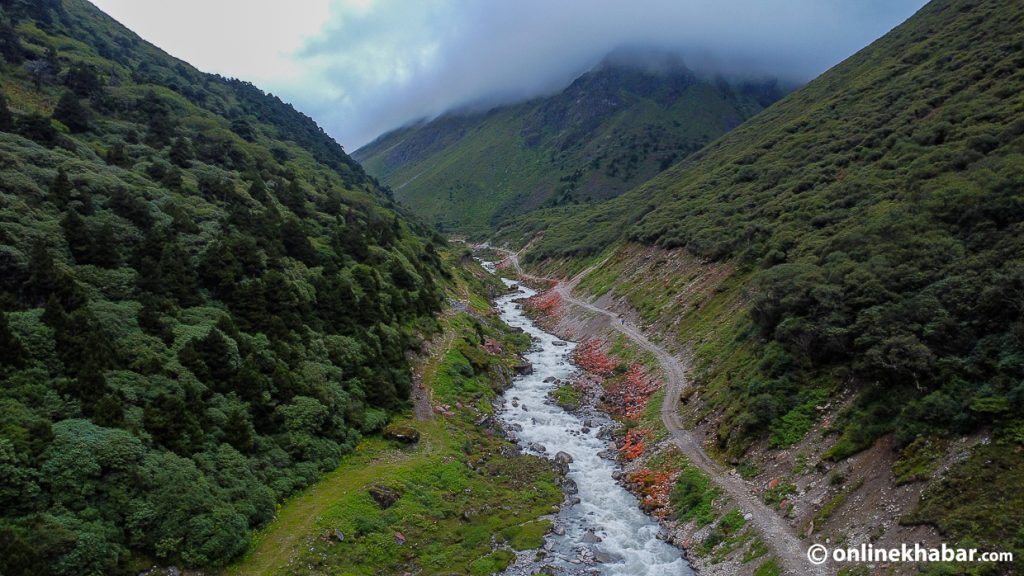
The construction and upgrading of the North-South Highway, which connects Rani in Biratnagar to the Tiptala border, has brought Olangchung Gola into Nepal’s road network.
During winter, vehicles can reach the settlement.
The road was developed with the broader objective of connecting the area with China and developing Tiptala as an international trade point.
Mobile connectivity has also arrived. Nepal Telecom launched 4G service in the area in recent months, giving residents direct access to modern communications.
The changes are transforming not only how people travel to Olangchung Gola but also how the settlement is perceived.
A place once used as a metaphor for remoteness is increasingly becoming a destination in its own right.
From Tibetan trade to tourism
Olangchung Gola historically maintained close economic links with Tibet.
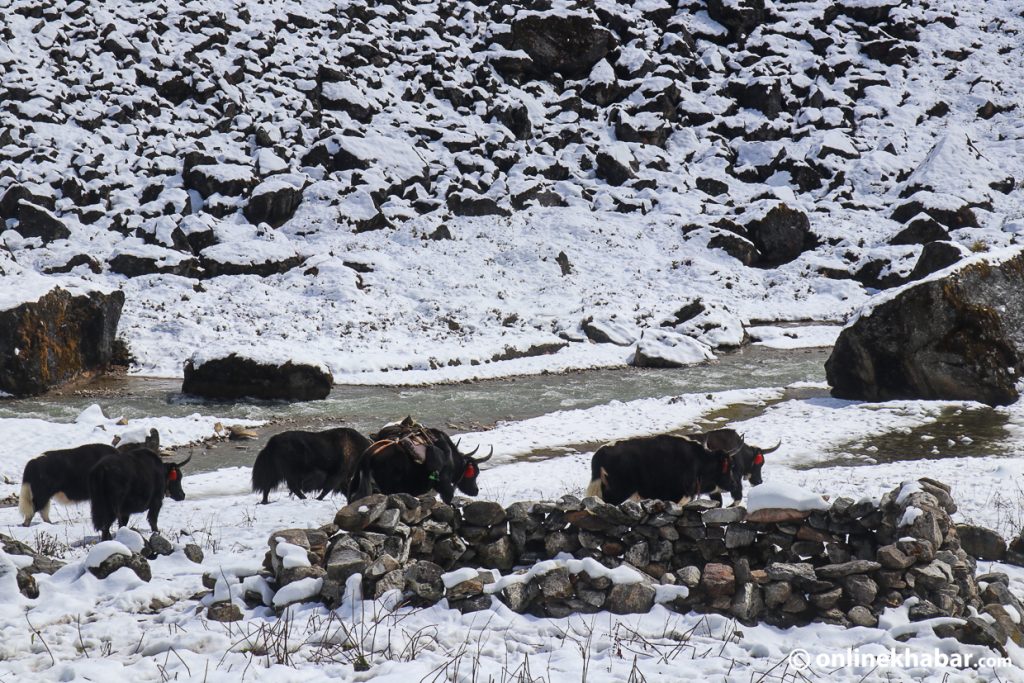
Yak and chauri products, wool and locally produced carpets were among the main items traded across the border. “Gola carpets” became a recognised product, with demand reaching Taplejung, Darjeeling, Kathmandu and even the United States.
That cross-border trade has, however, largely come to a standstill since China tightened border controls following the Covid-19 pandemic.
“The quarantine building is about seven kilometres from the Tiptala border. We have to stay there. Relatives come from Riu on the other side, and we meet there,” says Onga Sherpa, a ward member who runs a shop in Olangchung Gola.
For a community whose economy was historically tied to the border, the restrictions have been a major disruption.
Tourism, meanwhile, is offering a new possibility.
The lakes drawing visitors uphill
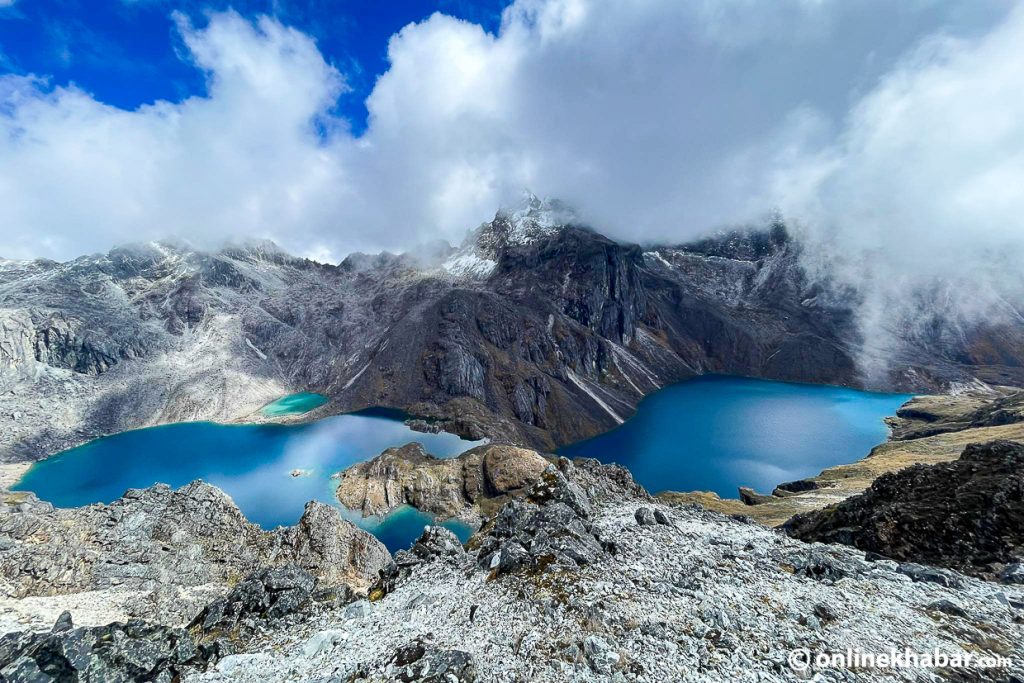
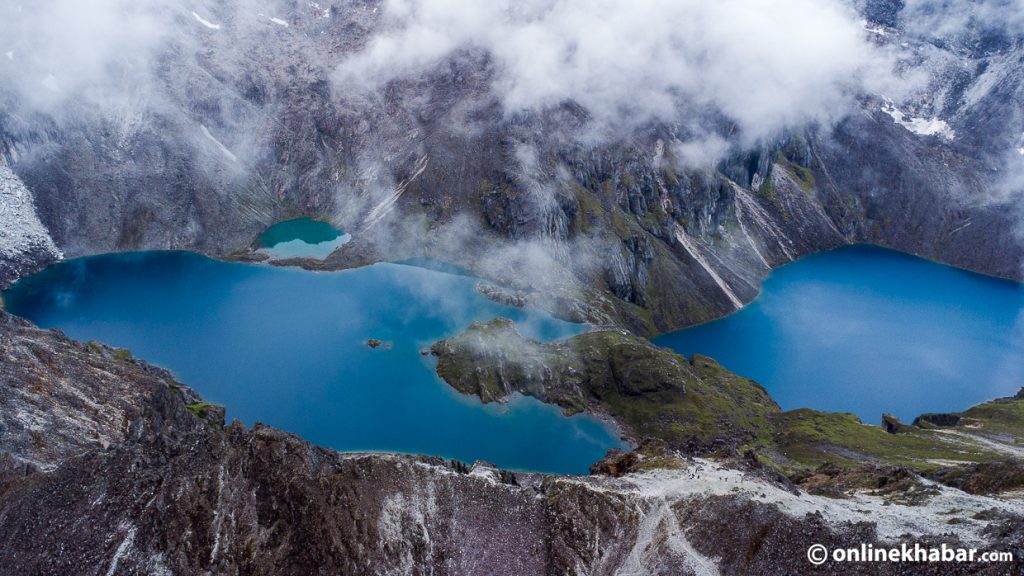
Beyond Olangchung Gola are two high-altitude lakes that have increasingly attracted attention in eastern Nepal: Singjema and Samdo.
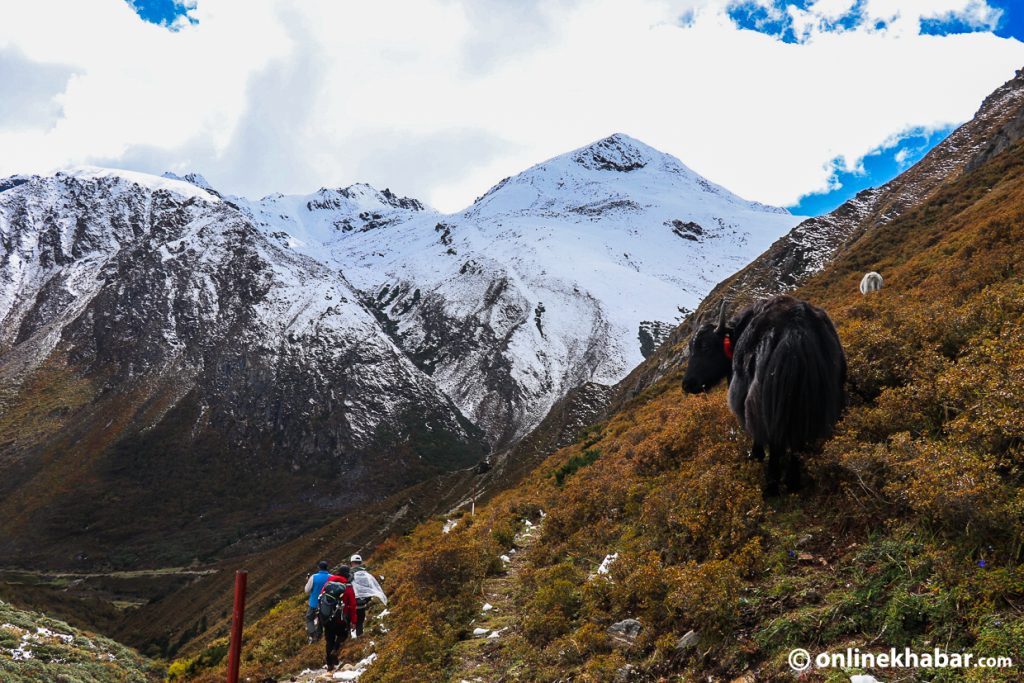
The trek to the lakes begins above the settlement and takes visitors through an increasingly dramatic landscape.
Singjema Lake sits at around 4,700 metres above sea level. Before reaching it is Chhyer Valley, a natural camping area surrounded by rocky mountains, green pasture and the winding Singjema River.
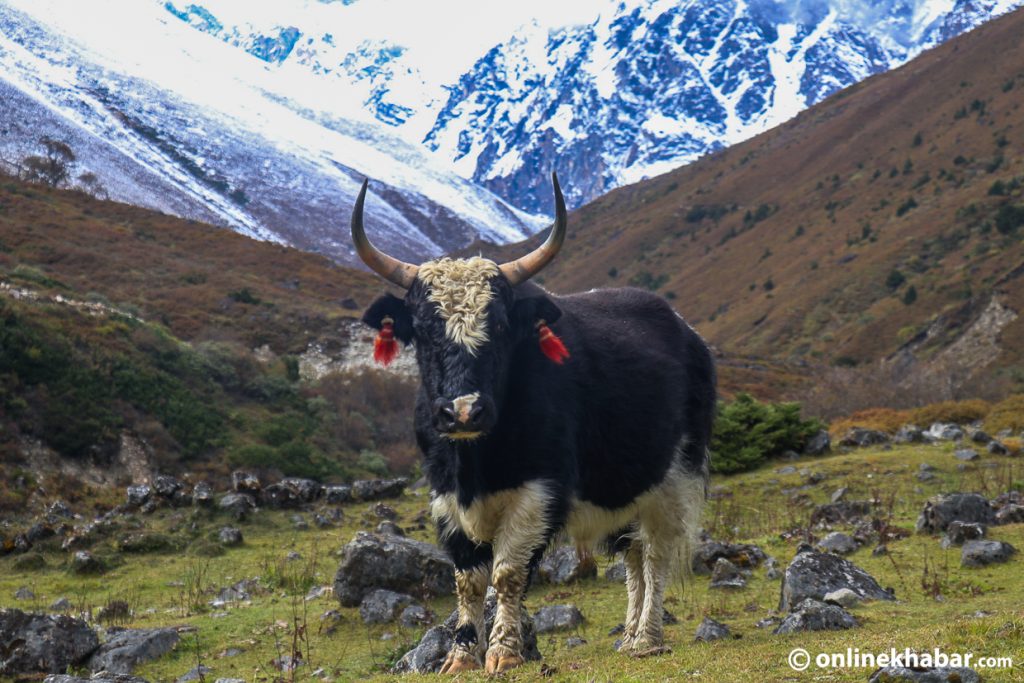
Yak and chauri graze freely across the grasslands, their bells ringing through the valley.
After climbing for around an hour to an hour and a half from Chhyer, trekkers reach Singjema.
From there, the route continues towards a pass at around 5,100 metres. Only after reaching the pass does the pair of Samdo lakes come into view.
The landscape changes dramatically.
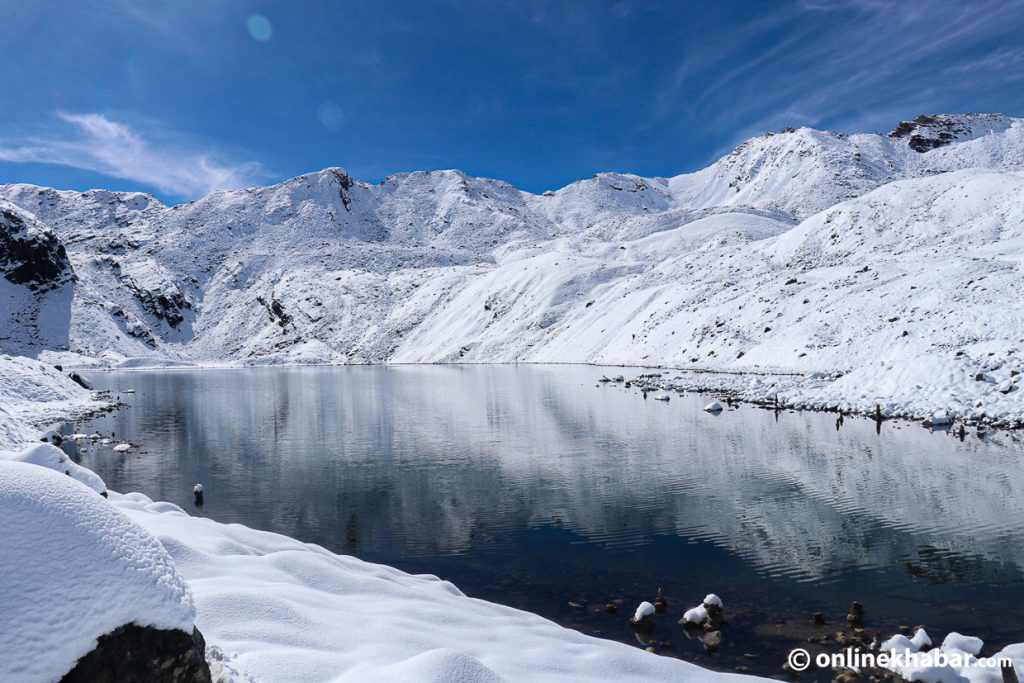
On one side, Singjema stretches across the highland pasture in blue. On the other, the two Samdo lakes sit quietly between rugged rock formations.
Clouds periodically cover and reveal the lakes, adding another layer to the landscape.
For visitors who make the demanding climb, the view from the pass can make the difficult journey worthwhile.
Staying with the Walung community
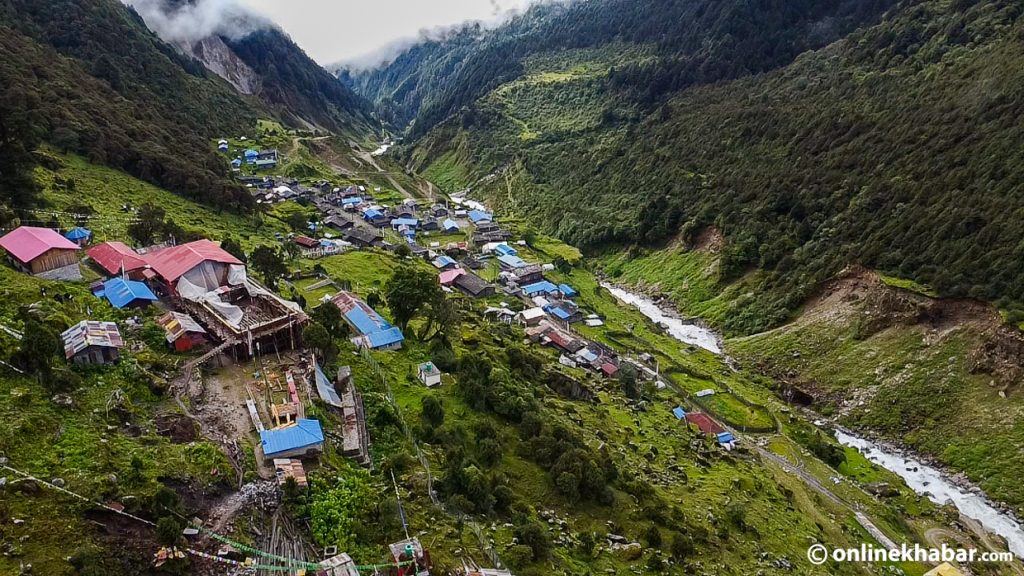
Visitors heading towards the lakes generally need to spend at least two nights in Olangchung Gola.
Many homes in the settlement now operate as small hotels, but accommodation remains closely connected to the traditions of the local Walung community.
Inside the traditional wooden-roofed houses are metal cooking utensils, Buddhist prayer spaces, burning lamps and broad hearths around which daily life takes place.
White flour is used to draw traditional Buddhist symbols on wooden beams.
Hospitality is equally distinctive.
Visitors are often welcomed with an invitation to sit down and have tea. Hosts may repeatedly offer more tea before presenting guests with a khada when they leave.
There is also a local tradition of placing the khada at Deurali, below Olangchung Gola, after returning from the settlement.
The warmth of that hospitality is becoming part of the experience for visitors as much as the landscape itself.
A community with a different political culture
Olangchung Gola’s distinctiveness extends beyond its geography and culture.
Many people originally from the settlement now live in Darjeeling, Kathmandu, France, the United States and elsewhere. Those who remain continue to maintain a Himalayan way of life while adapting to changing economic and social conditions.
The community has also developed an unusual approach to local politics.
Although residents may have different political affiliations, they have sought to avoid political divisions within the small settlement during local elections.
In the 2017 local election, residents selected Chheten Sherpa as ward chairperson by consensus without holding a formal vote.
Sherpa is known in Taplejung for his efforts to develop the ward.
The practice reflects the close-knit nature of a settlement where political competition can easily create divisions among families and neighbours.
Olangchung Gola beyond the old stereotype
For decades, Olangchung Gola was imagined from afar as a place at the end of the road—a difficult posting, a distant village and a destination reachable only after a long and arduous journey.
That image is increasingly outdated.
The road has arrived. Mobile connectivity has followed. Tourism is growing. The historic connection with Tibet remains important, even as cross-border trade faces restrictions.
And above the settlement, Singjema and Somdo are offering a new reason for travellers to make the journey.
Yet Olangchung Gola’s appeal lies not simply in becoming easier to reach.
Its traditional houses, Walung culture, yak and chauri pastures, Buddhist heritage, mountain landscapes and distinctive hospitality remain central to its identity.
The village may no longer be the symbol of remoteness it once was.
But perhaps that is precisely what makes Olangchung Gola worth discovering now: a Himalayan community opening up to the outside world without entirely losing what made it unique in the first place.