
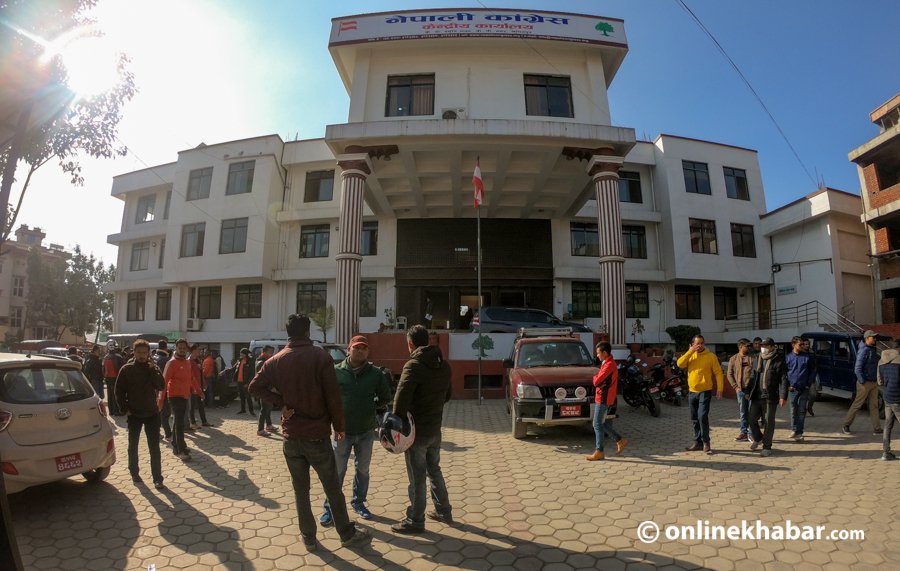
The ideological platform the party is mulling over
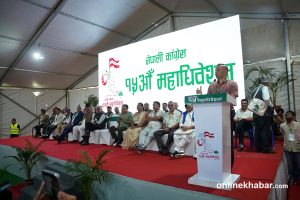
The Nepali Congress is presently weighing whether to continue on the platform of democratic socialism it adopted in 1955, or move toward a social democracy platform.
That choice is not primarily about which specific policy commitments the platform names; most of the modern commitments any contemporary platform would carry are, in one form or another, common to both options. What differs is the framework that undergirds them: whether these commitments are held together as expressions of an equalization mandate resting on state responsibility, or pursued as separate policy goals without that unifying commitment.
This essay takes up that choice by examining the record against which it should be judged: how far Nepal’s democracy has expanded since 1990, and how far the state’s capacity to act upon that expansion has kept pace. The position that record supports is worth stating at the outset, since the argument that follows is intended to substantiate it rather than discover it along the way.
Fiscal capacity has expanded, but its deployment has lagged; migration has produced substantial welfare gains without a corresponding productive transformation; and political inclusion has consistently advanced faster than socioeconomic equalization.
None of these findings requires treating redistribution as something that must await economic growth, nor do they justify retaining the classical instruments historically associated with democratic socialism—state ownership and centralized economic direction—for which Nepal’s record provides little support. They argue instead for retaining an explicit equalization mandate, the substantive commitment at the core of the democratic socialism the party adopted in 1955, while updating the instruments through which that commitment is pursued.
Nepal’s own Constitution already provides much of that update. Its Preamble commits the state to building a prosperous nation “with commitment to socialism based on democratic norms and values.” These democratic norms and values encompass—though are not limited to—a competitive multiparty democratic system, civil liberties, fundamental rights, human rights, adult franchise, periodic elections, full press freedom, and an independent, impartial, and competent judiciary along with the rule of law.
In substance, this preserves the same normative ideal the party adopted seventy years earlier, but within a democratic, rights-based and federal constitutional order. This is no coincidence. It fits a longer pattern: across the major constitutional transformations of Nepal’s modern history, the party has repeatedly helped shape the terms on which the state itself is organized. Set against that record, the continuity between the party’s original commitment and the present constitutional framework needs no further argument.
Stating a position, however, is not the same as settling the debate. A platform is easy to declare; building the capacity to deliver on it is not. The real question, therefore, is not simply what democratic Nepal has committed the state to achieve, but whether the state has built the institutional capacity to fulfil those commitments. This essay examines that gap—call it the authority-capability gap—domain by domain, drawing on the country’s broader experience to conclude with what democratic socialism should concretely mean within the existing constitutional framework.
Democratic transformation beyond the language of deficit
In the first years after the restoration of multiparty democracy in 1990, Nepal’s political course appeared relatively stable and hopeful. Over time, however, political fragmentation increased. Internal divisions within the Nepali Congress weakened governing cohesion, while the Maoist insurgency that began in 1996 created prolonged conflict and uncertainty.
The monarchy’s reassertion of executive ambitions added a further layer of institutional contestation. Nepal’s post-1990 experience has consequently often been described in terms of deficit: political instability, weak institutions, fragmented coalitions, corruption, poor governance, and incomplete development. These concerns are real. Nepal has experienced frequent changes of government, inconsistent policy implementation, administrative discontinuity, and weak institutional coordination. Yet this interpretation is incomplete because it gives insufficient attention to the transformation that occurred alongside these failures.
The Nepal that emerged in 1990 was highly centralized, fiscally constrained, and administratively narrow. Infrastructure was limited, territorial reach was uneven, and many social groups remained excluded from political and institutional life. Nepal in 2026 is structurally different. Political participation has expanded; historically marginalized communities have gained greater representation; public expenditure and state presence have increased; infrastructure and connectivity have improved; local governments now have constitutional authority; and education, health, and other measures of human development have advanced.
The central story of Nepal’s democratic development is therefore not simply failure or stagnation. It is transformation without full consolidation. Political inclusion has outrun administrative adaptation, fiscal resources have outrun implementation capacity, federalism has outrun coordination mechanisms, and social mobility has outrun productive economic transformation.
That pattern—expansion outrunning consolidation—recurs across every domain this essay examines, and it is worth naming before turning to the evidence. Four interrelated concepts organize the analysis that follows. Transformation without consolidation refers to a condition in which political, social, and economic change advances more rapidly than the institutional capacity required to absorb and stabilize it. Performance legitimacy captures the increasing dependence of democratic authority on demonstrable governance outcomes rather than on historical achievement or political affiliation alone. The coordination state highlights the growing importance of aligning authority, resources, and implementation across institutions and levels of government. Democratic stress denotes the pressures that arise when public expectations expand faster than institutional capacity.
Together, these concepts shift the analytical focus from the expansion of democratic authority to the institutional capacity required to govern an increasingly complex society. That is the shift this essay tests against the evidence—and the same shift on which the party’s platform choice ultimately turns.
Democratic expansion and the enlargement of state responsibility
The first domain in which the authority-capability gap appears is the state’s own fiscal reach. The democratic opening of 1990 changed the relationship between the state and society. Groups previously marginalized by geography, caste, ethnicity, class, language, gender, and region entered political life with increasing organizational and electoral significance. Democracy therefore changed not only how governments were selected but also what citizens expected from the state. As participation expanded, demands grew for infrastructure, public services, and economic opportunity. Political representation increasingly had to be matched by tangible improvements in everyday life.
State capacity also grew, particularly in the fiscal domain. In the early 1990s, limited domestic revenue restricted policy ambition and administrative reach. Improvements in taxation, customs administration, public financial management, and the monetization of economic activity over subsequent decades expanded the resources available to government. Public investment increased in roads, telecommunications, health, and hydropower, extending state presence into areas that had previously remained difficult to reach.
This was an important achievement, but it also changed the nature of the capacity problem: as resources and responsibilities grew, effective governance became increasingly dependent on implementation systems capable of managing larger budgets, more complex projects, and multiple institutions. The state’s ability to mobilize resources has therefore outpaced its ability to deploy them effectively, creating bottlenecks in procurement, project management, bureaucratic performance, and intergovernmental coordination.
Nepal’s challenge is consequently no longer simply to expand state capacity, but to translate expanded resources and responsibilities into effective and predictable outcomes. This is the authority-capability gap in its fiscal form—the version of it that each domain below will register in turn.
Remittances, household transformation, and deferred structural change
Labor migration has been one of the most important forces shaping Nepal’s recent development. Overseas employment has provided opportunities that the domestic economy could not offer to millions of Nepalis and has become a central household strategy for managing limited opportunities at home.
Remittances have transformed household life by financing education, healthcare, housing, land, consumer goods, and movement toward towns and cities. They have increased household incomes and resilience, contributed to poverty reduction, and expanded families’ ability to make choices about education, occupation, residence, and investment. Migration has also created new forms of social and economic mobility by linking households to transnational labor markets.
At the national level, remittances support consumption, foreign-exchange reserves, and the balance of payments and provide an important buffer during periods of economic difficulty. Yet their developmental effects are mixed: household incomes and consumption have both risen faster than domestic production, leaving domestic industries struggling to keep pace and a large share of demand to be met through imports, contributing to persistent trade deficits. Migration also reduces the labor available for agriculture, industry, and other productive sectors, particularly as large numbers of younger workers leave the country.
Remittance dependence has also altered the political economy of development. Because households receive income from abroad, pressure on governments to create employment at home may be weaker, even as rising incomes generate greater demands for infrastructure, services, and responsive government.
Migration has helped reduce poverty, improve living standards, and support macroeconomic stability—but the productive transformation that would make those gains more self-sustaining has not followed. Remittances have addressed many immediate constraints, but they cannot by themselves create a diversified and productive economy. Private income flows will not close this gap on their own; left to themselves, they can defer the structural transformation they help finance rather than produce it.
Inclusion, connectivity, and the transformation of democratic legitimacy
Nepal has experienced major advances in social inclusion, human development, and connectivity during the democratic era. Educational access has expanded, life expectancy has increased, maternal and child mortality have declined, and historically marginalized communities have gained greater political representation. Roads, telecommunications, migration, urbanization, and digital technologies have also reduced the distance between citizens and the wider world. Governance has consequently become a more direct part of everyday life.
This transformation has altered the basis of democratic legitimacy. During periods of democratic transition, legitimacy often derives from historical achievements such as the struggle for democracy, constitutional change, or institutional transformation. These sources remain important, but their capacity to sustain political support tends to diminish as democratic systems mature. Citizens increasingly judge governments by the outcomes they experience—whether public services function, infrastructure improves, and institutions respond to their needs. Political legitimacy thus becomes increasingly a matter of performance legitimacy, reinforced by the wider reference points that information access, migration, and global connectivity now give citizens for judging their own circumstances.
At the same time, political inclusion and socioeconomic equalization have not moved together: more groups participate in political life, but inequalities associated with geography, caste, class, gender, and region persist. As previously excluded groups gain political voice, claims on the state multiply. The result is a central tension of democratic development: the expansion of participation broadens political legitimacy while making governments more accountable to a larger and more demanding citizenry—a citizenry that, having acquired political voice, increasingly measures government against expectations of fair opportunity and redistribution rather than simply waiting for prosperity to arrive on its own.
Federalism and the emergence of the coordination state
The authority-capability gap also structures the institutional architecture through which any of this must be delivered. Federalism is one of the most consequential institutional changes in Nepal’s recent history. The federal democratic republic redistributed authority among federal, provincial, and local governments, creating new opportunities for political participation and bringing government closer to citizens. Local governments received constitutional authority, representation became more geographically dispersed, and citizens gained greater opportunities to participate in decisions affecting their communities. Federalism therefore changed not only the administrative structure of the state but also the relationship between citizens and government.
It also changed the nature of state capacity. Under a centralized system, governance depends largely on the effective exercise of authority within a hierarchical structure; under federalism, effectiveness increasingly depends on coordinating authority across institutions and levels of government. Decisions must be aligned among governments with different responsibilities, resources, political interests, and administrative capacities. Traditional measures of state capacity—revenue, bureaucratic competence, and administrative reach—remain essential, but federal governance adds another dimension: coordination capacity, or the ability to align planning, budgeting, implementation, monitoring, and accountability across levels of government.
Nepal is still developing this capacity. Jurisdictional overlaps, unclear responsibilities, uneven administrative strength, inconsistent planning, and fragmented implementation remain significant constraints. The constitutional framework itself was established relatively quickly; the administrative habits and institutional routines needed to make federalism work are taking much longer to build, which is why much of the difficulty lies not in decentralization itself but in running decentralized authority as a coherent system.
Nepal is consequently moving from an expansion state toward a coordination state: whereas earlier democratic development focused on expanding participation, services, infrastructure, and state presence, the next phase requires organizing these responsibilities across a multi-level system. Any mandate distributed across three tiers of government is only as credible as the coordination capacity that carries it from budget line to delivered service.
Democratic stress and electoral recalibration
Citizens register the accumulated effect of the gaps described above at the ballot box. This is where democratic stress stops being an analytical category and becomes a political fact. As democratic expectations have risen, elections have increasingly become mechanisms of political recalibration. Nepal’s recent electoral experience suggests that shifts in political support need not represent rejection of democracy itself; they can also reflect dissatisfaction with governance performance. Citizens assess governments through the quality and reliability of infrastructure, employment, and public services.
Yet electoral judgment does not necessarily correspond neatly to institutional performance. Responsibility for outcomes is dispersed across political leaders, bureaucracies, markets, different levels of government, and wider social conditions. Media, social networks, migration experiences, and international comparisons then shape how citizens interpret those outcomes. Elections therefore aggregate both lived experiences of governance and the narratives through which those experiences are understood.
This produces a distinctive form of democratic stress. Governments face pressure to demonstrate visible results within electoral time horizons, even though many reforms essential to long-term capacity—civil-service reform, procurement, intergovernmental coordination, professionalization, and organizational learning—require sustained effort and produce results slowly. The resulting tension is not simply between good and bad governance, but between the short political time horizon of electoral accountability and the longer time horizon required for institutional development.
Elections can expose the authority-capability gap in its electoral form and redistribute political authority, but they cannot by themselves resolve the institutional constraints underlying it. The more important question is whether electoral feedback can be converted into institutional learning and improved state capacity. Where that occurs, political competition can contribute to institutional adaptation; where it does not, governments may change while the underlying constraints persist.
What should democratic socialism mean today?
Nepal’s experience since 1990 neither suggests abandoning democratic socialism nor returning to its classical instruments. It instead points to retaining its core commitment—the acceptance of equalization as a direct responsibility of the state—while reinterpreting that commitment in light of the constitutional and institutional realities of today’s federal democratic republic. The analysis above makes the need for that rethinking clear: political inclusion has advanced further than socioeconomic equalization, while the responsibilities and resources of the state have expanded faster than its capacity to deploy them effectively.
This does not mean that the state simply needs to do more. It means that the state must become capable of doing effectively what democracy has already made it responsible for doing. Democratic socialism today must therefore concern itself not only with the distribution of resources, but also with institutional capacity, implementation, and coordination. Its credibility should be judged not by the commitments the state makes, but by whether it can translate commitments to equalization into reliable outcomes across different groups in society and across all three levels of the federal structure.
The argument stated at the outset need not be repeated here. But it is important to make clear that the argument alone is not sufficient. Making promises is easy; building the capacity to fulfil them is not. Rather than spending time debating the name of its platform, the party would do better to take up the more important question it has yet to address: how, within the state as presently organized, the authority-capability gap itself can actually be closed. Only by doing so can what the state promises and what it is actually capable of delivering be brought into alignment.
That leads to a more concrete question: what should democratic socialism mean in practice in today’s inclusive, empowered, federal democratic republic of Nepal? Five defining characteristics follow from the analysis.
First, it should be an explicit and committed project of equalization, accepting the reduction of inequality as a direct responsibility of the state rather than waiting for it to emerge as a secondary benefit of economic growth. Second, state spending and intervention in the social sectors need not be guided by traditional instruments such as state ownership or centralized economic direction; rather, they should be disciplined and guided by the Directive Principles of the Constitution of Nepal. Third, its test should not be what the state promises, but whether it has actually built the institutional capacity required to fulfil those promises—the authority-capability gap must be closed in practice, domain by domain, rather than merely acknowledged in name. Fourth, its benefits should be experienced equitably and reliably across all three levels of the federal structure—not as paper commitments confined to the federal capital, but as shared commitments carried by a coordinating state. Fifth, it must consciously and persistently address the gap between political inclusion and socioeconomic equalization, because the capacity to close that gap is what makes the state genuinely democratic and socialist. These five characteristics are a continuation of the ideal embraced seventy years ago; but connected to Nepal’s institutional realities today, they provide a clear and practical definition of democratic socialism for contemporary Nepal.
Democratic socialism, in this sense, need neither be defended merely as a historical doctrine nor abandoned as an outdated one. It can instead be understood as a continuing commitment to equalization, updated for a more inclusive, empowered, and federal Nepal, and made credible by the institutional capacity to translate that commitment into practice. That is both the continuity of the commitment adopted seventy years ago and its practical meaning in Nepal today.