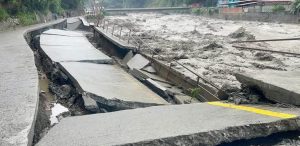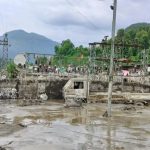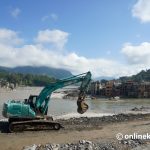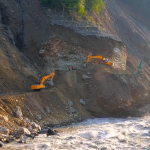


Nepal is mourning the catastrophic consequences of a massive rock-ice avalanche and subsequent debris flow. The disaster sent a devastating mud-rock slurry through transboundary river networks. Originating in the high-altitude reaches of the Lhende Khola, the deluge swept into the Purepu Tsangpo, Chhochen Khola, and Gyirong River in China before entering Nepal. It then funnelled violently down the Bhote Koshi and Trishuli river basins, compounding the devastation and worsening conditions for thousands of people.
Hundreds have been confirmed dead, thousands remain missing, and infrastructure worth billions has been destroyed. Amid this unimaginable tragedy, remarkable stories of rescue continue to emerge. The courage of local communities and the deep sense of solidarity demonstrated within Nepal and by the international community provide a glimmer of hope.
Yet this disaster has also raised existential questions for the nation: how much longer can a country that contributes almost nothing to global greenhouse gas emissions bear the catastrophic consequences of global heating?
The anatomy of a Himalayan crisis
Scientists working in climatology, meteorology, oceanography, and glaciology have long warned that climate change is accelerating glacier melt worldwide and increasing the risk of cascading disasters. The Earth’s “Third Pole”, the high-altitude Himalayan region, is warming at roughly twice the global average rate. This rapid warming is thawing ancient permafrost that acts as geological cement, holding steep and fragile mountain slopes together. As permafrost weakens, entire mountainsides can lose their structural integrity, creating conditions for rock avalanches, landslides, and glacial lake outburst floods.
This acute vulnerability recalls Elizabeth Kolbert’s eye-opening book, The Sixth Extinction: An Unnatural History (2014). Kolbert illustrates how human activities are driving a mass extinction event. Since the Industrial Revolution of the 1760s, human activity has rapidly increased the concentration of greenhouse gases in the atmosphere. While natural processes such as solar fluctuations and volcanic eruptions have historically influenced the climate, contemporary global warming is overwhelmingly driven by human activities.
Compounding this crisis, modern regional wars and intense global competition for natural resources, from deep-earth fossil fuels to the rare earth elements required for advanced technologies, continue to contribute to greenhouse gas emissions and exacerbate global warming. Climate change is no longer merely an environmental concern; it is a complex web of destruction affecting life across land, sea, and atmosphere, from the local to the global scale. Over the past decades, increasingly frequent, intense, and extensive floods, storms, droughts, and heatwaves have heightened collective awareness of the scale of the crisis.
Redefining climate governance
One might naturally expect that, confronted with recurring disasters, politicians, policymakers, business leaders, the private sector, and citizens would align behind ambitious and binding measures to reduce future risks. Yet formal action frequently lags behind the scale and urgency of the challenge.
Traditional frameworks of climate governance often focus on political priorities such as combating domestic corruption, ensuring immediate economic well-being, maintaining political stability, and safeguarding national interests and defence. While these remain fundamental responsibilities of the state, the contemporary situation demands that governance extend beyond traditional boundaries. Climate change and human security have converged as among the greatest existential challenges facing humanity, with direct implications for economic development, sovereign stability, and sustainable peace.
For an ecologically fragile and socioeconomically stratified country like Nepal, this convergence is already a lived reality. Climate change acts as a severe threat multiplier, magnifying deep-rooted structural inequalities based on caste, ethnicity, and gender. Nepal’s economy relies heavily on climate-sensitive sectors such as rain-fed agriculture, which employs more than 40 per cent of the workforce. When erratic precipitation, droughts, or flash floods occur, marginalised communities often suffer first and most severely.
Women and girls bear a disproportionate burden. As access to clean water and fuelwood becomes more difficult, their daily workloads increase, while girls may be forced to leave school. When disasters displace families, existing vulnerabilities related to physical safety, reproductive health, and financial security can be severely aggravated in temporary shelters.
Therefore, modern climate governance cannot treat adaptation as a peripheral environmental project. It must become an integral part of national economic planning, development policy, and security architecture.
Climate diplomacy: A new era of foreign policy
Addressing these monumental challenges requires new thinking in foreign policy. Global negotiations under the Conferences of the Parties (COPs) establish emissions targets and carbon-market rules, but Nepal must approach these forums through the lens of active climate diplomacy. Climate diplomacy can connect global climate finance, adaptation mechanisms, technology transfer, and transboundary resource cooperation, providing an important framework for advancing Nepal’s foreign-policy interests.
Nepal contributes only a negligible share of global greenhouse gas emissions but remains one of the world’s most climate-vulnerable countries. This profound climate injustice demands that Nepal’s foreign policy transition from passive participation to active advocacy.
Nepal must, first, strengthen its institutional capacity for international climate negotiations; second, build strategic coalitions with other highly vulnerable mountain and developing countries; and third, assertively advocate for climate justice, technology transfer, and direct financing for loss and damage from the world’s largest emitters.
The Ministry of Foreign Affairs should urgently elevate climate and disaster diplomacy as strategic national priorities. This requires a dedicated budget, a highly trained diplomatic corps specialising in environmental and climate law, and institutional mechanisms that can effectively connect local environmental data with international diplomacy and foreign relations.
Domestically, Nepal is attempting to address Himalayan vulnerabilities through a three-pronged approach: advocating for global climate justice; seeking to revive high-level global and regional dialogue platforms such as the Sagarmatha Sambad; and decentralising resource management to local governments under the federal system to ensure that resources reach affected communities.
Nepal’s intellectual capital in this field is also growing. The Intergovernmental Panel on Climate Change (IPCC) has increasingly drawn on the expertise of Nepali professionals, with 12 Nepali scientists and experts contributing directly to report-writing processes and helping shape global climate science. Similarly, work by the Intergovernmental Science-Policy Platform on Biodiversity and Ecosystem Services (IPBES) highlights the close relationship between biodiversity loss and climate change.
Translating diplomacy into action: The Karnali framework
The tangible benefits of proactive climate diplomacy are illustrated by the recent success of the National Trust for Nature Conservation. In July 2026, the Green Climate Fund (GCF) approved an $8.5 million grant for a four-year climate-resilience project in Nepal’s highly vulnerable Karnali Province. The project, titled Building Climate Resilience of Forest-Dependent Communities through Enhanced Livelihood Opportunities and Local Capacity in Karnali Province, has a total mobilisation of Rs 1.29 billion.
The project demonstrates how global climate finance can be channelled to the local level. It targets forest-dependent communities by restoring degraded ecosystems, strengthening local capacity through participatory National, Provincial, and Local Adaptation Plans of Action, and creating climate-resilient livelihood opportunities.
By promoting high-value medicinal plants and non-timber forest products, the project aims to strengthen local economies against climate shocks. It also emphasises the establishment of community-based early warning systems to protect more than 100,000 direct beneficiaries.
This provides a framework that other provinces could adapt to maximise the benefits of Nepal’s climate diplomacy and access to international climate finance.
An urgent call for disaster diplomacy
While climate diplomacy addresses long-term systemic challenges, the immediate crisis in Nepal’s river basins provides an urgent warning about the need for disaster diplomacy. Nepal must strengthen its foreign-policy architecture through disaster diplomacy, which uses pre-disaster risk planning and post-disaster humanitarian response to facilitate international cooperation, strengthen regional and subregional relationships, establish bilateral agreements, and promote transboundary coordination.
Nepal cannot manage the risks associated with the Himalayan cryosphere and the Anthropocene alone. Disaster diplomacy requires formal protocols with China and India for the real-time sharing of satellite, hydrological, meteorological, and seismological data related to glacial movements, river flows, and lake levels. It also requires collaborative transboundary river-basin management to reduce the risk of downstream infrastructure, including vital hydropower facilities, being destroyed within minutes by cascading disasters.
Ultimately, Nepal’s resilience will depend on two interconnected imperatives: systemic global accountability and local human solidarity. Nepal must continue to demand that industrialised nations acknowledge and address their historical responsibility for greenhouse gas emissions and contribute to stabilising the world’s natural water towers.
At the same time, the government should establish a dedicated Department of Climate Diplomacy, along with specialised divisions for Disaster Diplomacy and Negotiations, Climate Finance and Trade, and Green Industrial Policy. These institutions should be linked across relevant ministries and established as an urgent national priority, particularly before the Prime Minister and Foreign Minister participate in the United Nations General Assembly (UNGA).
Nepal’s climate vulnerability is no longer a distant environmental concern. It is a matter of national security, economic resilience, human development, and foreign policy. The country’s response must therefore evolve accordingly—from reacting to disasters after they occur to using diplomacy, science, finance, and regional cooperation to anticipate and reduce the risks before the next catastrophe strikes.