Kathmandu, September 11
The Nepal Communist Party (NCP) has called for the formation of an all-party parliamentary special committee to work on post-disaster issues, as proposed by Rastriya Swatantra Party (RSP) Chairperson Rabi Lamichhane.
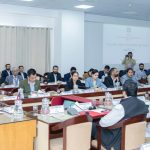
Speaking during a meeting of the House of Representatives, NCP leader Barshaman Pun said disaster management was not the responsibility of a single ministry, government or level of government.
He said a national mechanism should be formed by bringing together political parties, security agencies, experts, local communities and all other relevant stakeholders. Pun also called for an all-party parliamentary special committee based on Lamichhane’s proposal for addressing the situation following the disaster.
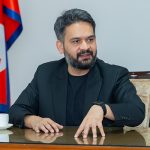
“I would like to express our party’s support for the proposal put forward by RSP Chairperson Rabi Lamichhane, who leads the government, to form an all-party parliamentary special committee to deal with this disaster,” Pun said.
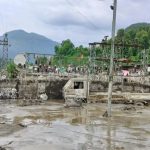
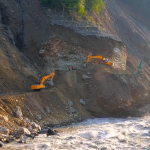
He said the federal, provincial and local governments should work in effective coordination following the Rasuwa floods.
“The government could not coordinate and cooperate with the opposition parties, provincial governments and local governments to the extent required during such a major disaster,” he said.
What was Rabi’s proposal?
A day after the devastating floods on August 26, RSP Chairperson Lamichhane convened an all-party meeting attended by senior leaders from the RSP, Nepali Congress, CPN-UML, NCP, Shram Sanskriti Party, Rastriya Prajatantra Party, Janata Samajbadi Party and Janamat Party. The meeting adopted a 10-point resolution.
The 10th point called for the formation of a “high-level all-party mechanism” for long-term solutions.
The resolution said the parties had agreed to form a parliamentary committee to coordinate reconstruction after disasters, climate adaptation, timely reform of national disaster policies, and continuous consultation, support and monitoring of government activities.
It also said the mechanism would help build national consensus on disaster preparedness and sustainable development and play an important role in policy reform, not only during crises.
However, the proposed mechanism has yet to be formed.
Instead, a second all-party meeting was held on September 1, attended by second-tier leaders. The meeting agreed to coordinate with the government on relief, rescue and rehabilitation efforts.
Leaders said the meeting had paved the way for forming all-party mechanisms at the district and local levels. However, no such mechanism has been established at the central level.
Two options have been discussed for a central mechanism: forming a parliamentary committee or establishing a mechanism outside Parliament.
Against this backdrop, Pun raised the issue in the House, saying his party supports the proposal put forward by the chairperson of the ruling party.