Kathmandu, May 30
The Nepal Centre for Integrated Development (NCID) hosted a half-day seminar titled “The Match Effect: Fueling the Future of Nonprofits in Nepal” at The Malla Hotel in Lainchaur on Friday.
The event brought together around 120 key stakeholders, including representatives from government agencies, the private sector, civil society organisations (CSOs), and media networks, to address the shifting financial realities and operational challenges faced by Nepali non-profits.
According to the organisers, local non-profits are finding it increasingly difficult to raise critical social issues as traditional international donor priorities pivot and Nepal consolidates its federal structure. The seminar served as a strategic platform to explore how cross-sector collaboration and innovative local match-funding can secure the long-term sustainability and grassroots impact of civil society.
Delivering the keynote address, SP Kalaunee, Chair of the Association of International NGOs in Nepal (AIN), shared strategic insights into the prospects of non-profits in an evolving environment. He outlined how civil society can proactively adapt and continue to play an effective role in national development, emphasising the urgent need for local organisations to cultivate creative, internal resource pathways to ensure institutional resilience.
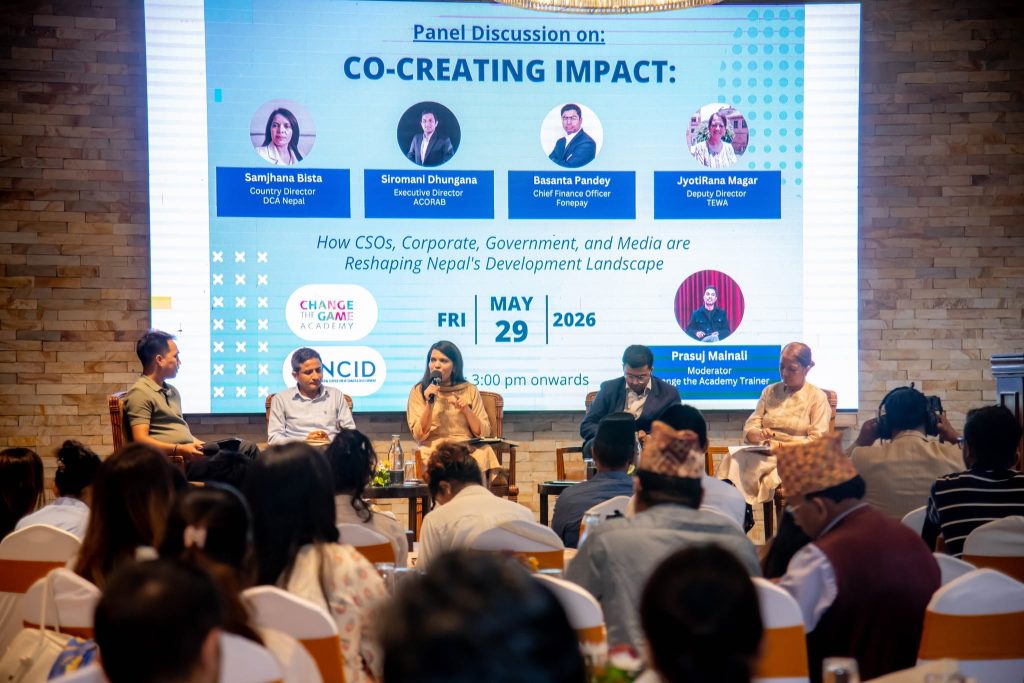
The event also featured a 90-minute panel discussion titled “Co-Creating Impact: How CSOs, Corporate, Government, and Media are Reshaping Nepal’s Development Landscape,” moderated by Prasuj Mainali.
The panel included Samjhana Bista, Country Director of DanChurchAid (DCA) Nepal; Siromani Dhungana, Executive Director of the Association of Community Radio Broadcasters Nepal (ACORAB); Basanta Raj Pandey, Chief Financial Officer of Fonepay Payment Service Limited; and Jyoti Rana Magar, Deputy Director of Tewa.
The panellists agreed that survival and deep community impact require non-profits to look beyond traditional external funding and actively co-create solutions alongside domestic corporate leaders, fintech innovators, media networks, and local public sectors.
Additionally, the seminar celebrated local capacity building with a session titled “Learning Sharing from Change the Game Academy – Sowing the Seeds of Change in Nepal.” During the session, graduates from the academy shared how their training is actively helping local CSOs navigate their evolving roles and empowering them to drive sustainable, independent local fundraising initiatives.
The event concluded with a felicitation ceremony honouring the speakers and partners, followed by a networking session aimed at establishing cross-sector alliances.