

Dubai, November 1
What do Nepalis miss most after moving abroad? Is it employment, money or opportunities? For many, the answer may include something less tangible but equally important — people who understand their circumstances, offer reliable information and provide support when needed.
For Nepalis living in Dubai, a network started with that idea has grown into a community of more than 5,000 members, connecting people from different professions and backgrounds across 10 countries.
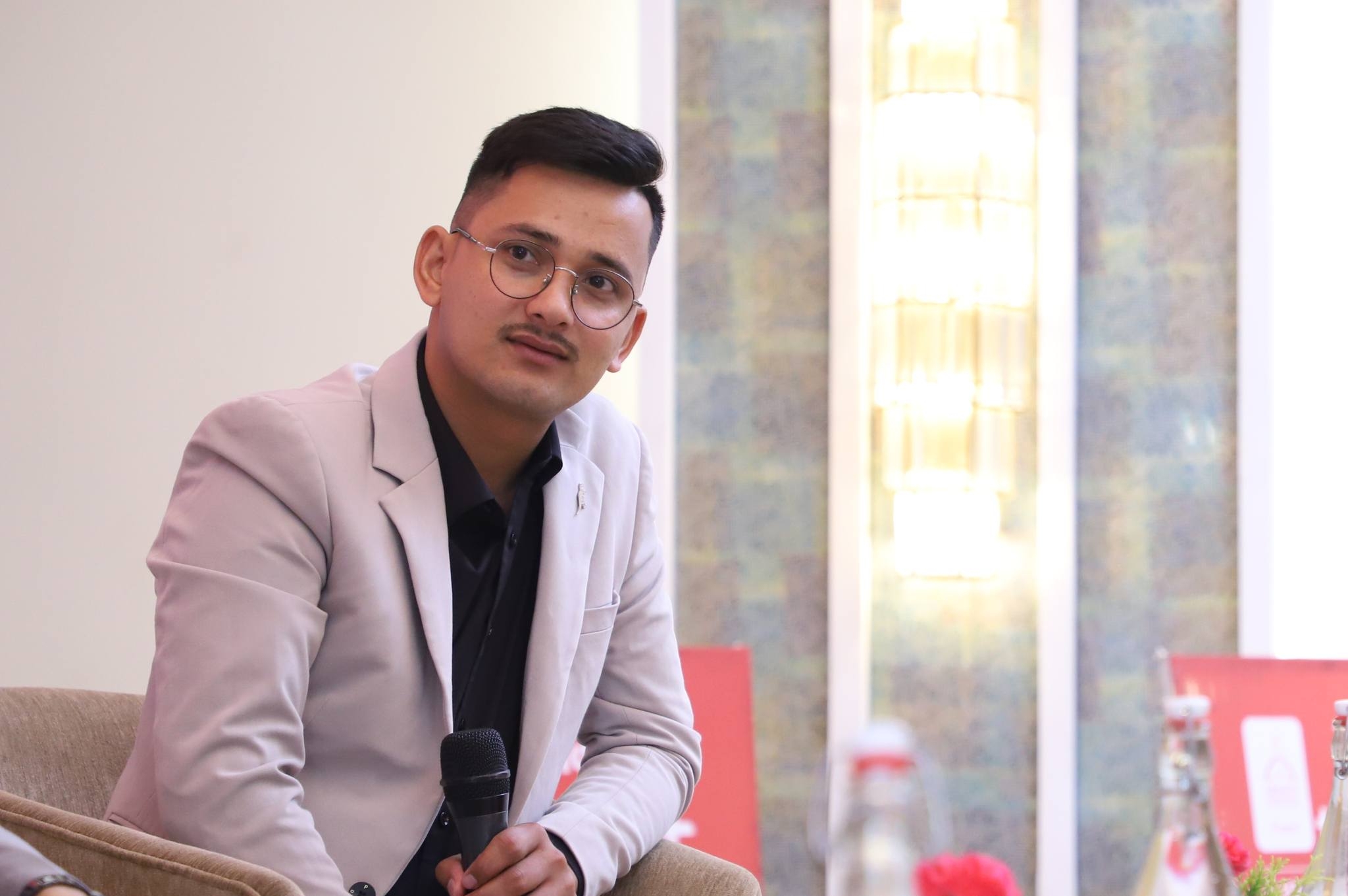
Established in October 2023, the Dubai Nepalese Influential Group (DNIG) was founded by Manoj Marhatta, who wanted to create a space where Nepalis abroad could connect beyond casual social interactions. What began with a few friends and colleagues has developed into a professional network that aims to link people with jobs, business opportunities, investment, skills and knowledge.
The initiative is not simply about bringing Nepalis together in a digital group. Its broader ambition is to turn those connections into practical opportunities and build stronger links between the Nepali diaspora and Nepal.
“Although there are large numbers of Nepalis living abroad, professional and practical networks among them remain weak,” says Marhatta. “We started with a few friends and my office team. Today, the network has expanded to 10 countries.”
Members include students, workers, managers, entrepreneurs, business owners, bankers, lawyers, auditors and young Nepalis educated at international universities. According to Marhatta, more than 5,000 people are now connected through the network, which has a presence in Dubai, Nepal, the United Kingdom, the United States and other countries.
He emphasises that DNIG is not a political organisation. Instead, he wants it to become a professional network where a Nepali can find someone to turn to, regardless of where they are in the world.
Looking beyond casual connections
Manoj Marhatta has lived in Dubai for 12 years. During his early years there, he noticed that Nepalis regularly met and socialised, but conversations rarely extended to professional development, employment, business or investment.
“Whenever Nepalis met abroad, conversations were generally about politics, music and similar subjects. I felt there was a lack of a separate circle where people could discuss professional matters,” he says.
That observation led him to consider whether other Nepalis might also benefit from a dedicated professional network.
He began by bringing together a few friends and colleagues from his workplace. From the outset, the group adopted one important principle — political party activities would not be allowed within the network.
“People can have their own political opinions, but the activities of the group cannot be political,” he says.
The idea was to create a common platform where members could interact based on their professional interests and practical needs rather than political affiliations.
The network’s basic concept is straightforward. Someone planning to move to the United States could connect with a Nepali already living there and learn about employment opportunities. Someone hoping to start a business in another country could seek advice from a member familiar with its market and regulations. Students preparing to study abroad could get practical guidance from people who have already experienced life in their destination country.
“If I need career guidance, want to start a business, need ideas or want to understand the rules in a particular country, I should be able to connect with Nepalis there,” Marhatta says. “We are helping people connect with one another free of charge.”
He believes such connections can save people considerable time and effort. Building relationships in a new country often takes years, while reaching the right person can sometimes involve financial costs. A network of people willing to share their experience can make that process easier.
His vision is simple — wherever a Nepali travels, there should be someone they can approach without having to pay for an introduction or a connection.
From networking to business opportunities
Manoj Marhatta says the network is already being used for more than exchanging contact details.
Members have helped one another explore employment opportunities, seek career advice, develop business ideas and identify potential investors. He also points to three or four businesses that, according to him, have emerged through collaborations among members.
He sees the network’s size and professional diversity as an opportunity to create a market within the community itself.
For example, a member running a business can introduce their products or services to other members, potentially finding early customers and gaining exposure. Similarly, members with specialised skills can offer services to others in the network.
The group has also organised discussions and sessions aimed at encouraging Nepalis abroad to invest in Nepal.
Marhatta says people from Nepal who have contributed to different sectors have been invited to events in Dubai. Speakers have included senior government officials, businesspeople and individuals associated with entrepreneurship and programmes such as Shark Tank.
The objective is to encourage conversations about how the diaspora can contribute to Nepal’s economy, whether through investment, business partnerships or bringing Nepali products to international markets.
However, the network does not yet have comprehensive figures on how many jobs have been created, how much investment has been generated or how many businesses have been established through its connections.
Marhatta acknowledges that documenting these outcomes systematically is something the group needs to work on.
A network spanning different professions
One of DNIG’s defining features, according to its founder, is that it is not restricted to a particular profession or economic group.
Students and workers can join alongside managers, entrepreneurs and established professionals. The idea is to bring together people who can learn from one another and share their experience.
Of the more than 5,000 members, Manoj Marhatta estimates that around 1,000 work in management positions. The group also includes bank vice-presidents, auditors, lawyers, managers and business owners, as well as young Nepalis who have studied at reputed universities around the world.
He considers this diversity one of the network’s greatest strengths.
Despite its growing membership, the group maintains its position against political activities. Individual members may belong to different political parties, but the organisation does not want those affiliations to determine participation or influence its activities.
“Someone may be affiliated with a political party, but they do not come into the group as a representative of that party or another,” Marhatta says.
Instead, the network wants to focus on subjects such as investment, business, production and development, including discussions with government representatives.
How can Nepalis in Dubai invest in Nepal? What can the Nepali community in Australia contribute? How can Nepali products reach international markets? These are among the questions the group hopes to address.
Taking Nepal to international markets
The network’s ambitions are gradually extending beyond connecting Nepalis living abroad. Manoj Marhatta says it also wants to attract foreign nationals to Nepal, both as tourists and potential investors.
He believes the Nepali diaspora can play an important role in promoting the country in their respective destinations.
Nepalis living across the world understand both their adopted countries and their homeland. They can use those connections to introduce Nepal to potential visitors, business partners and investors.
Alongside this, Marhatta has developed an interest in taking Nepali products to international markets.
He believes Nepal has products with considerable commercial potential that have yet to establish themselves as recognised international brands. Among those he is exploring are shilajit, wild honey, Himalayan spring water and timur.
He is particularly interested in the possibility of developing an international brand around Himalayan spring water.
Pointing to premium bottled-water brands from other countries, he asks why Nepal’s mountain water cannot achieve similar recognition.
For Marhatta, Nepal’s mountains, natural resources and distinctive products could provide the foundation for international branding. He hopes the network can eventually help connect Nepali producers with buyers and business partners abroad.
Building communities within the network
As its membership has grown, DNIG has also begun creating smaller groups based on shared interests and needs.
These include cricket and football clubs, wellness and meditation groups, a women’s group and communities focused on social service.
The women’s group, in particular, is intended to provide a space where female members can discuss issues and experiences more comfortably. A separate group also focuses on social and charitable activities.
Marhatta says the aim is to make the larger network more useful by allowing members to find communities relevant to their interests and circumstances.
Managing such a large network requires time and coordination. The core team meets once a month, alternating between physical and online meetings.
Experienced and senior professionals have also been brought in as advisers. Some have previously held positions in government institutions and offer guidance when required.
Marhatta says he does not receive financial benefits from running the network. Instead, he and other members of the core team contribute their own time and resources.
Membership is free, with no joining fee.
“There is no membership fee. It is zero membership,” he says.
Although the group has seen members develop business partnerships, secure investments and build professional and personal relationships, Marhatta says it now needs to maintain proper records of these outcomes to understand the network’s actual impact.
Changing how Nepalis are seen abroad
For Marhatta, the initiative also carries a broader message about the identity of Nepalis living overseas.
Nepalis are often associated primarily with labour migration, particularly in countries such as the United Arab Emirates, where large numbers work in different sectors. He believes that perception should not overshadow the presence and potential of Nepali managers, professionals and entrepreneurs.
“Just because someone is Nepali and has gone to Dubai does not mean they can only work as a labourer. A Nepali can also become a manager or a major entrepreneur,” he says.
He sees the network as a way to make those possibilities more visible by bringing professionals and aspiring entrepreneurs into contact with one another.
The group’s ambition is to demonstrate that Nepalis abroad are not only a workforce but also a source of knowledge, skills, capital and international connections.
From Dubai to a global platform
Manoj Marhatta’s plans now extend well beyond the UAE. He wants to develop a worldwide network of Nepalis and is exploring ways to expand the initiative in Nepal by connecting with international professional networking organisations.
One of his biggest ambitions is to build a digital “super app” that would bring different services for Nepalis abroad into a single platform.
The proposed platform would connect users with employment, business, investment, property-related information and social networks, while also making it easier for them to engage with Nepal.
For example, a Nepali living in Nigeria could use the platform to find local contacts, explore business opportunities or identify ways to invest in Nepal.
Marhatta also wants to make it easier for Nepalis abroad to access investment opportunities in Nepal’s stock market.
For those interested in buying land or investing in property, he envisions a system through which users could view property details, videos, maps and relevant documents digitally.
He believes partnerships with banks and government institutions could eventually make investment procedures more accessible through the same platform.
The plan also includes connecting members interested in investing in hydropower, tourism, agriculture and other sectors with opportunities in Nepal.
These are still ambitions rather than established services, but they reflect how Marhatta hopes to take the network beyond its current digital community.
Leaving a high-paying job to pursue business
Manoj Marhatta’s own professional life has also entered a new phase. After spending 12 years in Dubai, he recently left a job that paid him the equivalent of Rs 1.2 million a month. He made the decision around eight months ago to leave employment and focus on business full-time.
He says running a business offers more flexibility than working in a salaried position.
His main business interests now lie in artificial intelligence and technology, with the proposed super app also connected to those ambitions. He is additionally involved in businesses related to restaurants and travel.
However, his growing interest is in taking Nepali products to international markets. He is exploring opportunities involving around 10 products from Nepal, including shilajit, wild honey, spring water and timur.
For him, the potential of the Nepali diaspora lies in more than the number of people living overseas. Their skills, professional experience, capital and international relationships could also contribute to Nepal’s development.
That is ultimately what he wants DNIG to facilitate — not simply connections among Nepalis abroad, but stronger links between those people and opportunities in Nepal.
What began as a small network in Dubai has, according to its founder, grown to include more than 5,000 Nepalis across 10 countries. The next step is to turn it into a global platform.
Marhatta does not want to be known simply as the person who built a Nepali network in Dubai. He wants to be recognised as someone who helped create a worldwide network for Nepalis.