
Art is a rarely born light. It reflects like a societal mirror and paints unspoken emotions, memories, dreams and truths, shaping them into forms only creativity can give. To let your quiet thoughts scream and dance at the applause of the audience is both terrifying and exhilarating.
Yet stepping onto the stage and transforming the unheard stories into a performance requires courage- a courage that grows where artists are met with understanding and respect. It takes even greater vision and effort to build such platforms that not only recognise such emotional labour but also celebrate the vulnerability that’s quietly embedded within.
Jhilmil-e-Saajh, curated by Thoplo Arts, has emerged as such a platform, thoughtfully designed to honour both creation and performance. Founded two years ago, Thoplo Arts is a collective of four members: Saugat Sapkota, Pushpa Devkota, Kritika Koirala and Mira Tamang, established to encourage the artists to narrate their unheard stories through poetry-based performance.
Saugat Sapkota, one of the founding members of Thoplo Arts, emphasised that while each platform comes with its own format and guidelines that may limit creative expression, establishing Thoplo Arts allowed him the freedom to fully explore and realise his own ideas in art and poetry. Beyond that, Thoplo Arts envisioned a community where not only art but also the connection between artists and their audience could thrive.
With the focus on true connection and poetry supported by theatrical presentation and live music, the group has steadily shaped ‘Jhilmil-e-Saajh’, a distinctive cultural space. It also features ‘Ka-bee’z Roundtable’ where the artists meet up and creatively share their ideas and participate in discussions collectively and reflect on themes inspired by different societal and daily life events.
The journey began on November 11th, 2023, at Ujama Koffie, with the first edition of Jhilmil-e-Saajh as an open-mic poetry event. Poets shared their creations freely, building an intimate evening full of telling, listening and connections. The positive reception set the stage for subsequent editions, each exploring new themes and innovative forms of expression.
With Jhilmil-e-Saajh 2.0, the event moved to Kausi Theatre, introducing selected poets performing under theatrical lighting accompanied by live music, while still keeping an open-mic segment for emerging voices. The third edition of Jhilmil-e-Saajh, held in collaboration with Blind Rocks, celebrated both the beauty of love and the unique beauty of disability in romantic poems, exemplifying motivational inclusivity.
Later editions continued to explore varied themes and presentation styles. The fourth edition featured a park-like concept, and the fifth experimented with storytelling through shadow performance. The latest Jhilmil-e-Saajh, sixth edition, was inspired by wabi-sabi philosophy, embracing the beauty of impermanence and imperfections.
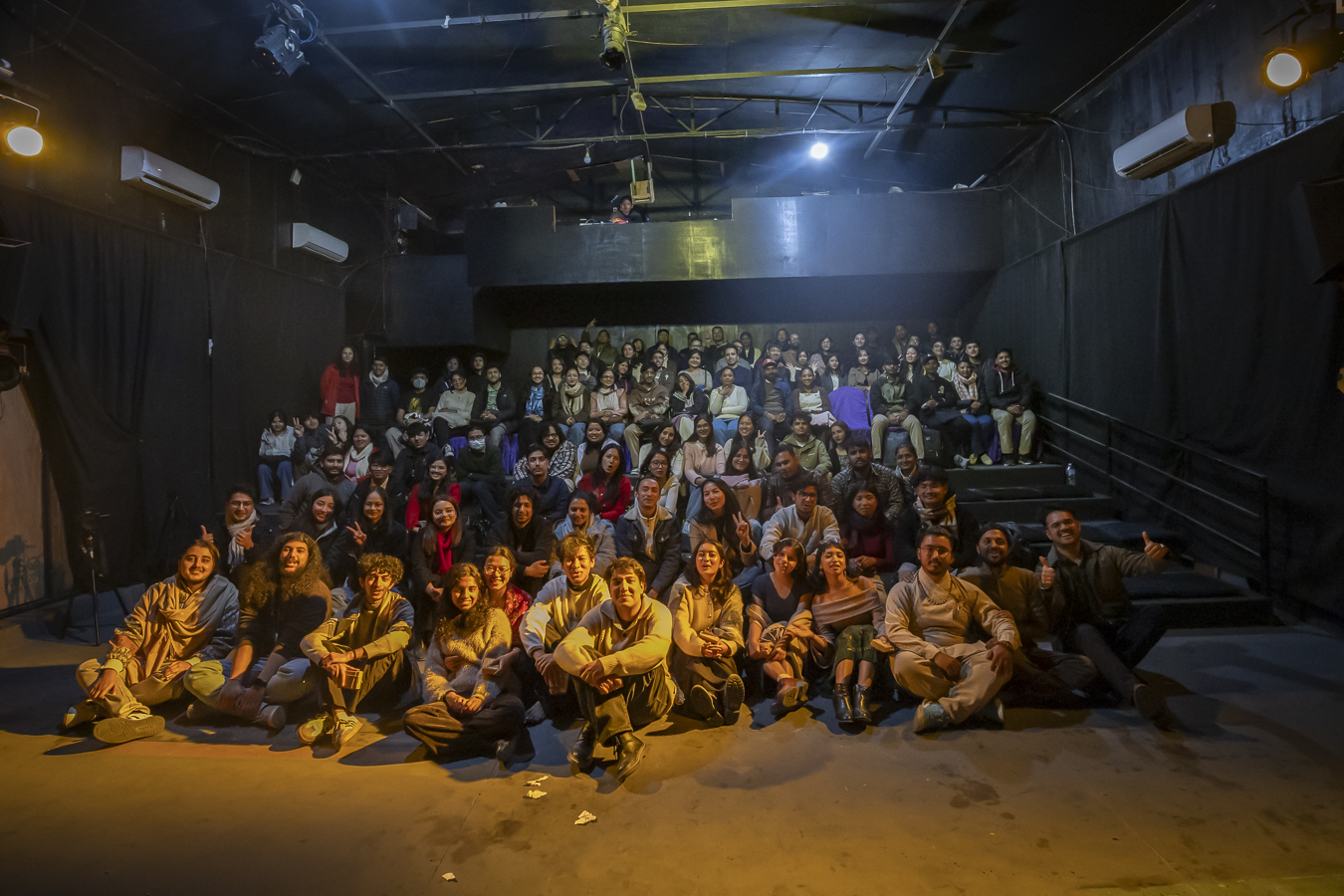
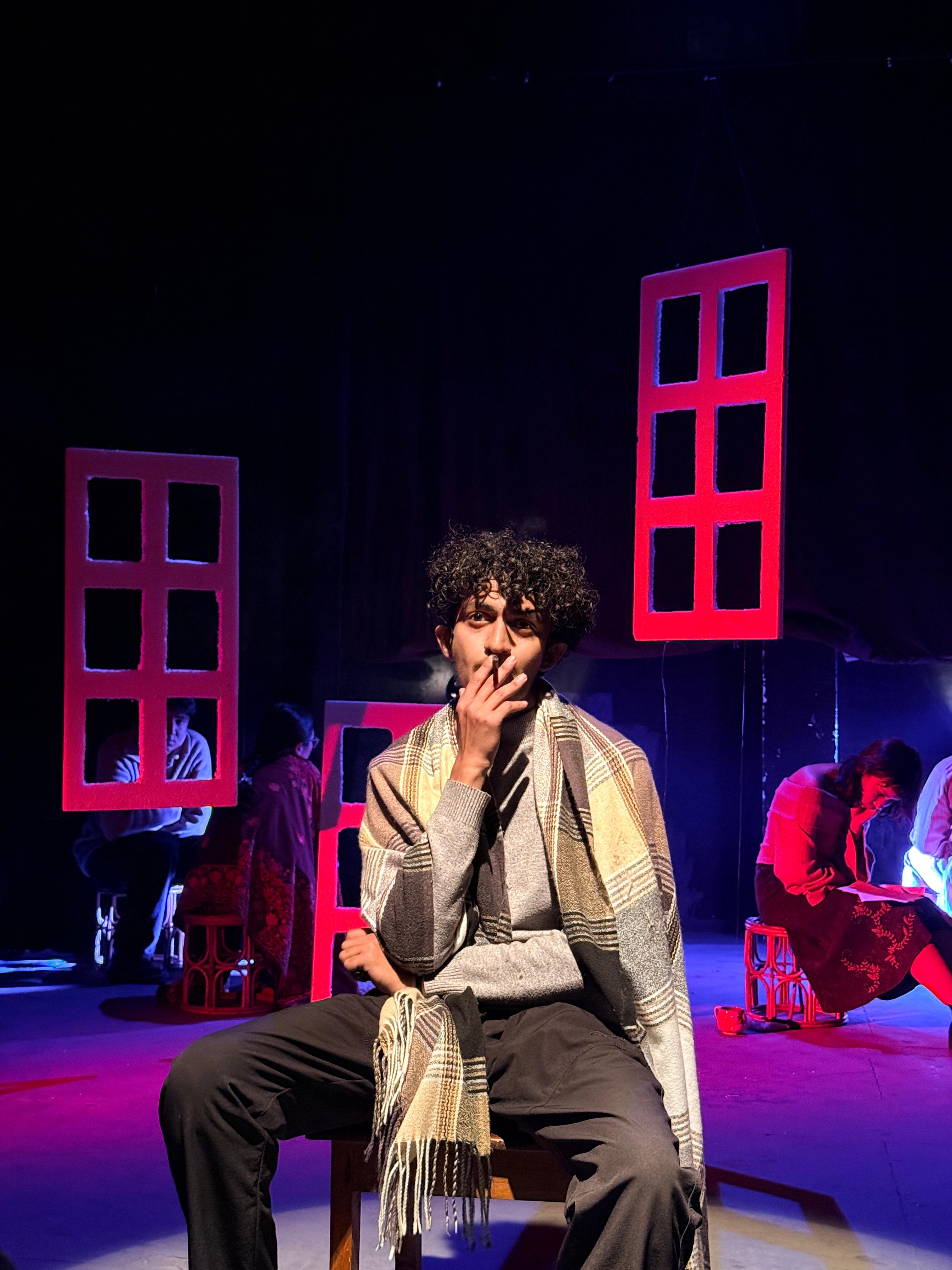
Jhilmil-e-Saajh 6.0 was organised on December 20th at Kausi Theatre, Kathaghera Productions, Teku. It featured a powerful performative poetry event accompanied by live Sarod music by Vivek Neupane and performed by ten talented artists, staged within a striking prison-like setting.

Symbolically, confined within the “prison of life,” the performers portrayed a space from which escape seemed impossible and even survival felt suffocating. This compelling concept emerged from the lived experiences of the curators, who view life itself as a prison where human beings remain trapped, merely existing rather than truly living. One by one, at the call of the cell in charge, each prisoner stepped out to deliver their poetry, creating moments that silenced the room while filling it with deep admiration.
The ten poets who made Jhilmil-e-Saajh truly a jhilimili saajh are listed here:
- Adina Sharma
- Ajnabee Khadka
- Biren Shrestha
- Krishu Lamichhane
- Kritika Koirala
- Kritika Sharma
- Mira Tamang
- Pushpa Devkota
- Raju Ubarkoti
- Saugat Sapkota
The evening drew to a poignant close as the final performance unfolded, leaving the audience visibly moved. As the last prisoner returned to the cage, the symbolism deepened, reminding everyone that the prison of life does not easily release its captives. The performers then gathered together in silence, allowing the weight of the words to linger in the air.

The event concluded not with celebration, but with reflection, as the audience rose in applause, acknowledging the courage, vulnerability, and artistic brilliance of the poets. Jhilmil-e-Saajh ended as it began with quiet intensity, leaving behind questions that echoed long after the lights dimmed.
The overwhelming response from both the audience and the performers each time Thoplo Arts organises such events leaves a deep mark on their aim, reinforces their vision and motivates them to continue creating similar living stages. These coteries aim to nurture human connection and build a community where people arrive with confusion and depart with a sense of belongingness and inclusion.

As a poet performer of Jhilmil-e-Saajh 6.0, I felt as though my poem that I wrote on paper two years ago while contemplating my grandmother’s lonely years had found a lap to rest its heaviness. With a hundred eyes carefully gazing at me while I performed made me realise that this was where I was meant to be, where I truly belonged. In this warm coterie, my words were not merely heard or read; they were felt, lived and shared.
The exchange between me and the audience felt deeply intimate, with warm daps on my shoulder, dissolving the distance between the stage and the seats. In that moment, my personal memories transformed into a collective experience. Jhilmil-e-Saajh, for me, thus became more than just a performance; it became my religion where the stories found their listeners, pain found understanding, and art found its true purpose.
Photos: Adina Sharma