

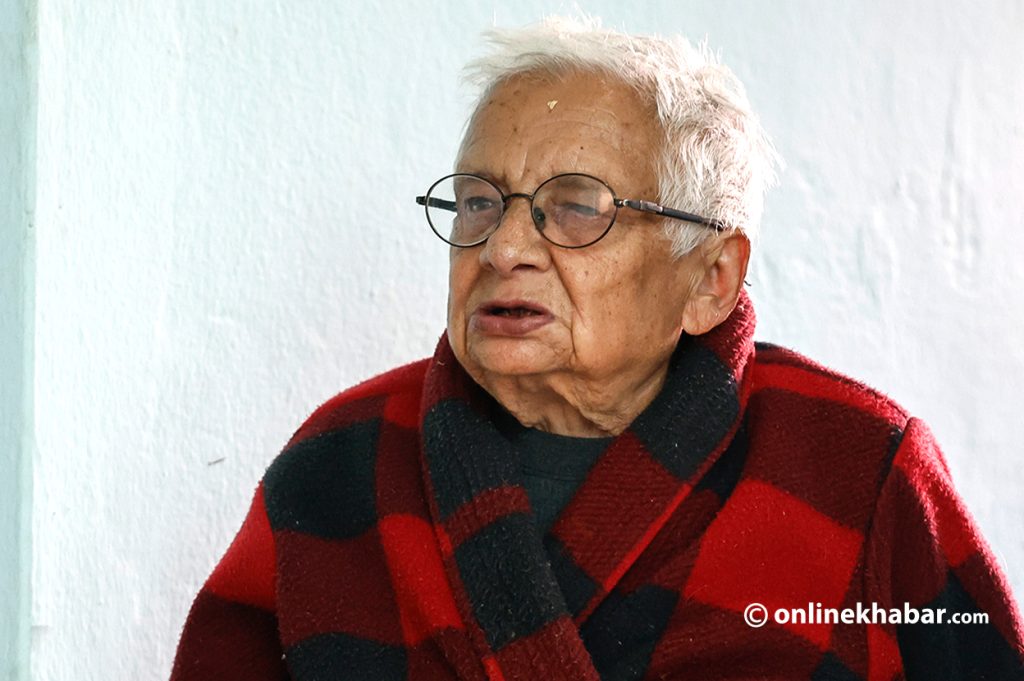
Indira Sapkota, who is approaching the age of 90, remains just as active as ever. Whether in her business or in social service, her passion and dedication are as strong as in her youth.
Born in 1938, Sapkota is now 89 years old and still works daily in her business. As the manager of “Aad Tayari Poshak,” she continues to design clothes and knit sweaters for new mothers and children up to age 8.
Prioritising service over profit, Sapkota has brought her multifaceted business to this point without any support from her children after her husband’s death.
“I started this business to fund my children’s education, but I never received any help from them,” she says. “Even without family support, I have done what I had to do, so I have no regrets.”
Started with Rs 18
Although she did not have the opportunity to pursue higher education herself, Indira Sapkota was determined to educate her children at any cost. That determination gave rise to her entrepreneurial mindset. Having learned basic sewing and knitting skills at her maternal home, she began buying fabric, stitching it into garments, and selling them as an alternative source of income.
In 1976, she first bought fabric for 18 rupees, stitched it into ready-made clothes, and sold them for 36 rupees. That marked the beginning of her long entrepreneurial journey.
She initially started by sewing vests and later expanded to making cotton clothes for new mothers and children, including blouses, shirts, and trousers. To grow her business, she even sold her jewellery and invested 50,000 rupees, something she still vividly remembers.
For many years, she ran a shop inside the premises of the maternity hospital in Thapathali, donating a fixed percentage of her earnings to the hospital’s development. However, she had to leave the space after structural changes in the hospital.
Loss of husband and a solitary struggle
Known for her strong-willed nature, Sapkota lost her husband at the age of 48. Afterwards, she alone managed her household, raised and educated her children, and arranged their marriages.
“My family has never supported my business or social work,” she says. “Since my children became capable, I have not received any help from them. Whatever I have done until today, I have done alone.”
Despite being alone, she never gave up. Instead, she diversified her business further and expanded her social service work.
Employment for women and skills for prisoners
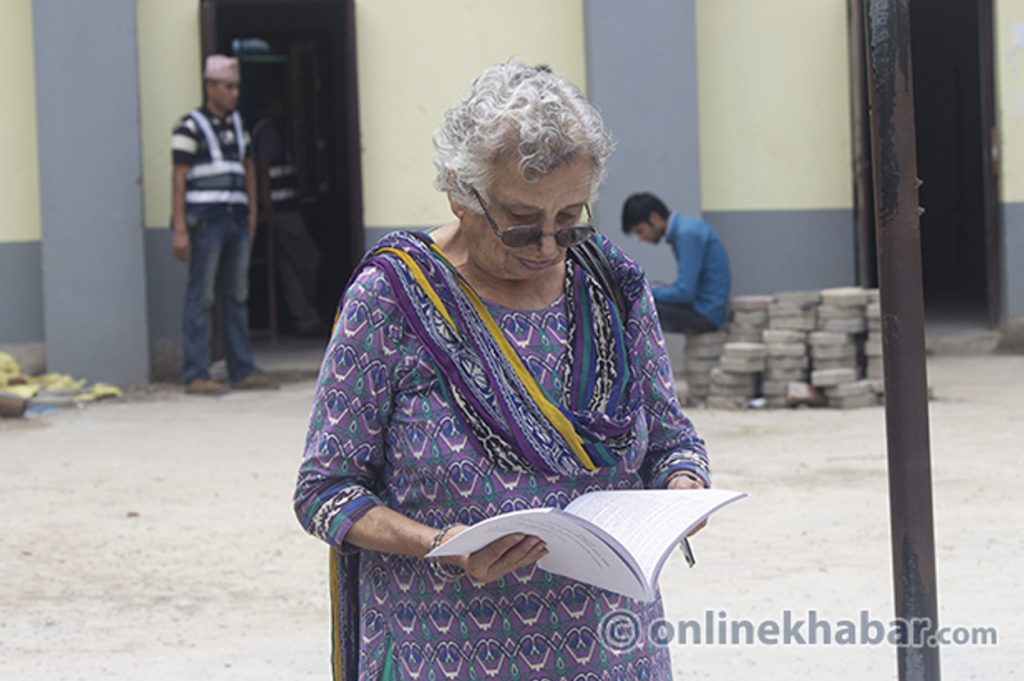
What began as a way to ease her family’s financial burden eventually helped transform society. Sapkota not only built her own enterprise but also helped create thousands of women entrepreneurs like herself.
She provided training in sewing, knitting, and design to help women become self-reliant and self-employed. Many of the trained women worked with her.
“The women I trained became so skilled that others would offer them better benefits and hire them away,” she says. “That made me happy. I would simply train another woman and put her to work. I kept records until I had trained about 5,000 women, but after the numbers grew into the thousands, I stopped keeping track.”
At one point, more than 250 employees worked in her enterprise. Alongside tailoring, she also operated a pickle business, registering “Sahara Food Industry” and “Bishwas Pickle and Spice Industry,” through which she trained many women. Five-star hotels like Hyatt and Dwarika’s were regular customers of her products.
Additionally, she initiated and ran a “Women Prisoners’ School” inside the central prison, providing incarcerated women with skill-based training such as sewing and knitting, helping them reintegrate into society. She is still willing to continue working with the prison.
Supporting Padma Kanya students
During the 1990s, she exported sweaters abroad for nine years. Through this, she helped many students from Padma Kanya Campus manage their educational expenses.
She employed them as part-time workers to knit sweaters, paying 100 to 150 rupees per piece.
“I helped arrange campus expenses for students who wanted to study. Even now, when some of them meet me and say, ‘I studied by knitting sweaters at your place,’ it makes me very happy,” she says with a smile.
She discontinued the sweater export business after the conflict period began.
Earning while serving society
Indira Sapkota established and operated several companies and organisations, including “Aad Tayari Poshak,” “Nepal Grihini Industry,” “Bhotu-Indira Social Welfare Organisation,” and “Sahara Food Industry.” Currently, she personally runs only “Aad Tayari Poshak,” with plans to establish a permanent office and hand it over to a reliable team.
From constructing school buildings in remote areas to reopening “Gram Sudhar Basic School” in Gokarneshwar, many initiatives have been carried out under her leadership.
“I spend the money I earn on social service,” she says with satisfaction.
Indira stands as a living example that women need not remain confined within household boundaries; they can be equally active in entrepreneurship, business, and social service. At 89, with a life philosophy rooted in social service and women’s empowerment over profit, her energy and commitment remain deeply inspiring for the younger generation.