

Jhapa, November 1
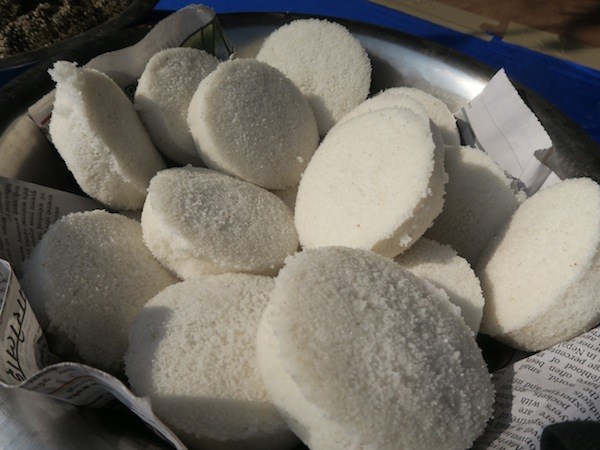
The sale of bhakka, a traditional local snack, is picking up with the onset of colder weather in eastern Tarai districts, including Jhapa, Morang and Sunsari.
Known as ‘bhakka’ in the Rajbanshi language, the traditional dish of indigenous communities has become popular among consumers of all ages and communities.
Jagani Rajbanshi of Mechinagar Municipality-15 has been selling freshly steamed, hot bhakka every day at Dhulabari Mod, two kilometres from her home, for the past decade.
“I sell bhakka made from 10 kg of rice flour every day,” she said. “The income is enough to support my family.”
At around 5 am every morning, she carries the utensils used to prepare bhakka, a stove, a bundle of firewood and packets of sal leaves from her home to the market. Customers enjoy eating the hot bhakka served on fresh sal leaves, dipped in spicy pickle.
Bhakka is prepared by steaming rice flour. As it is steamed rather than fried, it contains no oil or other additives. It is commonly eaten with tea and pickle.
Amala Rajbanshi of Mechinagar-10 has also been selling bhakka at Khayardangi Chowk for the past 15 years. She said she sells up to 15 kg of rice-flour bhakka daily.
People who go for morning walks are among her regular customers. She added that children and senior citizens also gather at her stall to enjoy the snack.
“I sell bhakka for just four to five hours in the morning, leaving me time to do other work during the day,” she said. “I sell bhakka worth Rs 50,000 to Rs 75,000 a month, and more than half of that is profit.”
Local traders say demand rises during winter, making the period from Kartik to the first week of Falgun the peak season for bhakka sales.
There are more bhakka stalls in the southern parts of Jhapa than in areas north of the highway. The trade has provided thousands of indigenous women with self-employment and financial independence. However, younger generations do not appear to be as interested in taking up the business.
“Bhakka is available everywhere in the streets and squares of Jhapa during winter,” said 19-year-old Ramila Limbu of Phedap-1, Tehrathum, who is pursuing her bachelor’s degree at Mechi Multiple Campus. “In Bhadrapur, we have bhakka with tea every morning before going to college. It tastes wonderful when dipped in tomato and chilli pickle mixed with black salt.”
Students heading to schools and colleges, as well as people out for morning walks, can be seen gathering at roadside bhakka stalls in the streets of Bhadrapur.
Bhakka has become an integral part of eastern Nepal’s cultural identity, and Jhapa also celebrates an annual Bhakka Day to promote its traditional flavour.
—RSS