
Kathmandu, November 22
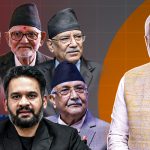
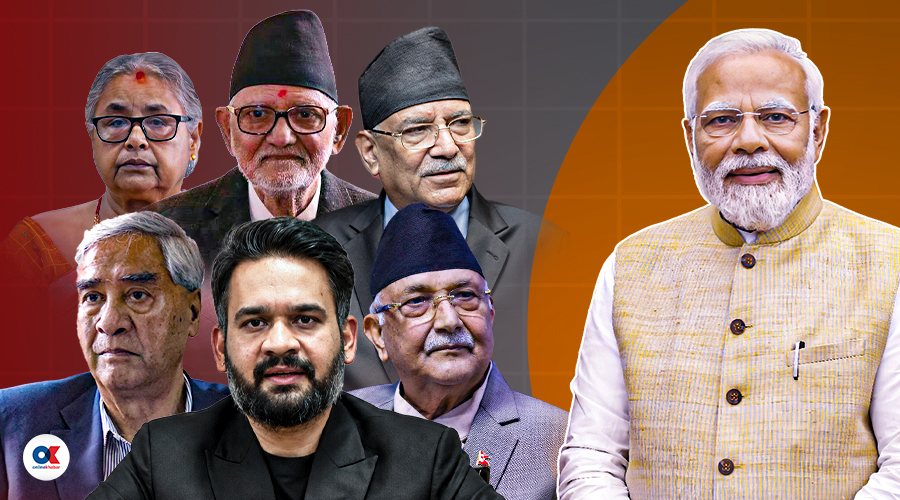
Narendra Modi has been Prime Minister of India for the past 12 years. During the same period, Nepal has seen six prime ministers come and go, reflecting the political instability that has often shaped Kathmandu’s relationship with New Delhi.
Modi, who first became prime minister in 2014, is now serving his third term. In Nepal, the changes in leadership have been frequent. If government formations and reshuffles are counted, KP Sharma Oli has served as prime minister four times and Pushpa Kamal Dahal twice.
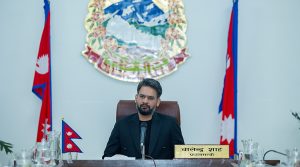
From Sushil Koirala and Sher Bahadur Deuba to interim government Prime Minister Sushila Karki and the current Prime Minister Balendra Shah, Nepal’s frequent political transitions stand in sharp contrast to India’s continuity under Modi.
During this period, Modi has visited Nepal three times, while all Nepali prime ministers except Sushila Karki have travelled to India. Shah is now joining that sequence with his visit to New Delhi. The trip has renewed interest in whether the relationship between the two countries will continue along its familiar trajectory or undergo a shift.
“Following a major political transformation, a young prime minister has emerged. There is considerable interest in him in India as well,” says Dhananjay Tripathi, associate professor at South Asian University in New Delhi and an expert on international relations.
Tripathi says Nepal–India relations have experienced ups and downs and need to be brought onto a more consistent footing. He argues that India needs to adapt its Nepal policy to changing circumstances.
From Neighbourhood First to a period of goodwill
When Modi came to power in 2014, he introduced the Neighbourhood First policy. To signal the policy’s importance, he invited the leaders of neighbouring South Asian countries to his swearing-in ceremony.
Nepal’s then prime minister Sushil Koirala travelled to India to attend the ceremony, marking the beginning of Nepal’s engagement with the Modi government. Over the following 12 years, the relationship between the two countries alternated between periods of closeness and tension.
Modi’s first visit to Nepal in 2014 was also intended to reinforce the message of his Neighbourhood First policy. Until then, from IK Gujral’s visit in 1997 to 2014, Indian prime ministers had largely not made bilateral visits to Nepal. Apart from Atal Bihari Vajpayee’s visit to attend a SAARC summit, Nepal had not seen visits from Indian prime ministers in that period.
Modi’s visit soon after taking office was therefore seen as an attempt to elevate bilateral relations.
Addressing Nepal’s Constituent Assembly, Modi invoked the relationship between the two countries through references to roti-beti ties, Pashupatinath and Vishwanath, the Himalayas, water and youth, as well as Ram and Sita, appealing to shared cultural and religious connections.
He also expressed India’s support for Nepal’s sovereignty, independence and development, signalling a renewed priority for bilateral relations.
Modi returned to Kathmandu in November 2014 to attend the SAARC summit. His two visits within a short period were seen as a sign that Nepal had been placed high on India’s diplomatic agenda.
Cooperation in hydropower, roads, transmission lines, trade and transit was also a key part of his agenda. India sought to build a new foundation for bilateral relations through energy trade and infrastructure development.
The joint statement issued during the visit also included a commitment to advance the detailed project report for the Pancheshwar Multipurpose Project.
At the time, expectations in Nepal were high, particularly regarding India’s support for the constitution-making process and its role as a development partner.
But the goodwill generated by Modi’s first visit did not last long.
The blockade that widened the trust deficit

The biggest rupture in Nepal–India relations emerged following the promulgation of Nepal’s Constitution in 2015.
Nepal’s Constituent Assembly promulgated the new constitution on September 20, 2015. Before its promulgation, India had repeatedly expressed the view that the constitution should be adopted through consensus and address the demands of Madhesh-based parties.
After nearly 90 per cent of the Constituent Assembly members supported the constitution, Modi sent then Indian Foreign Secretary S Jaishankar to Nepal as a special envoy, urging Nepal to delay the process.
Nepal’s political leadership viewed constitution-making as a sovereign and internal matter and was unwilling to accept India’s request. India did not welcome the promulgation of the constitution, reinforcing perceptions in Nepal that New Delhi had exerted undue pressure on the country’s constitutional process.
Following the promulgation, protests in Madhesh intensified. India imposed a blockade, citing the Madhesh movement and disruptions along the border. The blockade disrupted imports, leaving Nepal short of petroleum products, medicines and essential goods.
India maintained that the situation stemmed from Nepal’s internal problems. However, Nepal, still recovering from the devastating earthquake, faced further economic and humanitarian hardship.
The blockade weakened traditional trust in India in Nepal and intensified debates over the country’s dependence on India for transit and trade.
The then KP Sharma Oli-led government moved to seek alternative routes by signing trade and transit agreements with China, arguing that excessive dependence on a single transit route posed a national security concern.
The goodwill that Modi had sought to establish in 2014 had turned into deep mistrust within a year, a divide India continues to struggle to bridge.
“The tense relationship after 2014 should also be viewed through Modi’s personal outlook. For him, Hindutva is more important than other issues. Even during the blockade, although India cited internal problems in Nepal, its position on the Hindutva issue remained firm,” says Ramesh Paudel, associate professor at Tribhuvan University’s Department of International Relations.
Paudel also says Nepal’s political leaders have at times made decisions for popularity and electoral gain.
Attempts to repair relations
After the blockade, both countries continued diplomatic engagement to ease tensions.
Following the collapse of the Oli-led government, Pushpa Kamal Dahal, who became prime minister from the Maoist party, visited India in an effort to improve relations. The two countries also established mechanisms to monitor the implementation of development projects.
Sher Bahadur Deuba subsequently visited India. After the 2017 elections, Oli returned to power and also travelled to India to improve relations, despite having expressed strong dissatisfaction with New Delhi during the blockade.
Modi later visited Nepal, including Janakpur, Muktinath and Pashupatinath. His reception in Janakpur and visits to religious sites were presented as part of India’s religious and cultural diplomacy, aimed at reinforcing people-to-people ties and shared heritage.
Modi sought to connect bilateral relations more closely with religious and cultural affinity.
Meanwhile, Nepal decided to participate in China’s Belt and Road Initiative in 2017. India was not pleased with Nepal’s agreements with China, even as it itself continued to expand cooperation and partnerships with Beijing.
Another major source of tension emerged in 2019, when India issued a new political map incorporating Nepali territories including Kalapani, Lipulekh and Limpiyadhura.
In May 2020, India’s Defence Minister Rajnath Singh inaugurated a road through Lipulekh connecting India to China. Nepal protested, arguing that the road had been built on Nepali territory, and sent a diplomatic note to India.
Nepal subsequently issued its own revised political and administrative map incorporating Limpiyadhura, Lipulekh and Kalapani. Parliament amended the constitution to give the map constitutional recognition.
The map dispute further strained relations, deepening the mistrust created by the blockade. However, diplomatic channels remained open.
Visits by Indian Foreign Secretary Harsh Vardhan Shringla and then Indian Army Chief Manoj Mukund Naravane in 2020 helped create an environment for renewed dialogue.
The border dispute, however, remains unresolved. Both countries have frequently expressed the view that cooperation in other areas should continue despite the longstanding territorial dispute.
Economic cooperation continues despite political disputes

Despite political disagreements, economic and technical cooperation between the two countries has continued.
Nepal began exporting electricity to India in November 2021, opening opportunities to sell surplus power during the rainy season and positioning the country as a potential electricity exporter.
The Jayanagar–Kurtha railway service was operationalised, the Motihari–Amlekhgunj petroleum pipeline began operating, and cross-border transmission lines and trade infrastructure were expanded.
During Dahal’s third term as prime minister and his visit to India, the two countries reached a long-term electricity trade understanding with a target of exporting up to 10,000 megawatts of electricity from Nepal to India over 10 years. The agreement was considered significant for Nepal’s hydropower development and access to the Indian market.
Cooperation also expanded in transmission lines, railways, petroleum pipelines, integrated check posts and hydropower projects, with India-backed development projects adding to the bilateral agenda.
The two countries opted for a pragmatic approach to continuing economic cooperation despite political disagreements, although the overall balance in the relationship remained unsettled.
In 2024, India objected to Nepal’s decision to include the revised map in its Rs 100 banknote. Indian Foreign Minister S Jaishankar said Nepal’s unilateral move would not change the reality.
Thus, while energy and trade partnerships continued to expand, disputes over borders and sovereignty remained a major influence on political relations.
Former ambassador Vijaykant Karn, an expert on diplomacy, says the conduct and approach of Nepal’s politicians have also contributed to tensions, arguing that Nepal cannot place all the blame on India.
“On dealings with India, there have been instances of indiscriminate remarks in Parliament and even mocking India’s national symbols,” Karn says. He argues that Nepal has not consistently pursued efforts to maintain close and stable relations since 2014, partly because governments have changed frequently.
Will cooperation expand further?
During Modi’s third term, Nepal–India relations have continued to prioritise trade, transit, energy and cross-border infrastructure. However, progress on border issues remains limited, and Nepal’s trade deficit with India has not improved significantly.
Following the formation of Shah’s government, Foreign Minister Shishir Khanal visited India and held discussions with his Indian counterpart on trade, transit, energy, development cooperation and people-to-people relations.
Shah’s visit on Sunday is expected to build on those engagements and expand cooperation at the highest level.
Over more than a decade of Modi’s leadership, economic and infrastructure cooperation between Nepal and India has expanded, but the political trust deficit has not been fully resolved. India continues to closely monitor developments in Nepal.
One of India’s major concerns regarding Nepal is its relationship with China. For New Delhi, Nepal is not only a neighbouring country but also a strategically sensitive region bordering China.
When Nepal expands infrastructure, transit and strategic cooperation with China, India often views such developments through the lens of its security interests. Nepal, meanwhile, seeks to expand ties with both neighbours while safeguarding its national interests.
“China’s economic partnership with Nepal is not India’s only concern. China’s strategic presence in Nepal and the large infrastructure projects it is undertaking are particularly important issues for India,” says Tripathi, assistant dean of the international relations faculty at South Asian University.
“Some of these projects are close to the Indian border. At times, they raise concerns in India from a security and strategic perspective.”
The experience of more than a decade under Modi has demonstrated that Nepal–India relations cannot be determined solely by the personal ties between prime ministers or the number of high-level visits. Trust, equality, mutual respect and consensus remain the foundations of a stronger relationship.
Many argue that Nepal should prioritise the implementation of existing agreements rather than adding new ones during every high-level visit to India.
Will Shah’s visit mark a shift towards that approach? And will the 12 years of distance between Kathmandu and New Delhi during Modi’s tenure begin to narrow?